From Mary Josephine Squire’s (KWZV-7RH) autobiography:
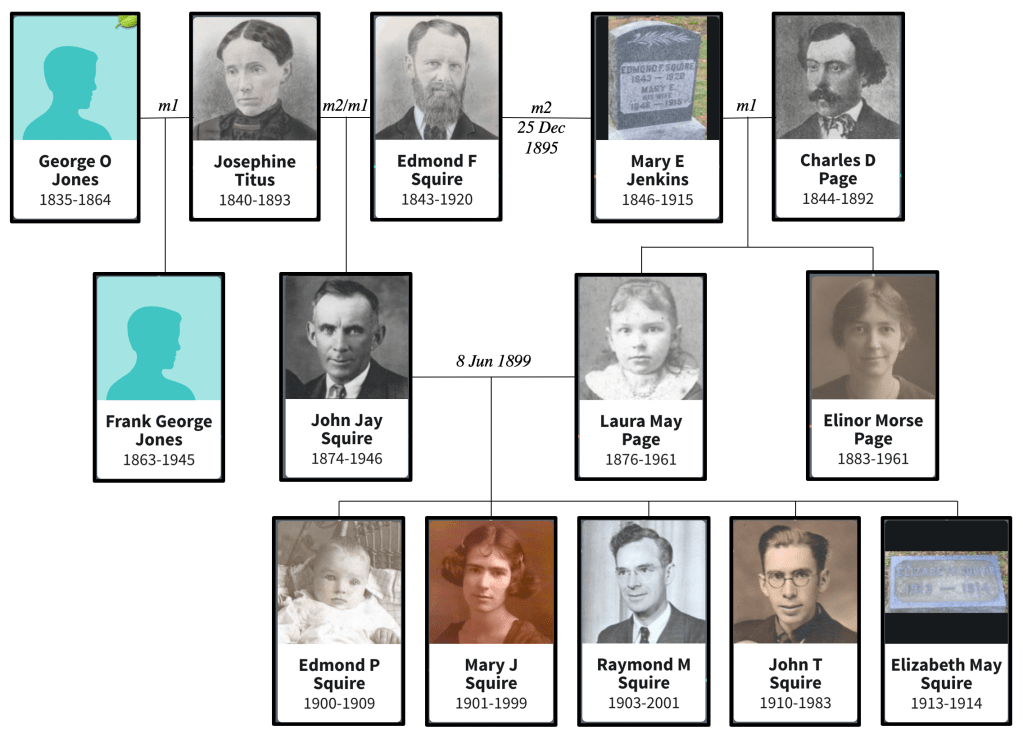
“While we were living in Fredonia, N.Y., my brother Page contracted diphtheria in school. If I remember correctly (I was 7 1/2 at the time), he came home from church sick. It was his 9th birthday, 4 May 1909, and he had just joined the Methodist Church that day. He was desperately sick, and one week later he died. There was no funeral because he had died of a contagious disease.”
“My father was the only person beside the hearse driver who went to the cemetery. The picture is still vivid in my mind of the hearse driving away on that cold, windy muddy May day with all that was left of our darling brother. The only glimpse Raymond or I had had of Page since that fateful Sunday was through a window.”
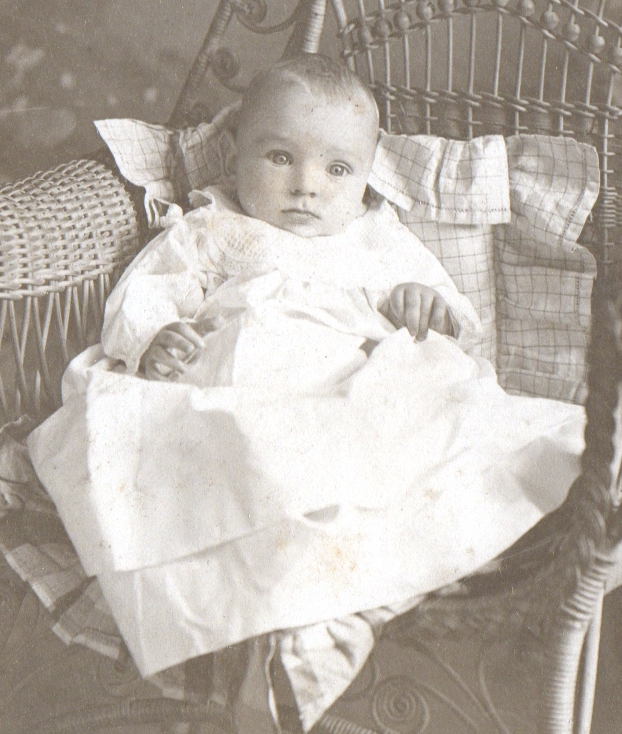
“Page was very like his father, sweet, kind, and unselfish. Our loss was surely Heaven’s gain! Many years later my mother told me that just before Page died, all of a sudden he sat straight up in bed and seemed to look off in the distance and smiled and seemed to look radiant. Then he lay back down and died. Perhaps he saw a chariot and angels coming to get him.”
“My mother took every precaution and Raymond and I did not contract the disease. But since Page had contracted the disease at school, mother would not send me back to school until the truant officer came and enforced attendance.”
The outbreak of diphtheria in Fredonia was not like the pandemic of coronavirus we are having in 2020. It was a smaller outbreak, but diphtheria outbreaks happened regularly in the United States and around the world when Mary was growing up. Like coronavirus, it is a respiratory disease (though caused by a bacteria) with some similar symptoms, including sore throat, loss of appetite, and fever. It is also spread similarly, from person to person, usually through respiratory droplets, like from coughing or sneezing. Before a vaccine was invented in the 1920s, diphtheria was one of the most feared infectious diseases, with mortality rates as high as 40 percent, and was a major cause of childhood mortality.
At least a few other children died from the outbreak that killed Page Squire. I couldn’t find any news articles about his death, but I found a few about other children who died around the same time.
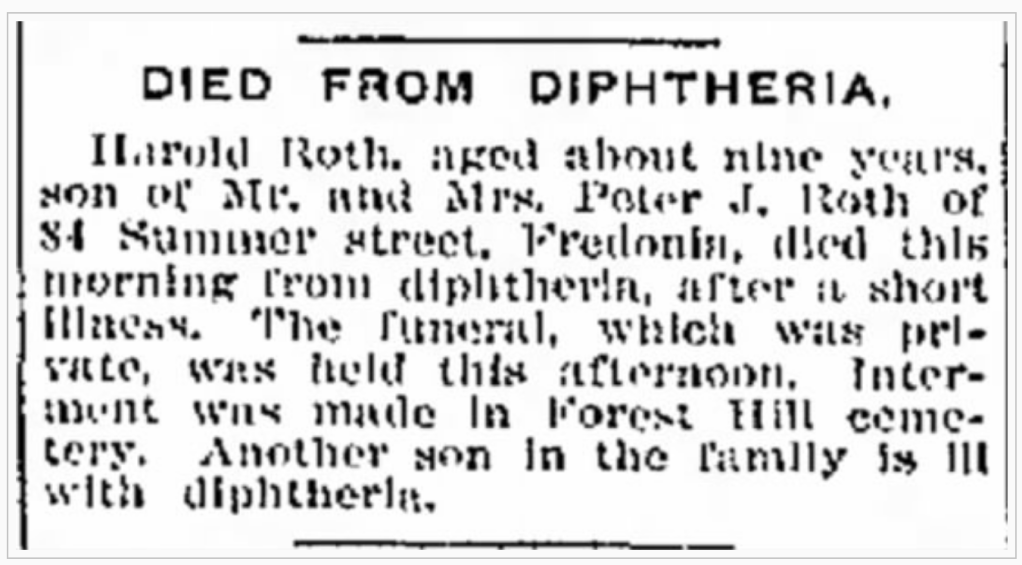
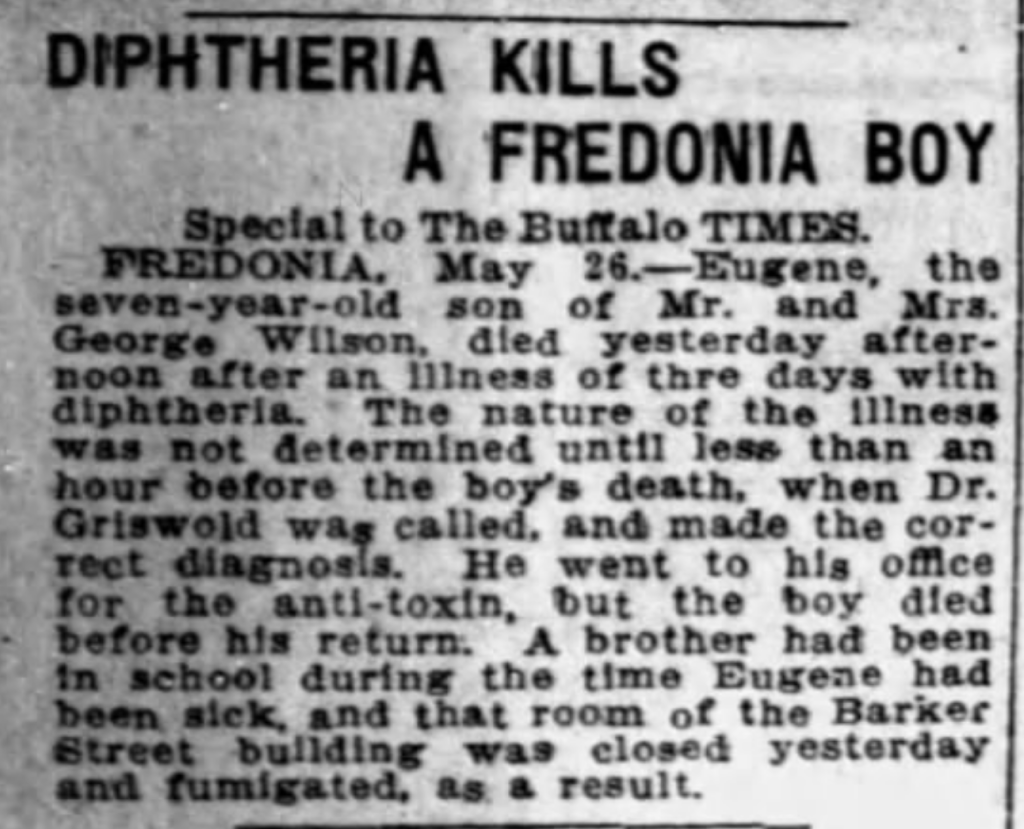
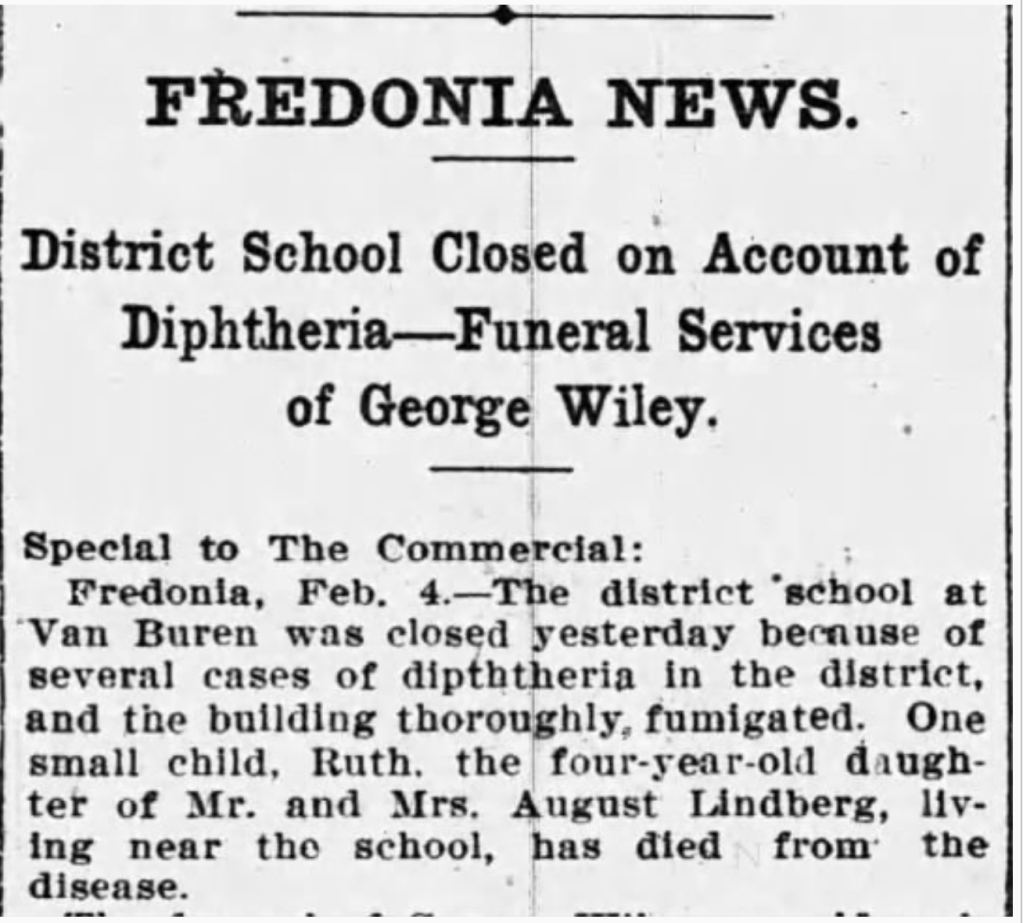
Three months earlier, the school district was closed because of several cases of diphtheria. You can understand why Laura Squire did not want to send Mary back to school until she was forced to. It was a scary time to live and have kids with so many early childhood diseases that we can now avoid thanks to vaccines.
 Genealogy Adventures