Lately I have been researching the family of William Squire (1772-1857, KGVR-8NH), of London, England, who is my 5th great grandfather. I am currently working through everything I can find out about his children. His second oldest child, Mary Squire (2Z3X-BHD) married Henry Graves (2Z3X-B63) on 6 Jan 1831 in St. James’s Piccadilly Anglican church in London. On each of the census records for the family, Henry’s occupation was listed as publisher of engravings, which I didn’t really understand. But I could tell the family was well off because they had three to four live-in servants, including a governess, cook, and one or two maids. Then I found an obituary for Henry that said he was the well-known printseller and the son and grandson of notable London printsellers and the brother of the distinguished line engraver, Robert Graves.
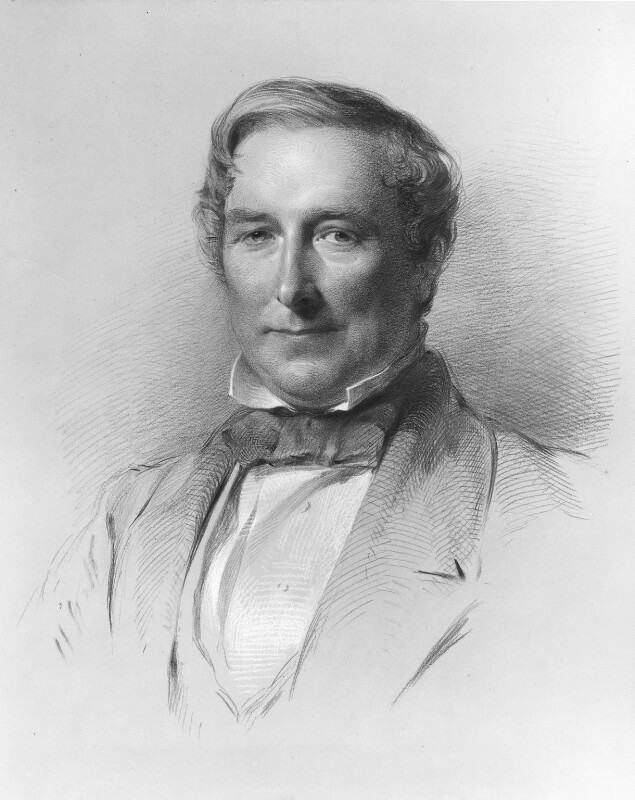
©National Portrait Gallery, London, used by permission
A Google search led me to Wikipedia entries for Henry and Robert Graves and then to the National Portrait Gallery, London website, which has a collection of portraits of Henry, Robert, and their father, also Robert. It also has a collection of portraits they engraved and published.
- Portraits of Henry Graves
- Portraits published by Henry Graves
- Portraits of Robert Graves (1798-1873)
- Portraits engraved by Robert Graves (1798-1873)
- Portraits of Robert Graves (d. 1825)
- Portraits by Robert Graves (d. 1825)
- Portraits by R Graves (which probably are by either the father or the son)
Henry Graves started out, at age 16, as an assistant to an art dealer. He later joined another company and was the manager of their print department. When that firm failed in 1825, he and several others acquired the business, with various partnerships until 1844, when Henry became sole proprietor of the firm Henry Graves & Co. The 1871 UK Census notes that Henry had 11 employees. He also was one of the founders of ‘Art Journal’ and ‘Illustrated London News,’ which began publication in 1842 and was the world’s first illustrated newspaper. Its extensive coverage of the royal family’s tours, lives, and deaths earned the paper popularity.
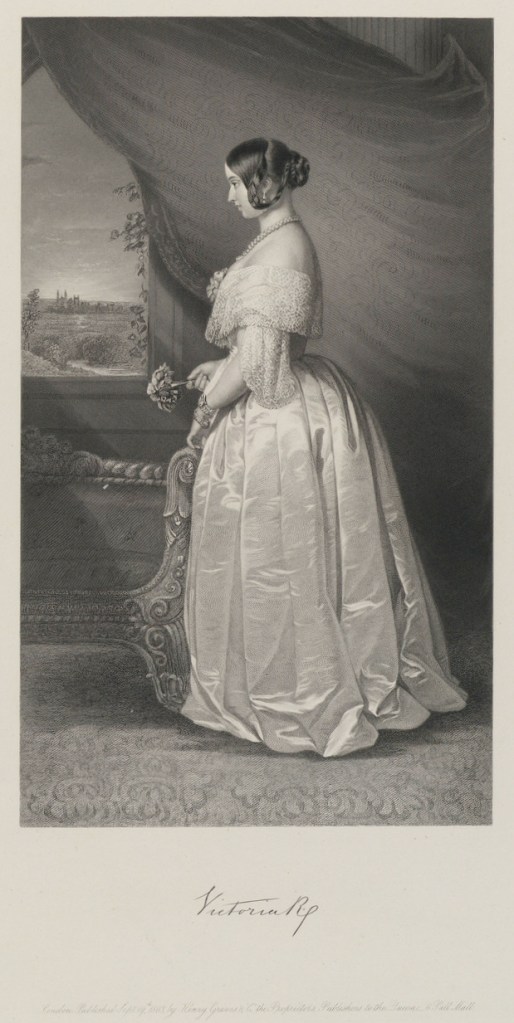
The caption at the very bottom that you can barely see says, “London. Published Sept 19th 1863 by Henry Graves & Co., the Proprietors, Publishers to the Queen at Pall-Mall
Henry Graves and Co., like many commercial art galleries, began as a print publishing business, and gradually moved into the exhibition and sale of paintings and other fine arts. There are 230 portraits associated with Henry Graves & Co at the National Portrait Gallery, London. Graves published an immense number of fine engravings from pictures by Turner, Wilkie, Lawrence, Constable, Landseer, Faed, Frith, Grant, Millais, and other contemporary painters. He specially devoted himself to the reproduction of the works of Sir Edwin Landseer, employing the best engravers of the day, and paying the artist himself more than £50,000 for copyrights. He also issued valuable library editions of the works of Reynolds, Lawrence, Gainsborough, Liverseege, and Landseer.
At a time without photographs, scanners or copy machines, line engravers and printsellers enabled art and images of events to reach a much wider audience. Henry died in 1892, at the age of 85. Henry’s younger son, Algernon, of whom I have done very little research so far, carried on the business. However, by the end of Henry’s life, photography was beginning to replace the need for engraved prints.
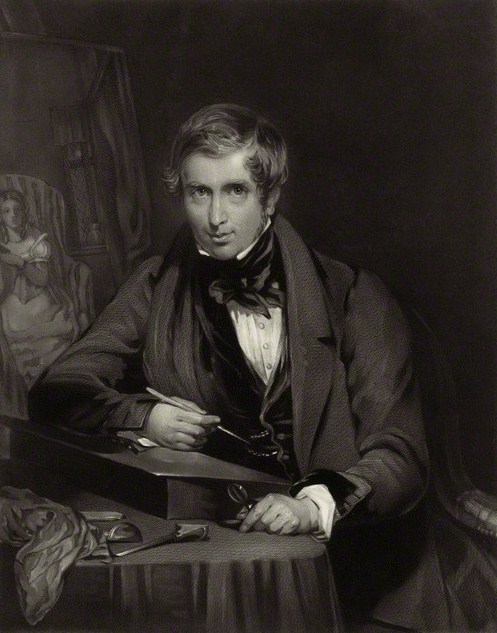
© National Portrait Gallery, London, used by permission
Robert, Henry’s older brother, pursued the other half of the business, engraving. He became the pupil of John Romney, a line engraver, in 1812, when he was 14 years old. He initially focused on pen and ink facsimiles of rare prints and had much success, according to his biography in the Oxford Dictionary of National Biography. However, he later decided to devote all his attention to engraving, and he masterfully recreated the works of many artists. A contemporary art critic wrote that his plates (that he engraved) are generally characterized by their refinement and delicacy and in these qualities they can scarcely be surpassed. In 1836 Graves was elected an associate engraver of the Royal Academy and he presented as his diploma work a portrait of Lord Byron from the original by Thomas Phillips. He created many plates to print works by famous artists. His last was a portrait of Charles Dickens, from the original by William Powell Frith, for a book about novelists. He died in 1873, at the age of 74.
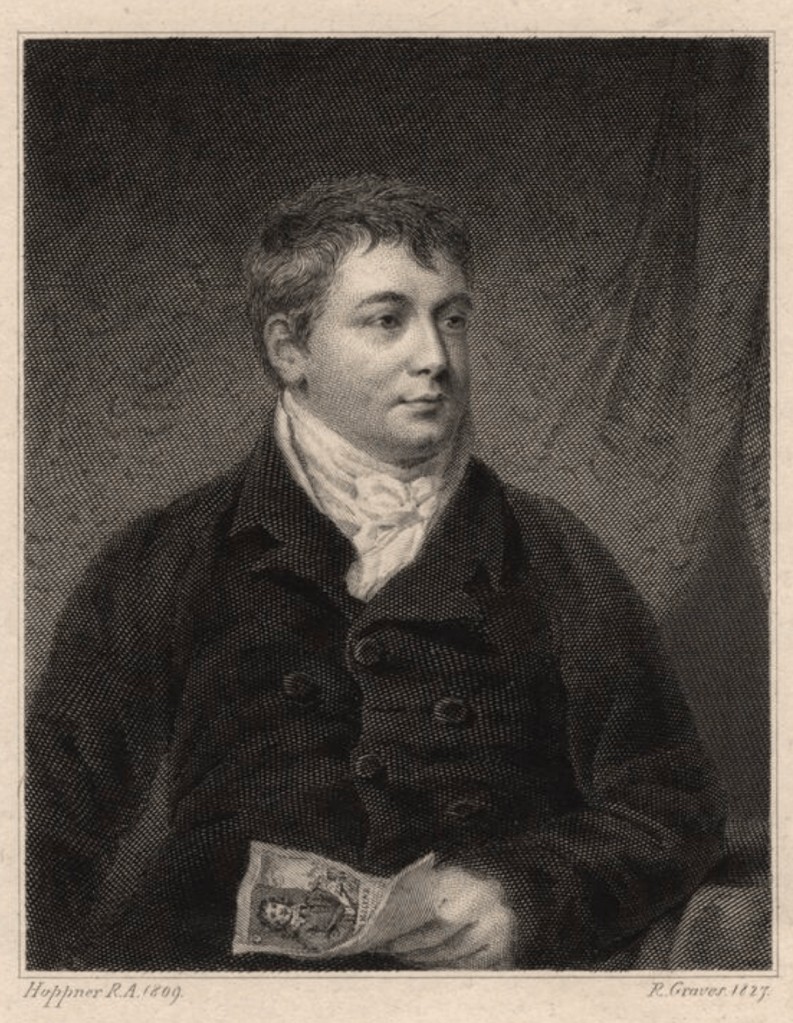
Line engraving, 1827, by his son Robert Graves
©National Portrait Gallery, London, used by permission
 Genealogy Adventures