Posted in Allred, Photo, Squire

Honoring Those Who Served Their Country

This week in the United States we mark Veterans’ Day, which is known as Armistice Day or Remembrance Day in other countries.  It originally marked the anniversary of the end of World War I; the cessation of hostilities between Germany and the Allies took affect at the 11th hour of the 11th day of the 11th month.  Now the day honors all those who have served in the Armed Forces and remembers those who gave their lives for their country. I don’t think Veterans’ Day gets as much attention in the United States as Remembrance Day does in the countries more deeply affected by World War I.  In many of the Commonwealth counties, especially the United Kingdom, Canada, Australia, and New Zealand, members of the military wear a red poppy flower on their uniforms for several weeks before Remembrance Day to remember whose who fought and especially the millions who died.
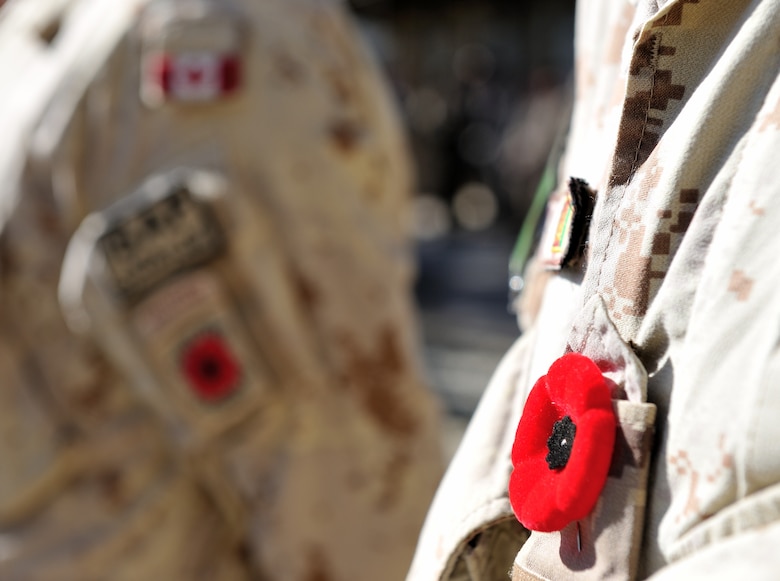
Canadian soldiers with a poppy flower on their uniform to mark Remembrance Day

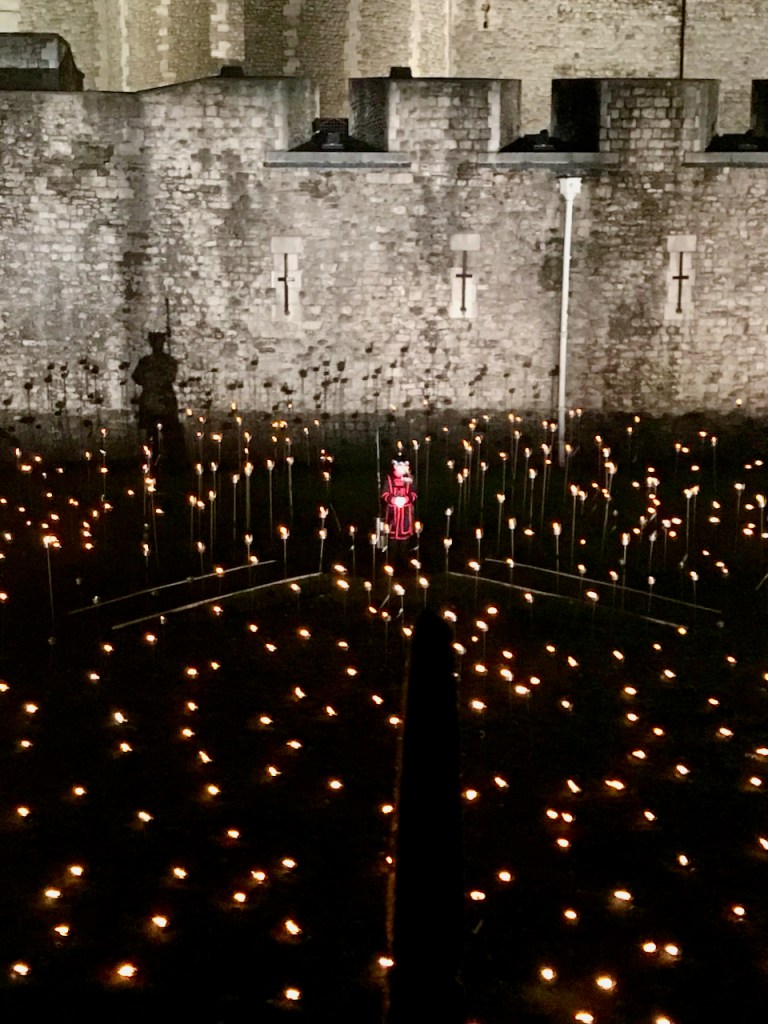
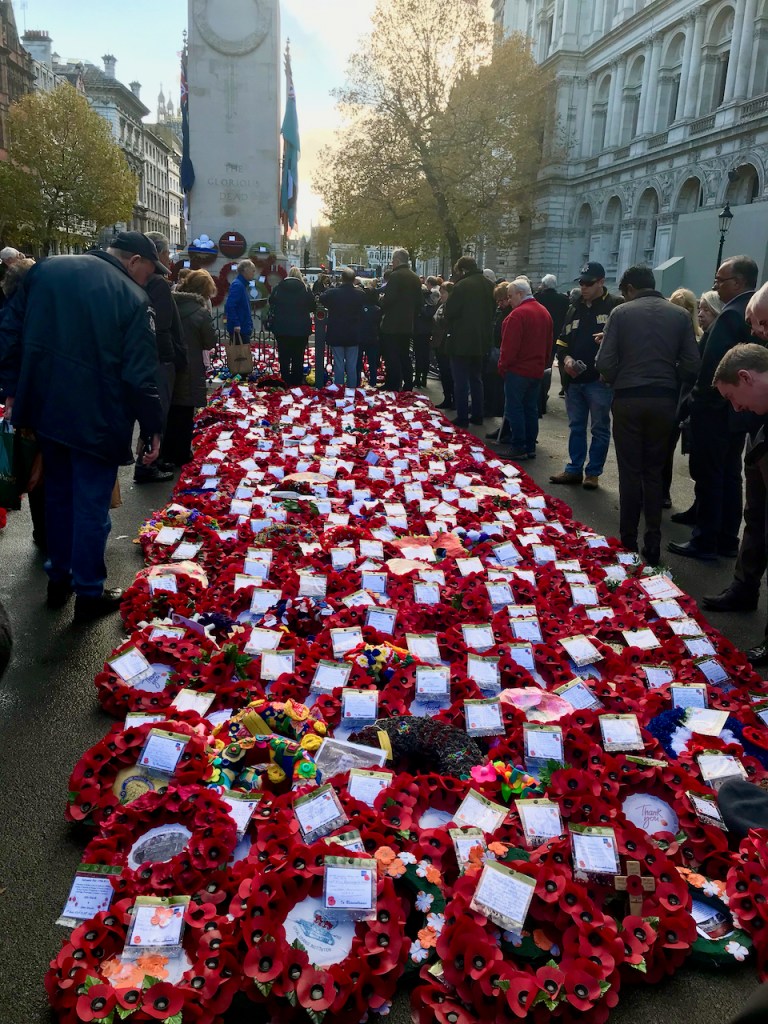
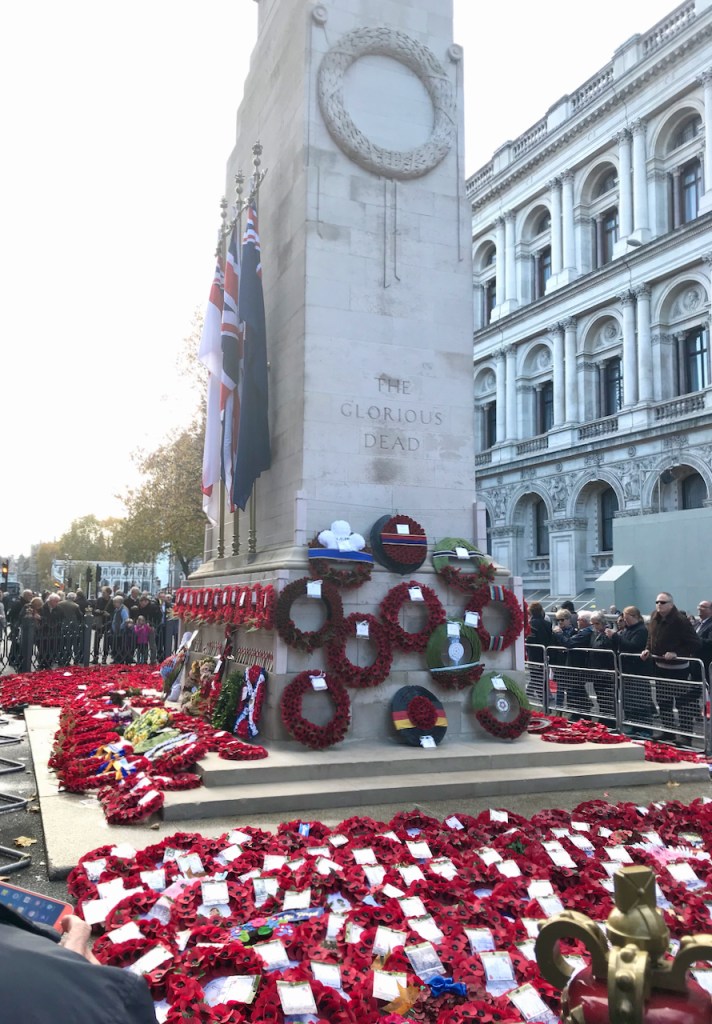
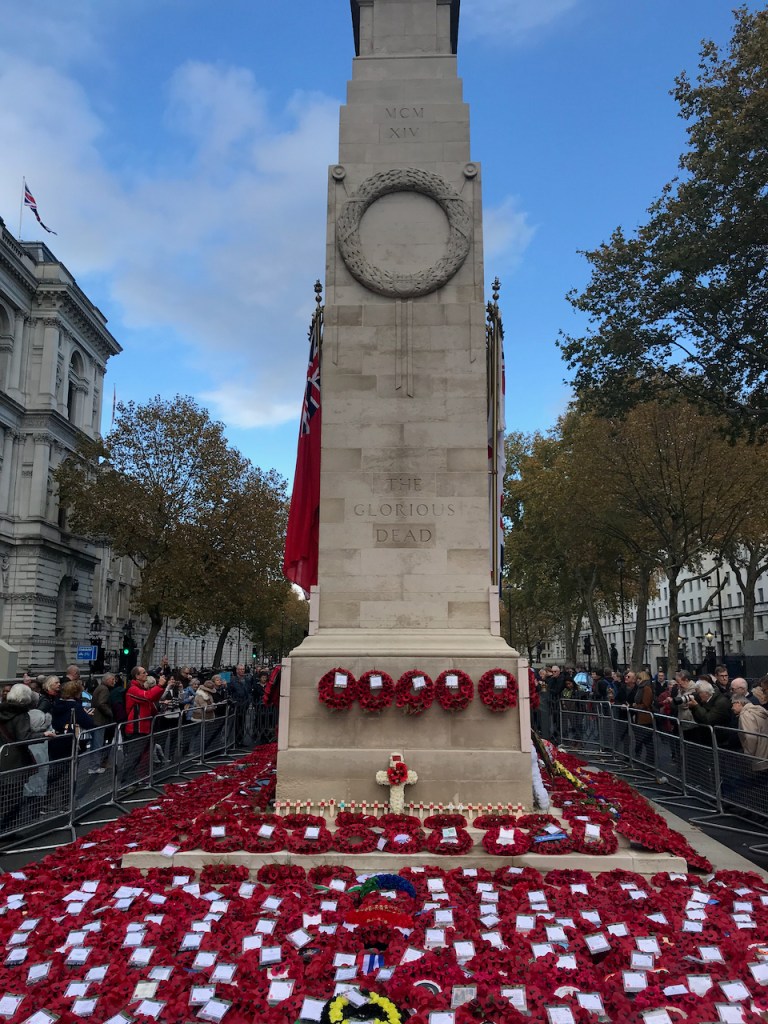
I had the privilege to be in London on 11 November 2018, the 100th anniversary of the end of World War I, and was able to see the scope feeling that Remembrance Day still evokes there.  To mark the centenary of the end of the First World War, an installation at the Tower of London filled the moat with thousands of individual flames: a public act of remembrance for the lives of the fallen, honoring their sacrifice.  Each evening over the course of four hours the Tower moat was gradually illuminated by individual flames. The visual spectacle was accompanied by the sounds of whispered voices, representing the shifting tide of political alliances, friendship, love and loss in war.  Seeing the installation was a moving and haunting experience.  On the day after Remembrance Day, I went to the Cenotaph, a memorial honoring those who died in World War I, that was set up in 1920, where lots people had laid wreaths the day before.
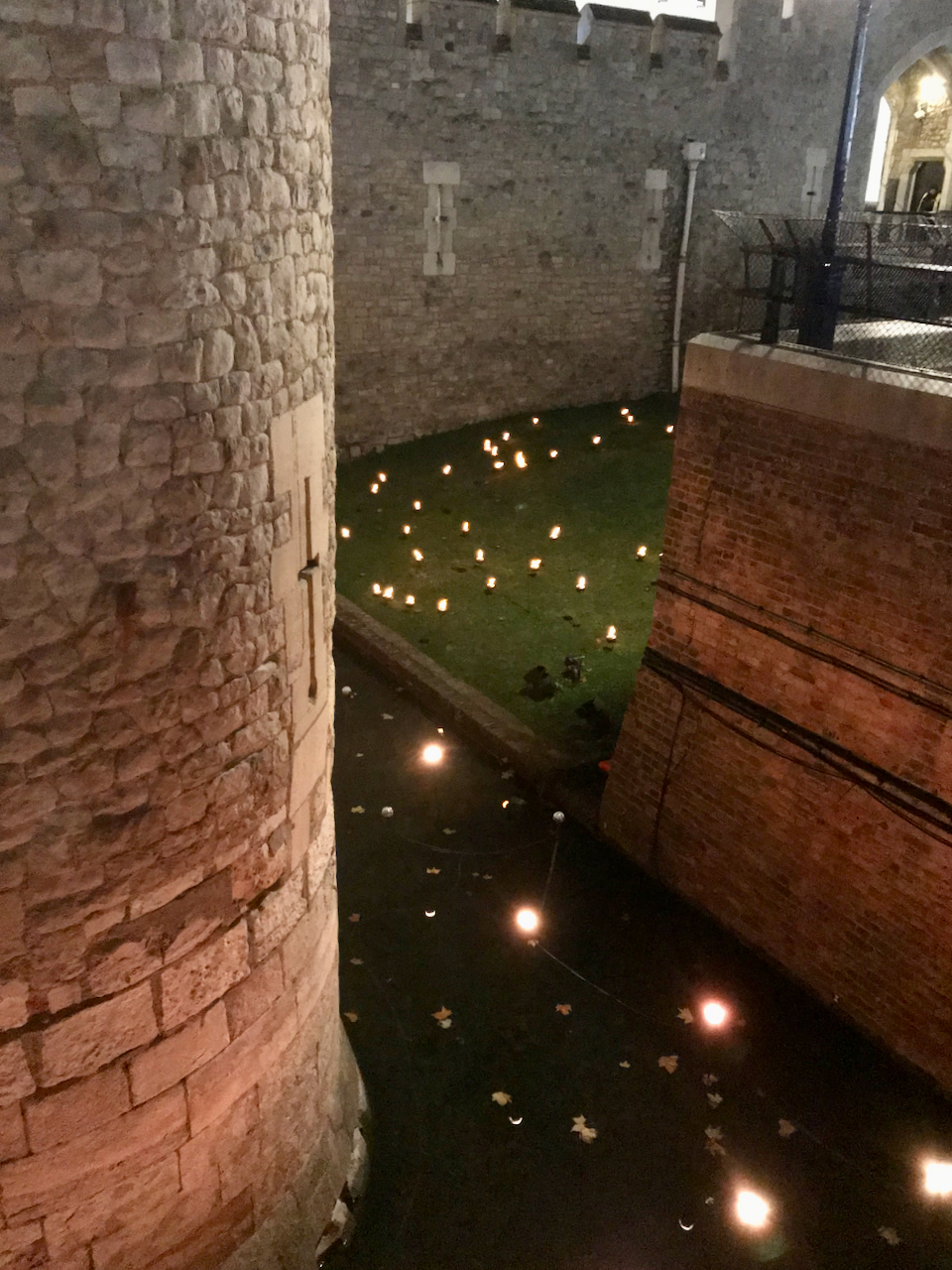
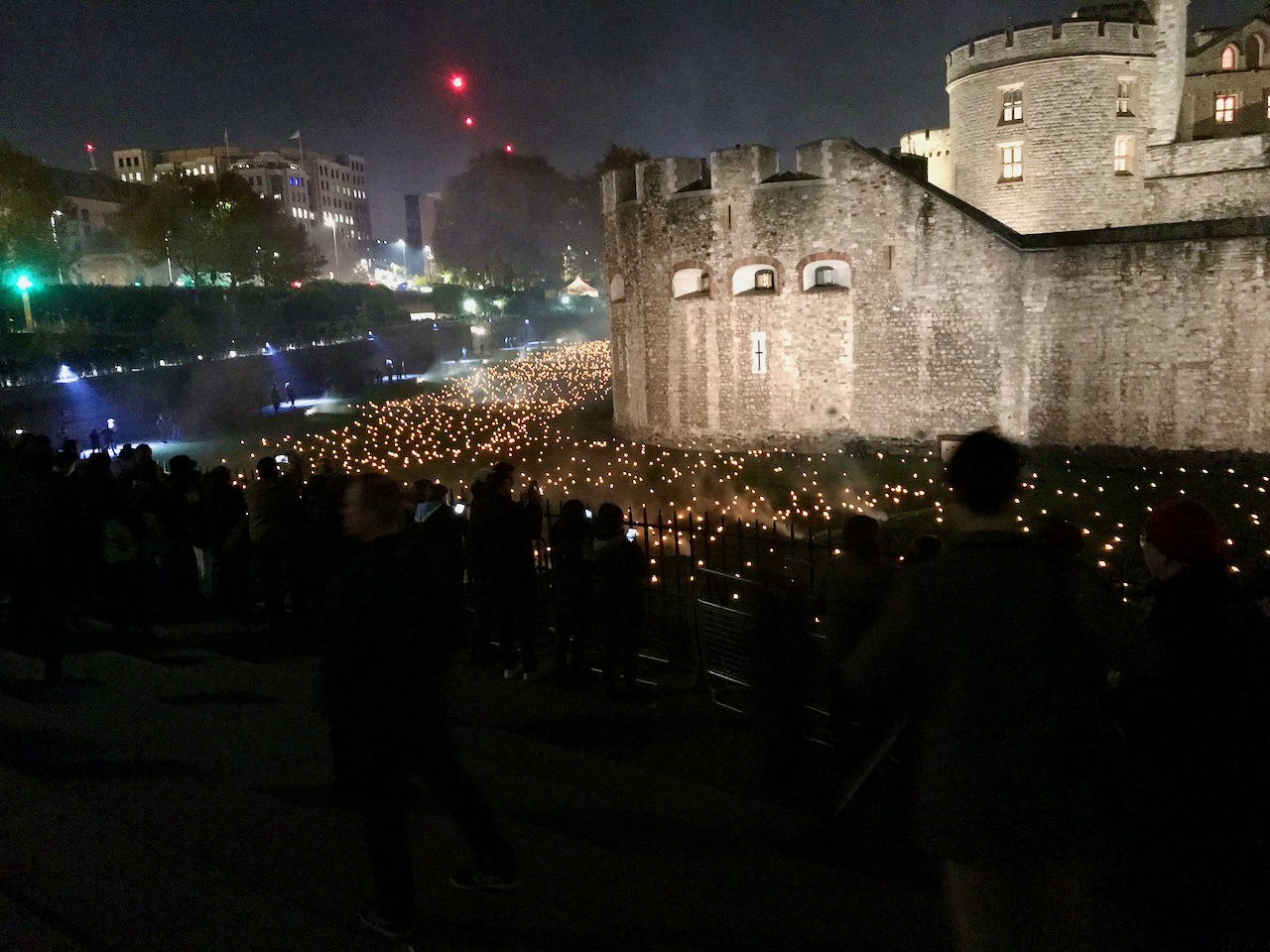
I honor all who have served in the Armed Forces to protect their families, freedom, and peace.  I have been touched by the military service I had discovered while researching my family, and will share a few examples of their service below, particularly those who served during World War I.

George Sydney Tucker (1973-1932) & William Henry Tucker (1881-1916)

During World War I, William joined the British Army, leaving behind his wife, son, and daughter.  He was 33 years old. He arrived in France on 24 January 1915.  He started as a private in the 16th Battalion, London Regiment and was later promoted to a second lieutenant in the 12th Battalion, London Regiment (the Rangers), the same battalion in which his brother, George, was also a member.   He was killed on 1 July 1916, during the first day of the Battle of the Somme and is buried there.  
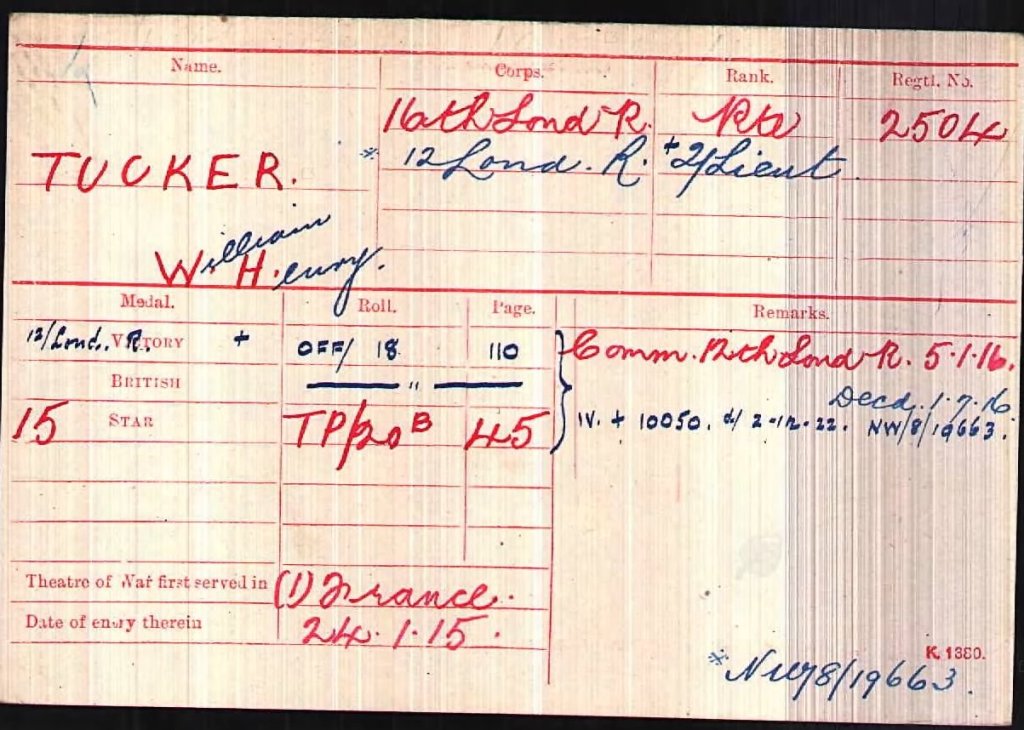
William’s service record, noting rank, unit, and medals he earned

The Battle of the Somme took place between 1 July and 18 November 1916 on both sides of the upper reaches of the River Somme in France. More than 3 million men fought in the battle, and 1 million men were wounded or killed, making it one of the bloodiest battles in human history.  The first day was also the worst day in the history of the British Army, in terms of casualties, suffering 57,470 casualties, including 19,240 killed in action.  In the end, British and French forces penetrated only 6 miles into German-occupied territory and they failed to achieve their key objectives.
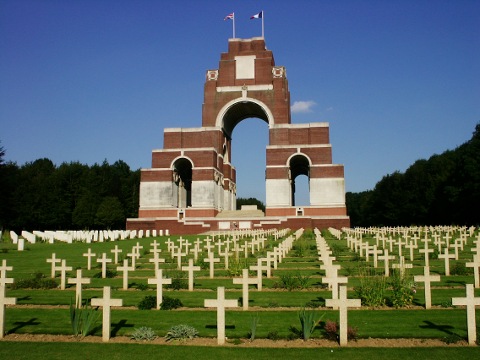
Thiepval Anglo-French Cemetery, where William is buried

William’s older brother, George, also served in the British Army during World War I. In May 1915, he was a captain in the 12th Battalion, London Regiment (the Rangers). By December 1915, he had been promoted to a major. The regiment saw intensive action on the Western Front in the First World War (including the Battles of the Somme and Passchendaele). Unlike his brother, George survived the brutal war and returned to his family in England.
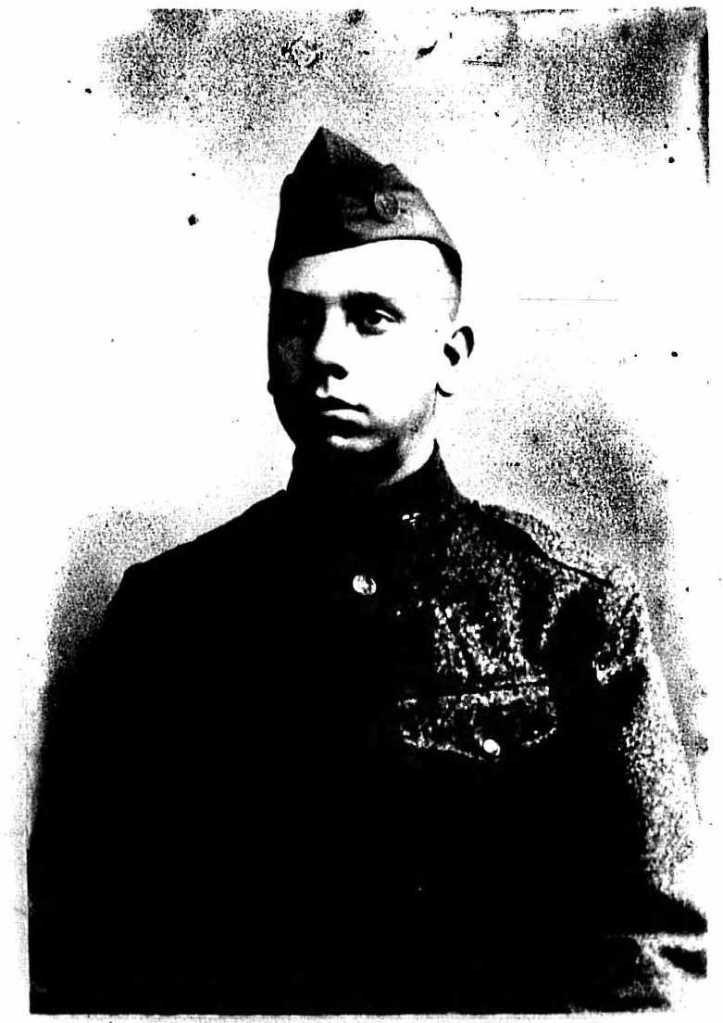
Alma Sharp Barker (1897-1980)

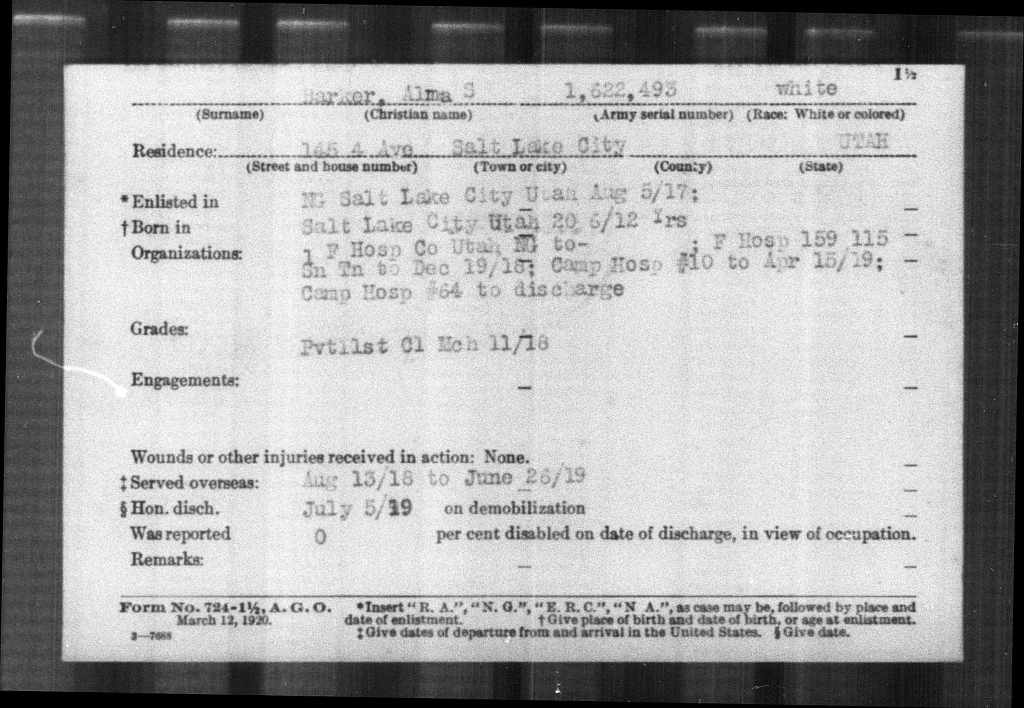
Alma joined the Utah National Guard in 1917, at age 20, just before the National Guard unit was mustered into the United States Army, when the United States entered World War I.  He served for 2 years.  First at Camp Kearny, California and later in France, in the Medical Department.  He arrived in France in August 1918—about 2.5 months before the war ended—and was on his way to the Front when the Armistice was signed.  He recorded in his autobiography that there was not much for the medical department to do at first, when he arrived, but then an influenza outbreak occurred among the soldiers and he was very busy.  For a while, he was a nurse in the contagious ward. Later he worked in camp hospital administration because he could type quickly.  He stayed in France until June 1919, and was honorably discharged in July 1919.  During World War II, he served his country again, this time in the Coast Guard Reserves in California.
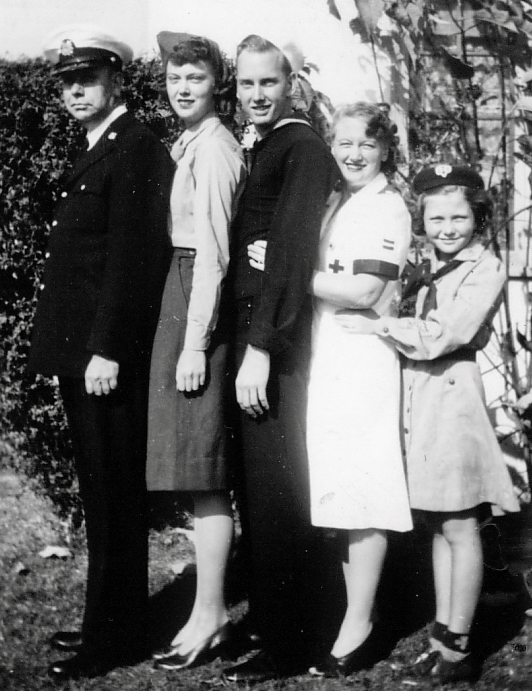
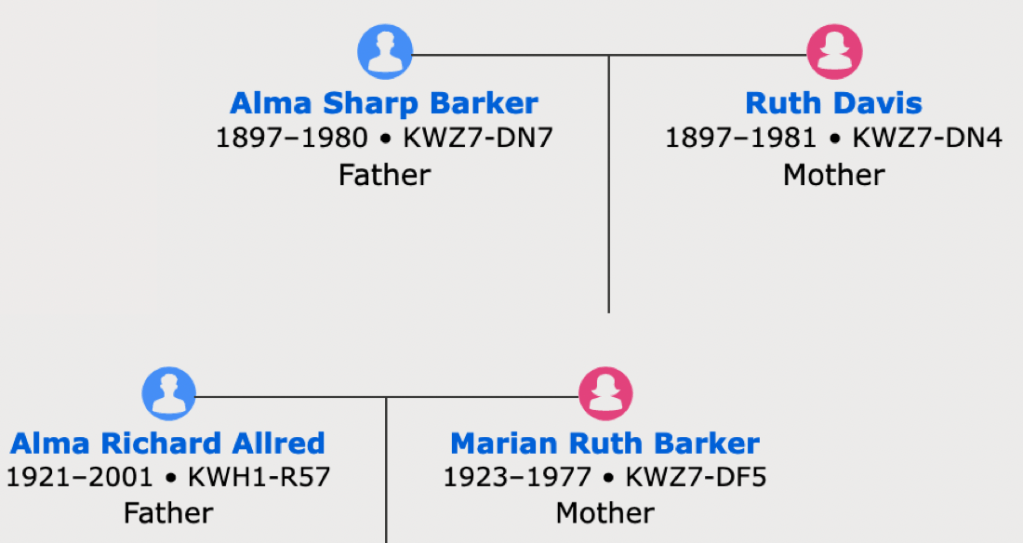
1944: Alma Barker (Coast Guard Reserves), Marian Barker (Civil Air Patrol), Wayne Barker (Navy), Ruth Davis Barker (Red Cross), Marjorie Cecilia Barker (Girl Scout)

William Squire (1809-1846)

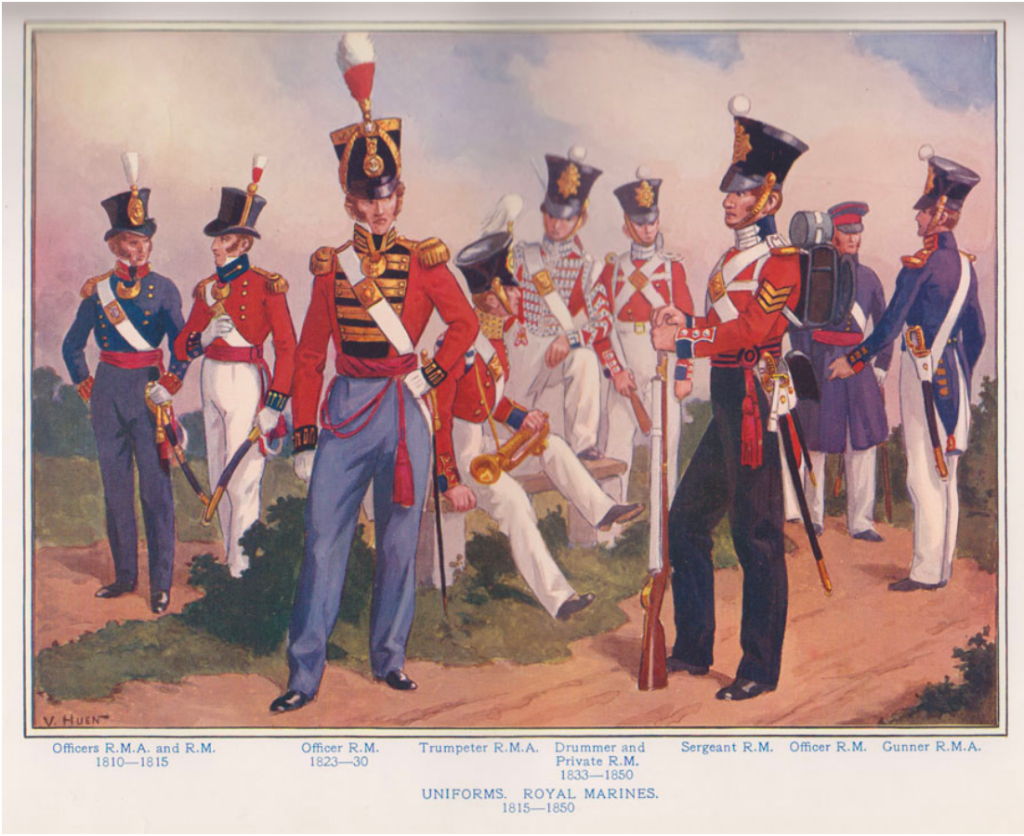
William probably joined the British Navy or Royal Marines as a teenager or young adult. In his 1844 will, he states he was in Her Majesty’s service in the Royal Navy.  Later, his death is noted in a Navy obituary list as a member of the Royal Marines.  In late March 1846, William became the Master (the senior non-commissioned rank) aboard HMS Styx, operating off the western coast of Africa.  In May 1846, the Styx was at Ascension, a very small island in the middle of the Atlantic Ocean used by the British Navy as a resupply point.  The ship operated along the coast of Africa to intercept and capture slave ships. 
In late October, much of the crew of HMS Styx became ill, to such an extent that the Styx borrowed the surgeon from HMS Flying Fish to help deal with the outbreak. Sadly, William died of “coast fever” on 30 October, when he was 37 years old.  He likely was buried at sea.  It took months for the news to reach England; an account of the illness was reported in a Southampton newspaper in late February 1847.  William’s will was not proved until 22 April 1847.  Before news of his death reached England, William was included among a batch of promotions announced on 9 November 1846, when he was promoted to master, a senior non-commissioned officer rank, which suggests he must have been in the Marines for some time.
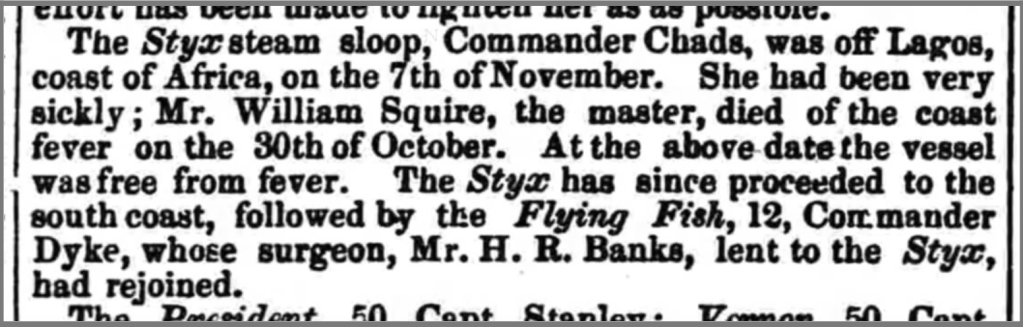
27 February 1847: News of William Squire’s death at sea
Posted in Peterson, Photo, Squire

More Memories Added To FamilySearch

I’ve been scanning a few documents and photos from a book of remembrance that belonged to Jay Peterson and possibly his mother before him. It’s a bit of a random collection of items that I have added to FamilySearch lately.

  • Jay Peterson:
    • Page with vital data and short autobiography (in 2 parts)
    • Book of Remembrance entries for key moments from birth to marriage
    • Peterson family origin and coat of arms info
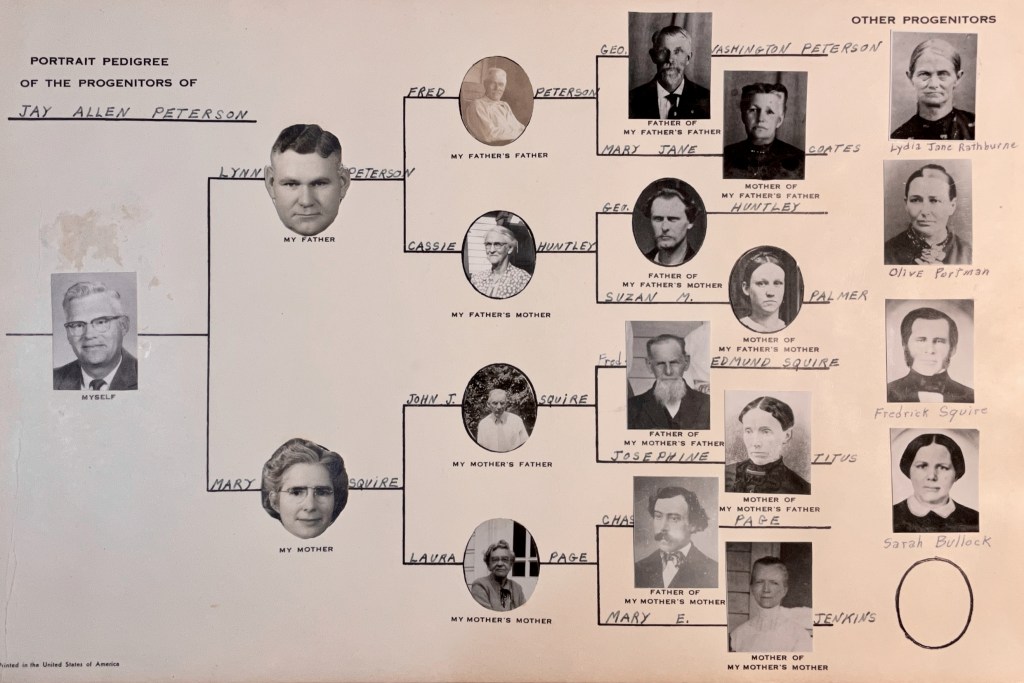
    • Portrait pedigree charts for Jay and his ancestors
    • Small pox vaccination card
    • Chart of major world religions that Jay had made (very detailed and handwritten)
Lynn Peterson
Posted in Photo, Squire

Diphtheria Outbreak Breaks Family’s Heart

From Mary Josephine Squire’s (KWZV-7RH) autobiography:

“While we were living in Fredonia, N.Y., my brother Page contracted diphtheria in school. If I remember correctly (I was 7 1/2 at the time), he came home from church sick. It was his 9th birthday, 4 May 1909, and he had just joined the Methodist Church that day. He was desperately sick, and one week later he died. There was no funeral because he had died of a contagious disease.”

“My father was the only person beside the hearse driver who went to the cemetery. The picture is still vivid in my mind of the hearse driving away on that cold, windy muddy May day with all that was left of our darling brother. The only glimpse Raymond or I had had of Page since that fateful Sunday was through a window.”

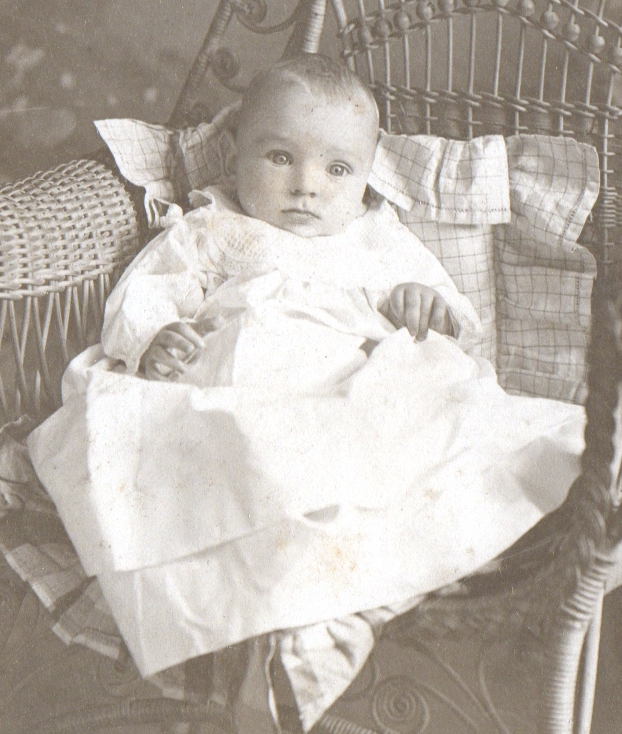
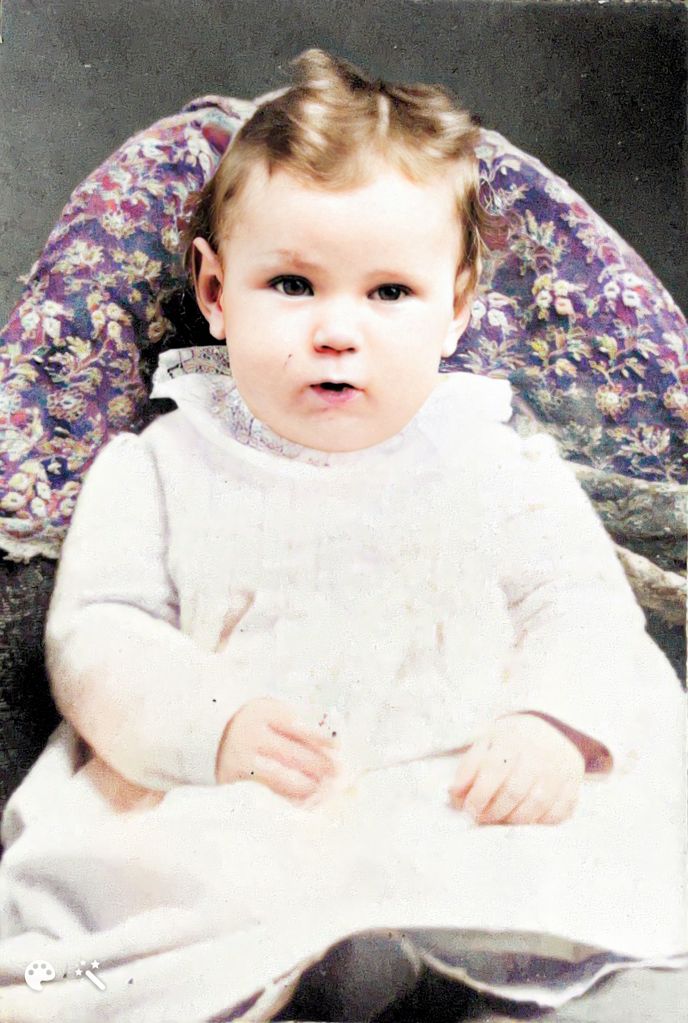
Edmond Page Squire as a baby

“Page was very like his father, sweet, kind, and unselfish. Our loss was surely Heaven’s gain! Many years later my mother told me that just before Page died, all of a sudden he sat straight up in bed and seemed to look off in the distance and smiled and seemed to look radiant. Then he lay back down and died. Perhaps he saw a chariot and angels coming to get him.”

“My mother took every precaution and Raymond and I did not contract the disease. But since Page had contracted the disease at school, mother would not send me back to school until the truant officer came and enforced attendance.”

The outbreak of diphtheria in Fredonia was not like the pandemic of coronavirus we are having in 2020. It was a smaller outbreak, but diphtheria outbreaks happened regularly in the United States and around the world when Mary was growing up. Like coronavirus, it is a respiratory disease (though caused by a bacteria) with some similar symptoms, including sore throat, loss of appetite, and fever. It is also spread similarly, from person to person, usually through respiratory droplets, like from coughing or sneezing. Before a vaccine was invented in the 1920s, diphtheria was one of the most feared infectious diseases, with mortality rates as high as 40 percent, and was a major cause of childhood mortality.

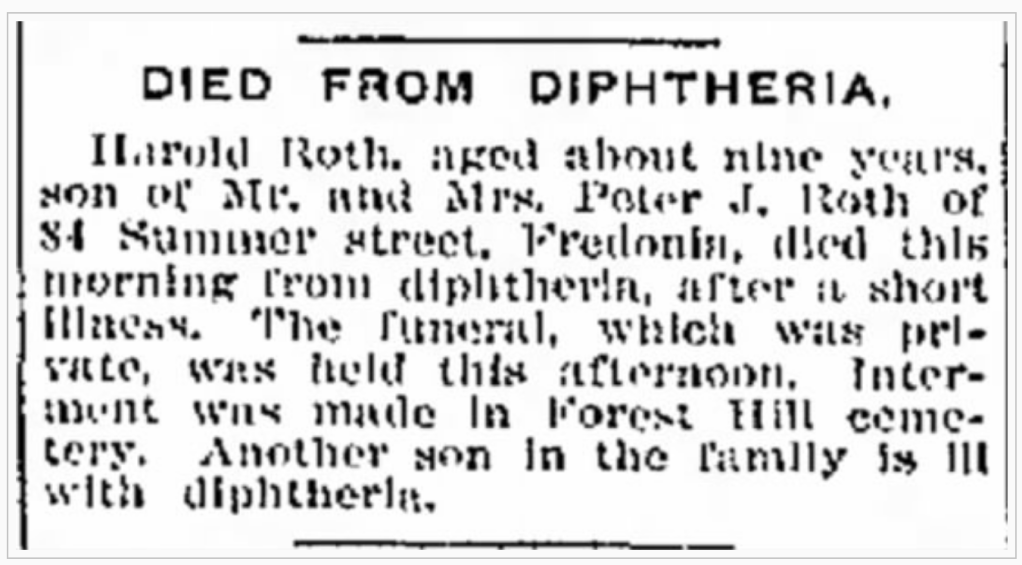
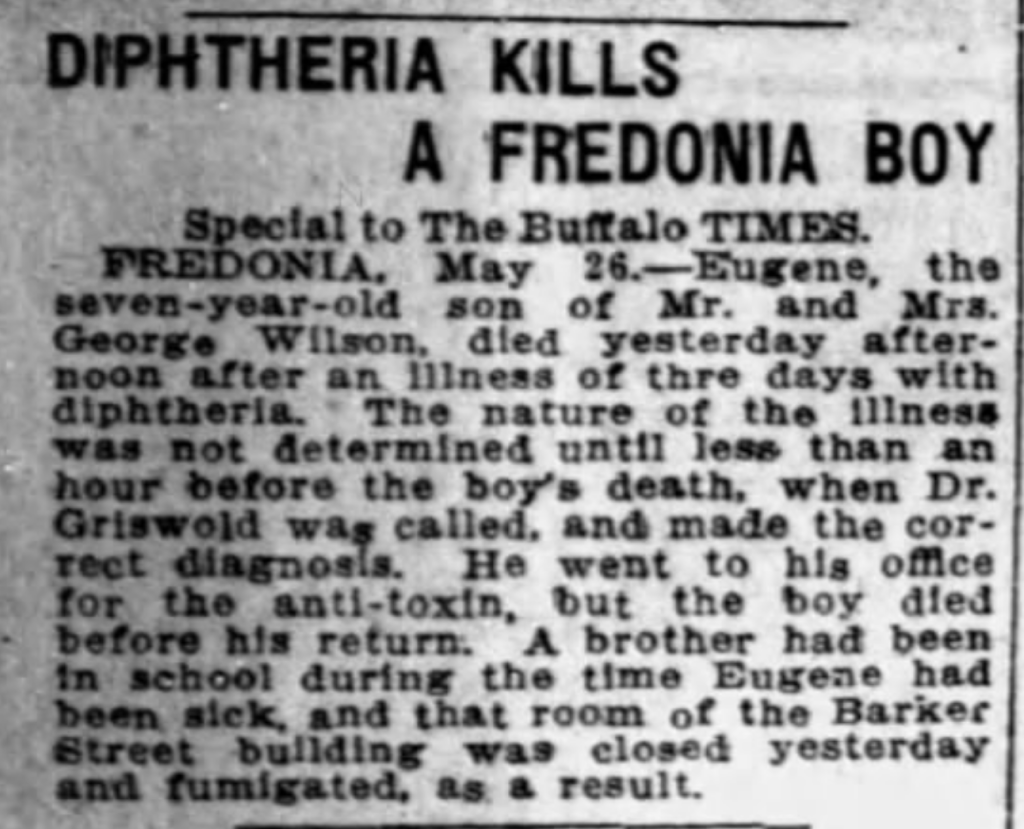
At least a few other children died from the outbreak that killed Page Squire. I couldn’t find any news articles about his death, but I found a few about other children who died around the same time.

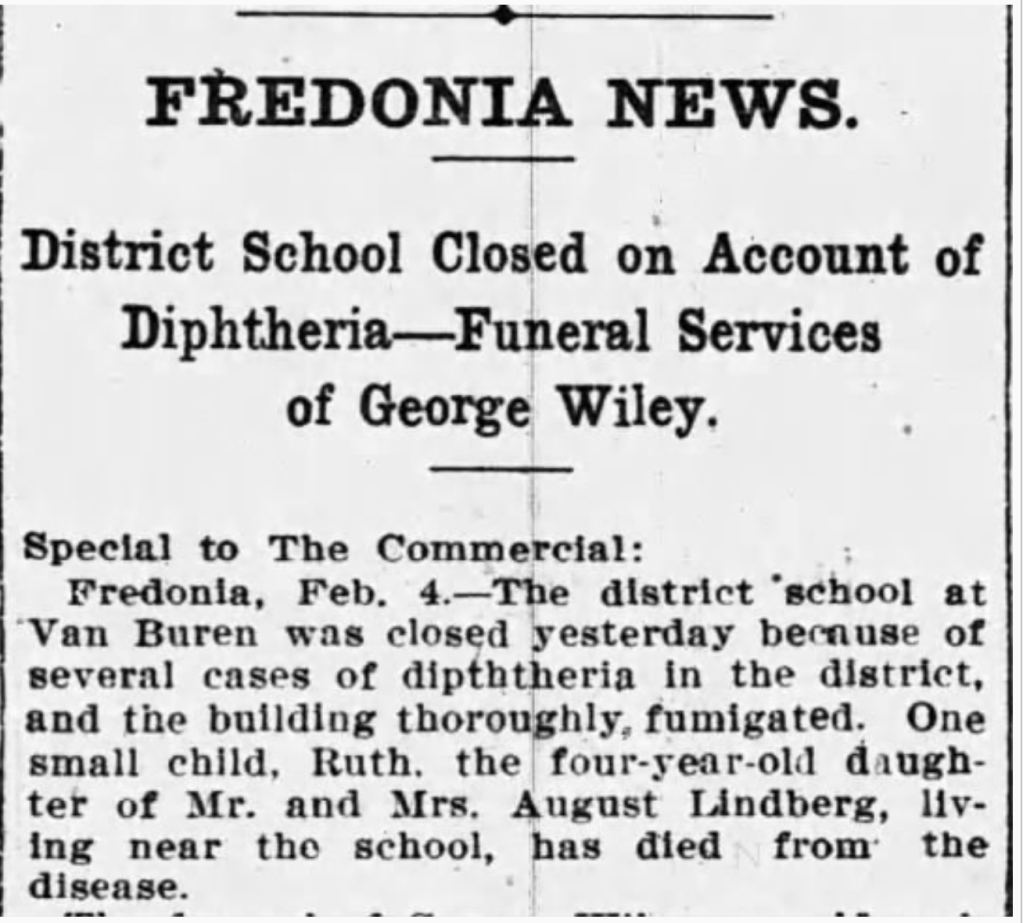
Three months earlier, the school district was closed because of several cases of diphtheria. You can understand why Laura Squire did not want to send Mary back to school until she was forced to. It was a scary time to live and have kids with so many early childhood diseases that we can now avoid thanks to vaccines.

Posted in Photo, Squire

The Early Years – Mary J Squire

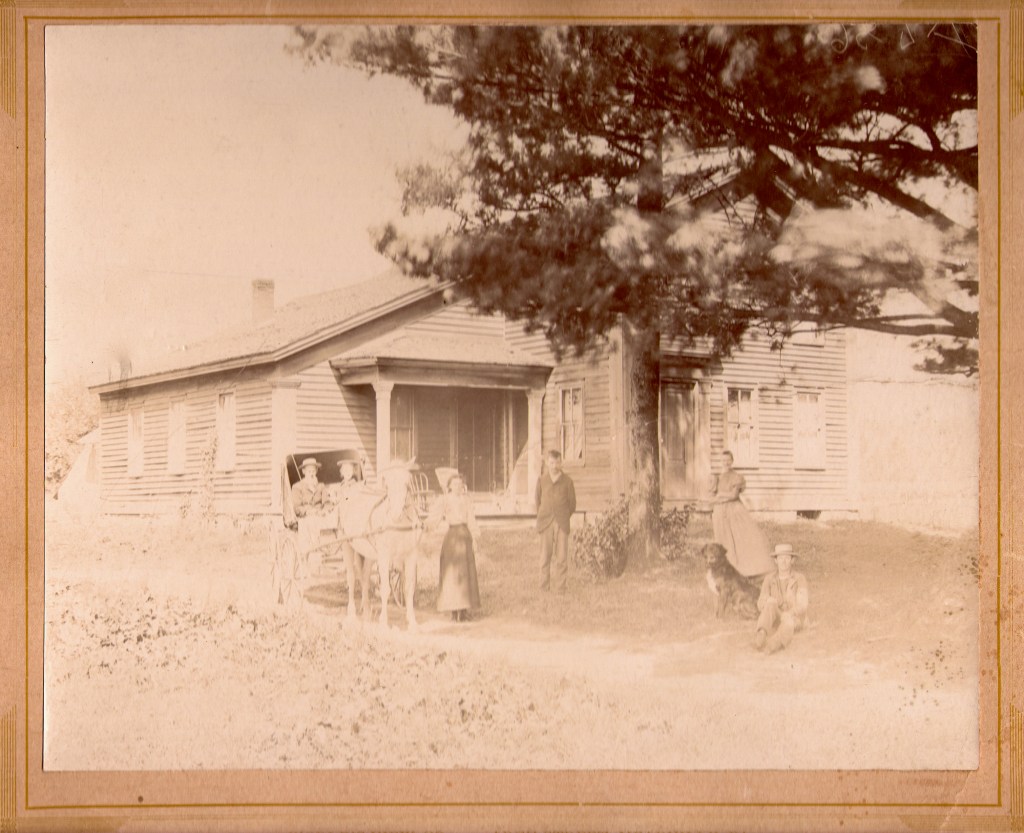
In her autobiography, Mary Josephine Squire (KWZV-7RH) wrote about often spending time at her grandparents’ house as a child. She was born in their house and often visited their dairy farm, 1 mile east of Spartensburg, Pennsylvania. “To arrive at this farm from Spartensburg, one had to go up over a hill and cross a high iron bridge over a creek. The farm was just on the other side. To me the bridge looked as if it rose about a mile into the sky.”

“The house was 30 or 40 feet from the road, and this front yard had several huge pine trees between two of which was hung a hammock in summer. On hot summer evenings or Sunday afternoons after Church, dinner and chores, one of the men often took a snooze in this hammock. But the rest of the time my brothers and I could enjoy it.”

Edmond Squire’s Farm at Spartensburg, Pennsylvania
Unfortunately, I don’t know who the people in the picture are

“Summers were happy times on the farm. We played with the Collie dog, Shep, or with the Gould children who lived a short distance away, picked four leaf clovers from the big field which came clear up to one side of the house, or sometimes went across the field to visit our great grandfather, Joseph Morse Jenkins.”

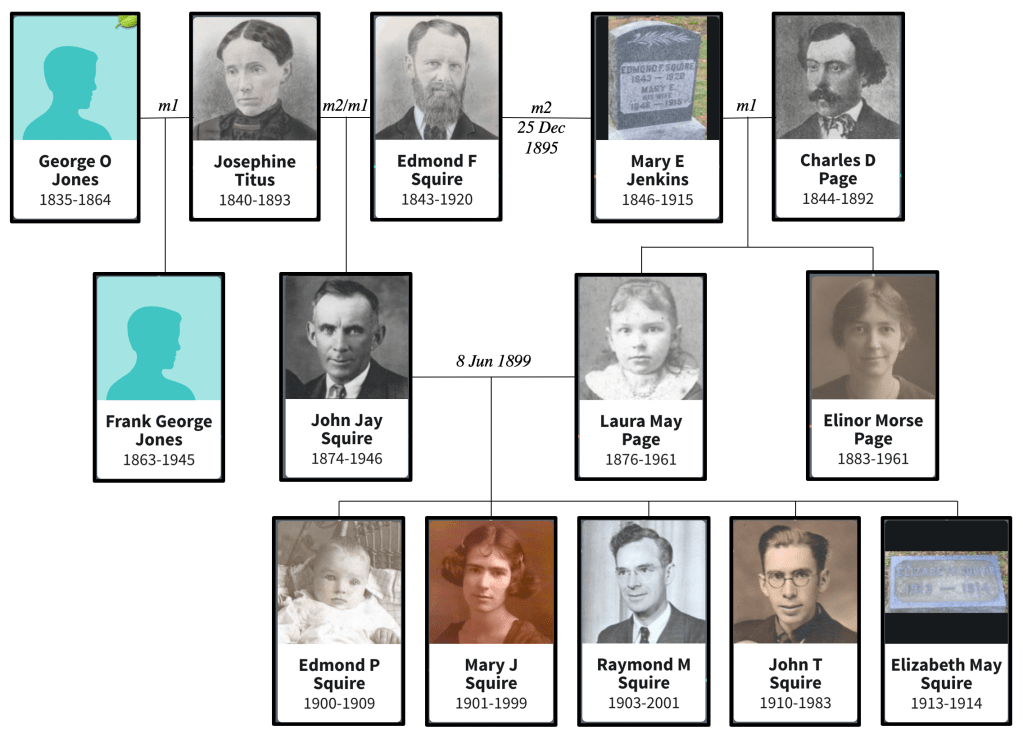
“It was quite confusing when my playmates spoke of their different grandfathers and grandmothers as I didn’t know anyone had more than one set. My brothers and I only had one set and wondered how come others had more. My father’s father had married my mother’s mother when my parents were in their teens. They grew up together and were brother and sister as well as husband and wife.”

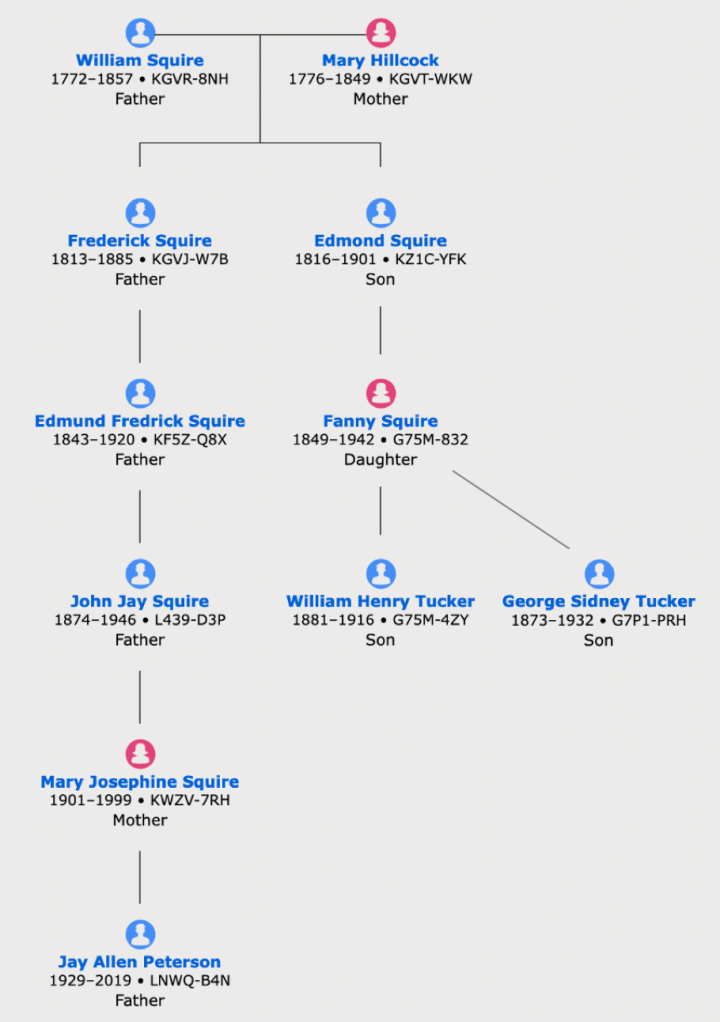
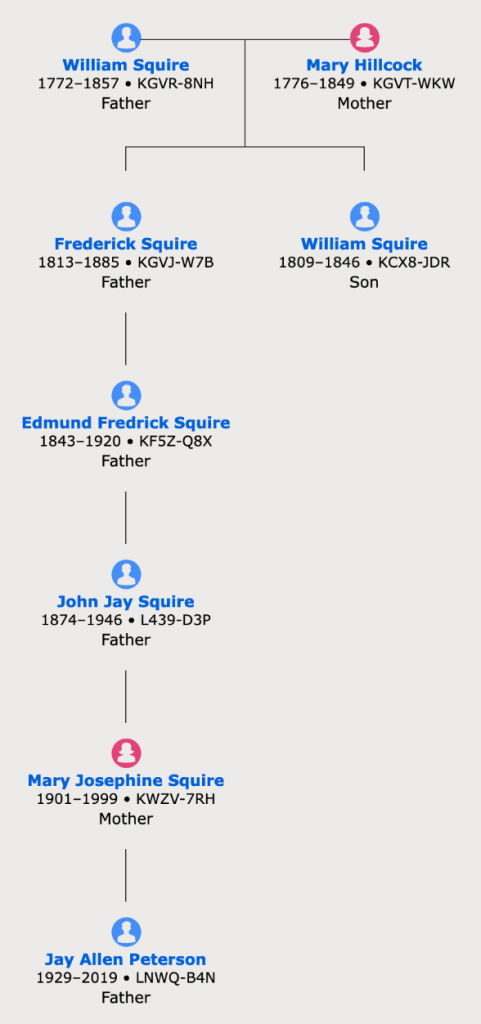
In case you didn’t catch all that, here is the chart.

John Jay Squire married his step-sister Laura May Page three and a half years after their parents married each other. But John was 21 years old and Laura was 19 years old when their parents married, so it is not like they grew up in the same house together.

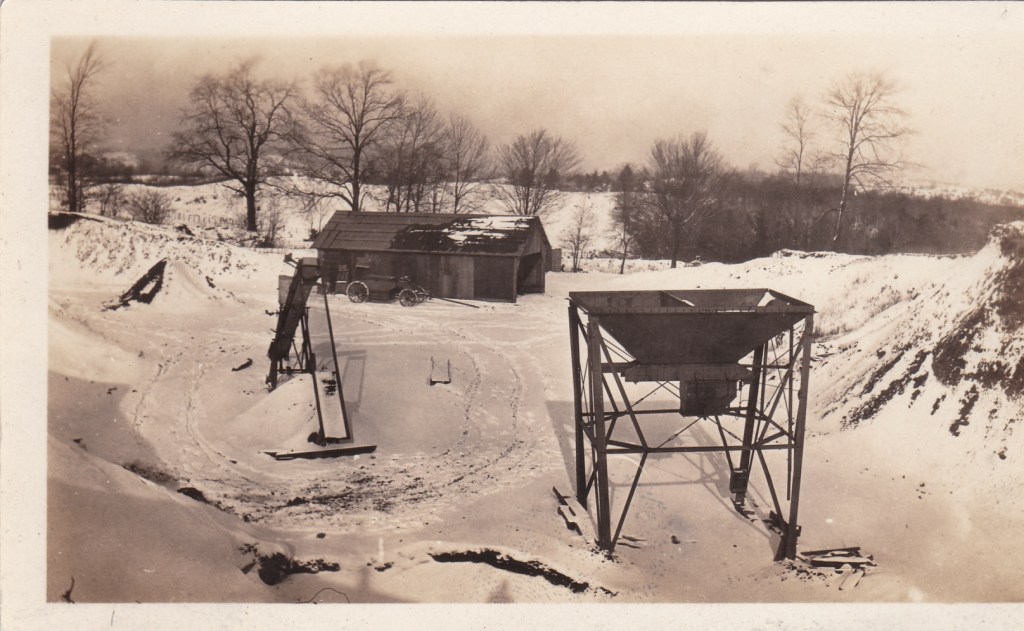
“In December of 1912, at my grandparents wishes, we left the vicinity of Fredonia, New York, and moved to Corry, Pennsylvania, where my grandfather helped my father to get started in the sand, gravel and cement block business. My grandfather purchased a piece of ground with veins of sand and gravel and a half a dosen Irish shanties, the largest of which we tried to make into a home.”

“All of the buildings were in various stages of disrepair. The house was small with four little rooms on the first floor and a room and a half under the eaves. It was so cold that winder that dad banked the house with straw and manure from the barn to keep us from freezing. We often had to wade up to our hips in snow drifts to get to school.”

“Eventually we tore down and replaced or dispensed with all the little outshanties – the little house over the well, the many chicken coops, tool shed, wood shed, and privy. When mother sold the house after dad died in 1947, it was an entirely different looking place with its additions, improvements, shingled exterior, enclosed porches and a nice double garage. In place of the shanties surrounding the house, there were trees, flowers, a rock garden and big lawns.”

John Jay Squire’s sand and gravel pit
Posted in Photo, Squire

A Family of Engravers, Artists, and Art Dealers

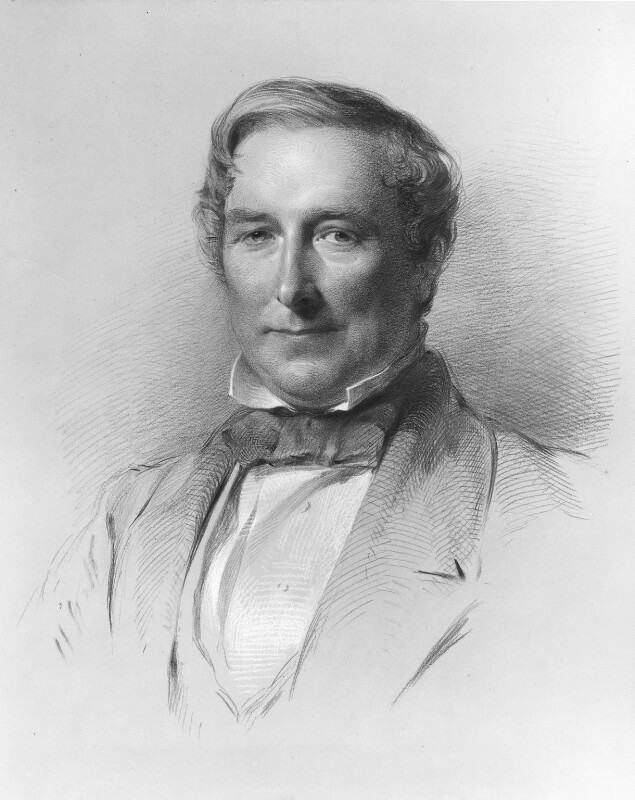
Lately I have been researching the family of William Squire (1772-1857, KGVR-8NH), of London, England, who is my 5th great grandfather.  I am currently working through everything I can find out about his children. His second oldest child, Mary Squire (2Z3X-BHD) married Henry Graves (2Z3X-B63) on 6 Jan 1831 in St. James’s Piccadilly Anglican church in London. On each of the census records for the family, Henry’s occupation was listed as publisher of engravings, which I didn’t really understand.  But I could tell the family was well off because they had three to four live-in servants, including a governess, cook, and one or two maids.  Then I found an obituary for Henry that said he was the well-known printseller and the son and grandson of notable London printsellers and the brother of the distinguished line engraver, Robert Graves.

Henry Graves about 1855
©National Portrait Gallery, London, used by permission

A Google search led me to Wikipedia entries for Henry and Robert Graves and then to the National Portrait Gallery, London website, which has a collection of portraits of Henry, Robert, and their father, also Robert.  It also has a collection of portraits they engraved and published.  

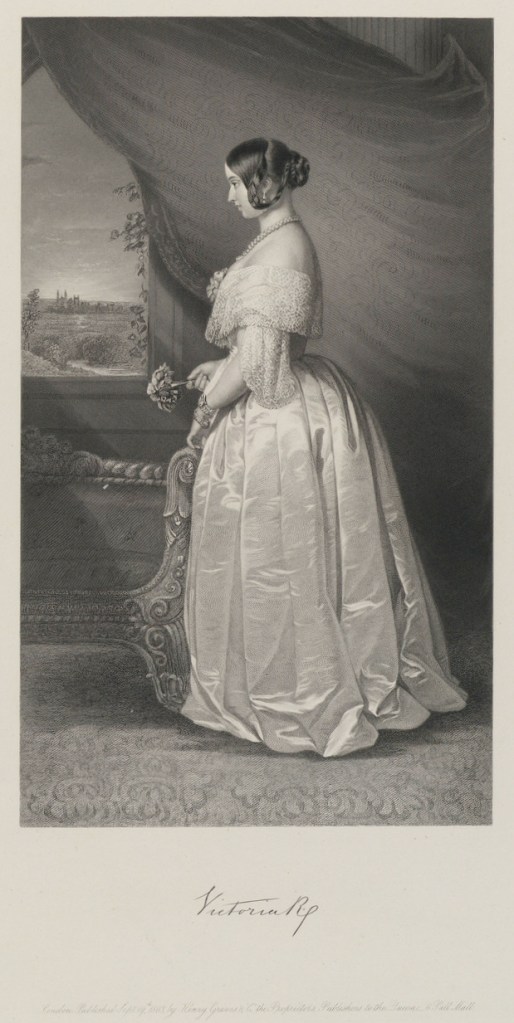
Henry Graves started out, at age 16, as an assistant to an art dealer. He later joined another company and was the manager of their print department. When that firm failed in 1825, he and several others acquired the business, with various partnerships until 1844, when Henry became sole proprietor of the firm Henry Graves & Co. The 1871 UK Census notes that Henry had 11 employees.  He also was one of the founders of ‘Art Journal’ and ‘Illustrated London News,’ which began publication in 1842 and was the world’s first illustrated newspaper. Its extensive coverage of the royal family’s tours, lives, and deaths earned the paper popularity.  

Queen Victory a print by Henry Graves & Co
The caption at the very bottom that you can barely see says, “London. Published Sept 19th 1863 by Henry Graves & Co., the Proprietors, Publishers to the Queen at Pall-Mall

Henry Graves and Co., like many commercial art galleries, began as a print publishing business, and gradually moved into the exhibition and sale of paintings and other fine arts.  There are 230 portraits associated with Henry Graves & Co at the National Portrait Gallery, London.  Graves published an immense number of fine engravings from pictures by Turner, Wilkie, Lawrence, Constable, Landseer, Faed, Frith, Grant, Millais, and other contemporary painters. He specially devoted himself to the reproduction of the works of Sir Edwin Landseer, employing the best engravers of the day, and paying the artist himself more than £50,000 for copyrights. He also issued valuable library editions of the works of Reynolds, Lawrence, Gainsborough, Liverseege, and Landseer. 

At a time without photographs, scanners or copy machines, line engravers and printsellers enabled art and images of events to reach a much wider audience.  Henry died in 1892, at the age of 85. Henry’s younger son, Algernon, of whom I have done very little research so far, carried on the business.  However, by the end of Henry’s life, photography was beginning to replace the need for engraved prints.

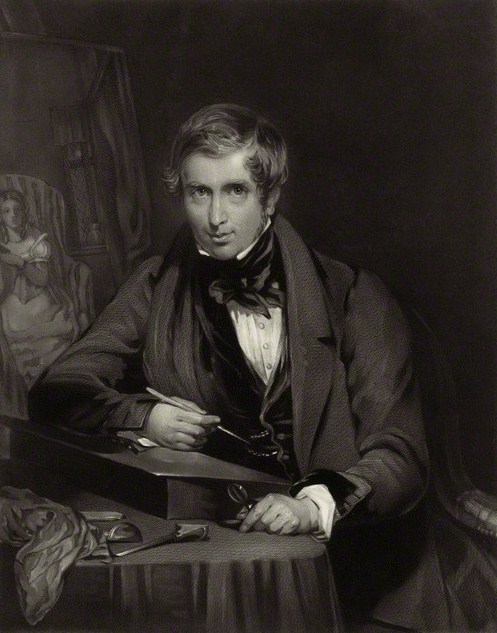
Robert Graves, 1835
© National Portrait Gallery, London, used by permission

Robert, Henry’s older brother, pursued the other half of the business, engraving. He became the pupil of John Romney, a line engraver, in 1812, when he was 14 years old. He initially focused on pen and ink facsimiles of rare prints and had much success, according to his biography in the Oxford Dictionary of National Biography. However, he later decided to devote all his attention to engraving, and he masterfully recreated the works of many artists. A contemporary art critic wrote that his plates (that he engraved) are generally characterized by their refinement and delicacy and in these qualities they can scarcely be surpassed. In 1836 Graves was elected an associate engraver of the Royal Academy and he presented as his diploma work a portrait of Lord Byron from the original by Thomas Phillips. He created many plates to print works by famous artists.  His last was a portrait of Charles Dickens, from the original by William Powell Frith, for a book about novelists.  He died in 1873, at the age of 74.

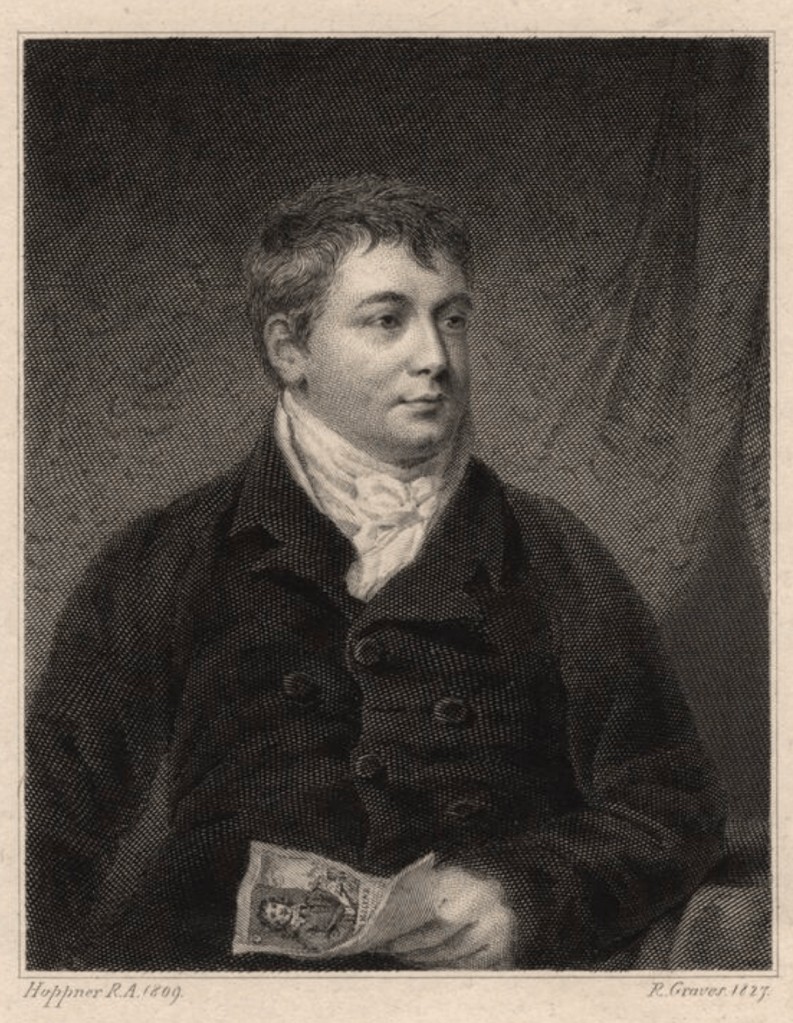
Robert Grave (d. 1825), 1809
Line engraving, 1827, by his son Robert Graves
©National Portrait Gallery, London, used by permission

Posted in Peterson, Photo, Squire, Update

More Photos

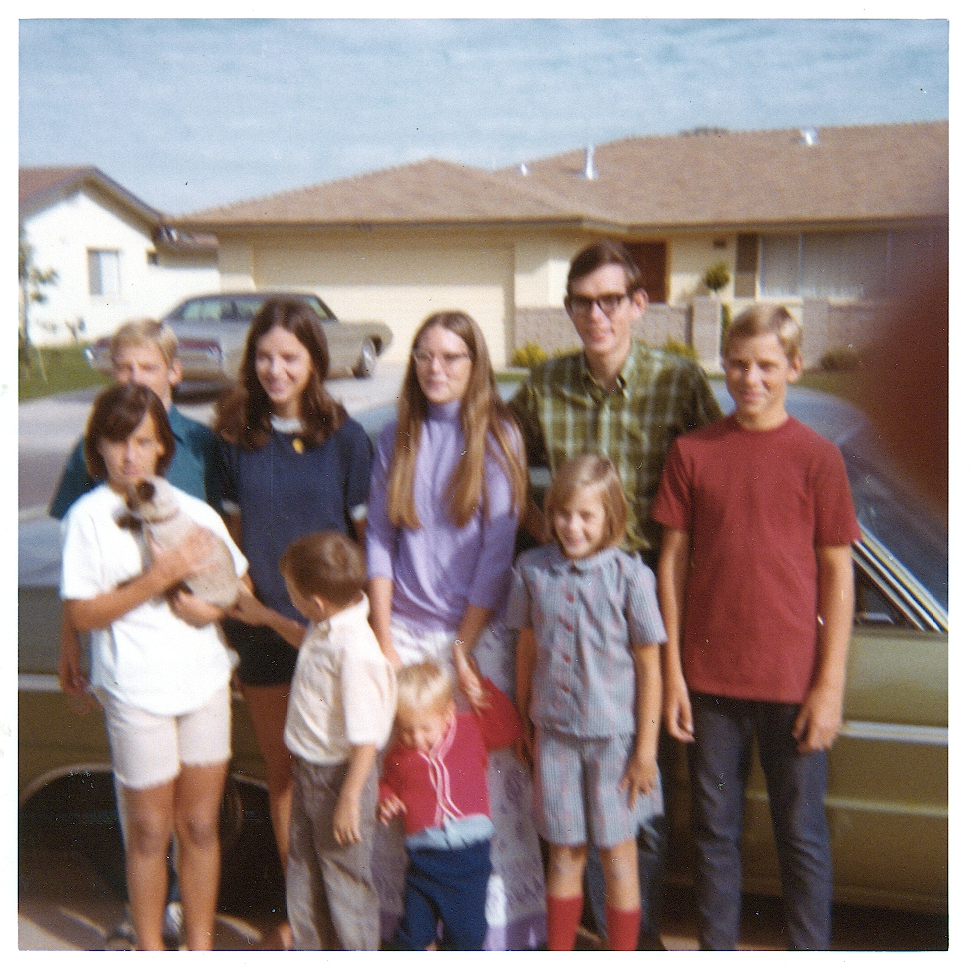
Lynn & Mary Peterson’s grandchildren, October 1970
Jay Peterson

I’ve added a lot more photos to Family Search:

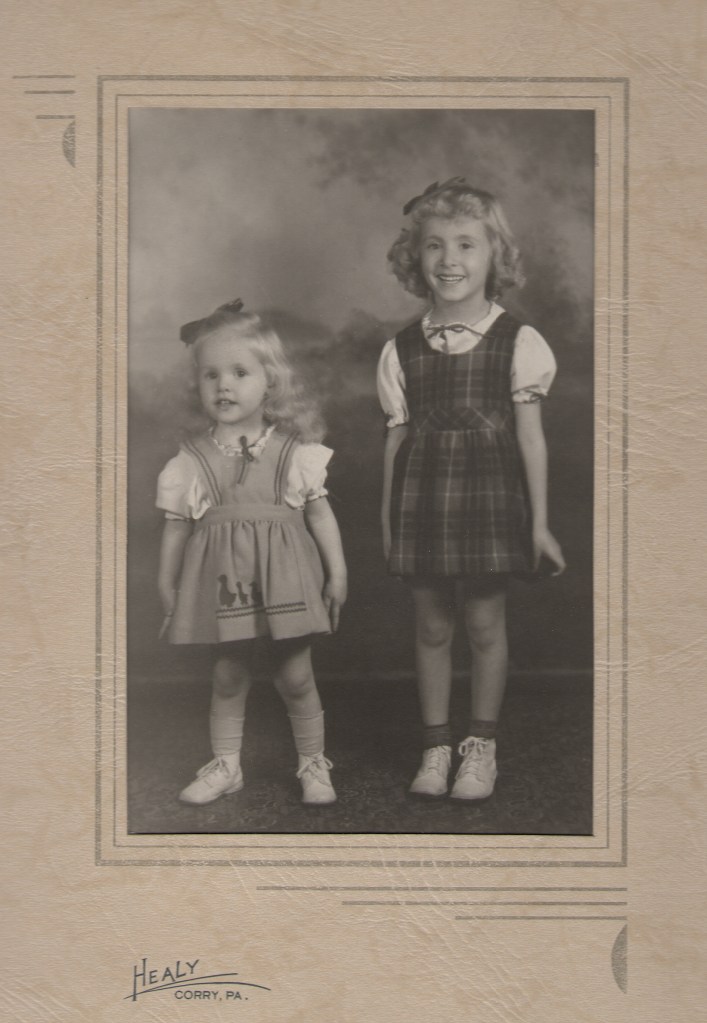
Sharon & Sylvia Squire, about 1944

I discovered that Sharon Squire, the unidentified little girl from my last post, is the daughter of John Theodore & Gladys (Bennett) Squire. I was able to find her quite quickly just by searching census records for a Sharon Squire in Pennsylvania and when I got some hits, I recognized her parents. Other pictures I found later of all the kids in the family confirmed my identification.

But I still have other mystery photos, some without any names or dates, that may end up being perpetual mysteries.

Bud Johnson, no date, possibly family friend?
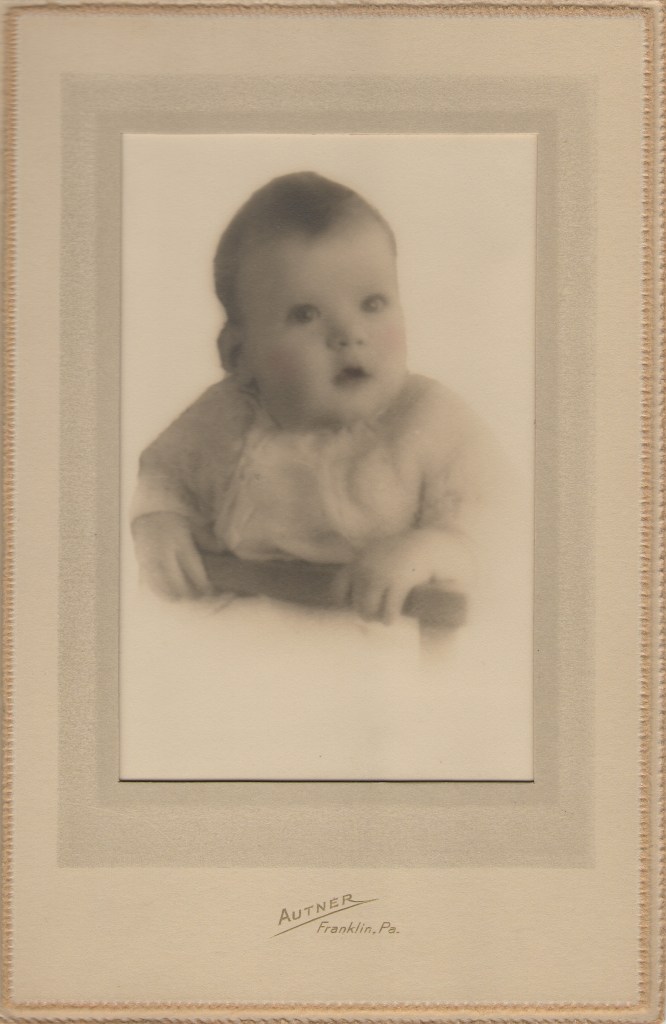
Unknown baby, no date

Posted in Peterson, Photo, Squire, Thayn

New Year’s Treasure

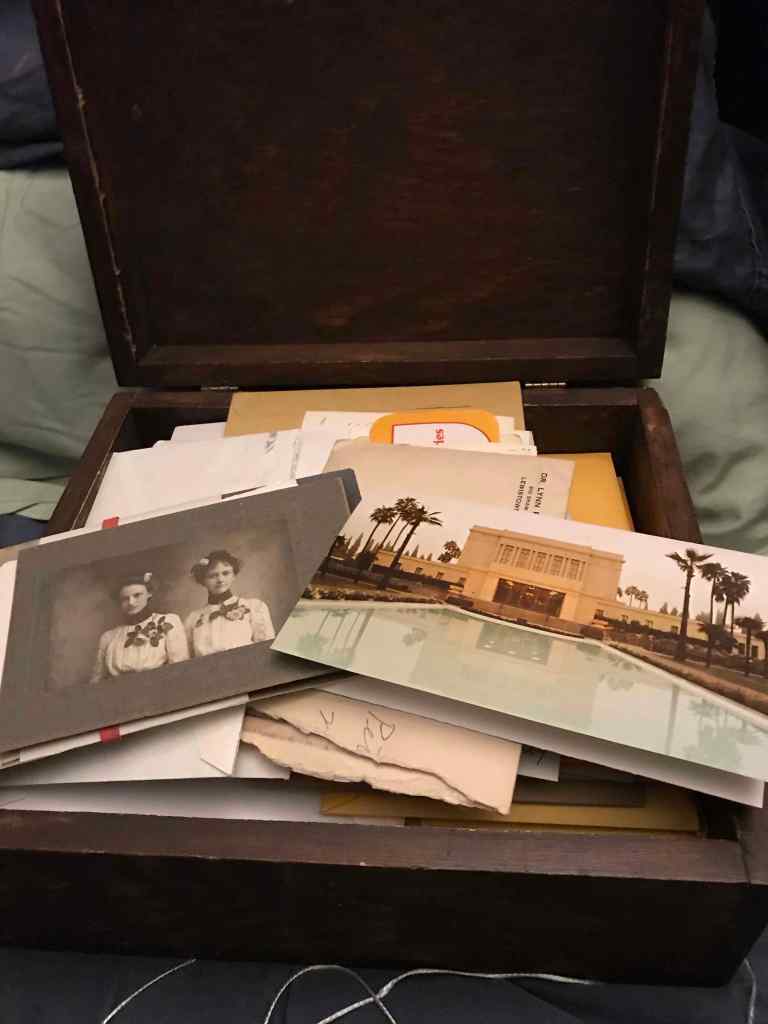
A precious box of treasure

I brought four boxes of mainly pictures back from my parent’s house when I visited for Christmas. I have my work cut out for me for a long while sorting and digitizing and attaching all the photos. I have everything from photos on CDs to slides, negatives, and watercolor paintings of ancestors. On New Year’s Day, I scanned and uploaded a few of the professionally taken and framed pictures and a few others, but I will be working on this project probably for months. So far I have uploaded new pictures to FamilySearch and Ancestry for:

If you want to keep up with this project, I recommend you follow Jay & Cleora Peterson and their parents on FamilySearch. I will also try to post updates with links to the people to whom I have added pictures.

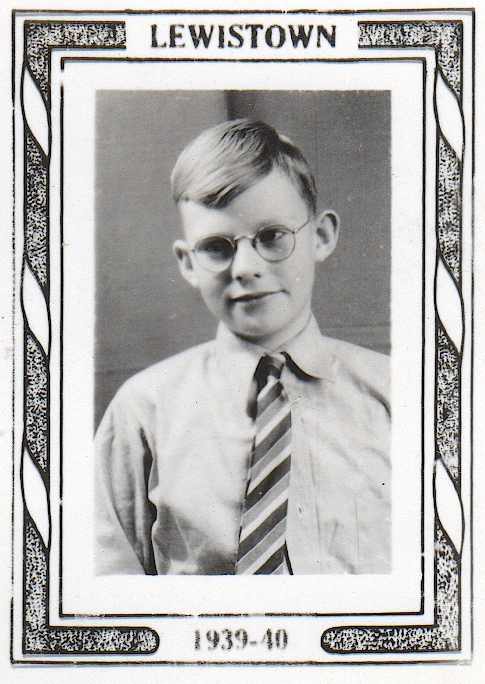
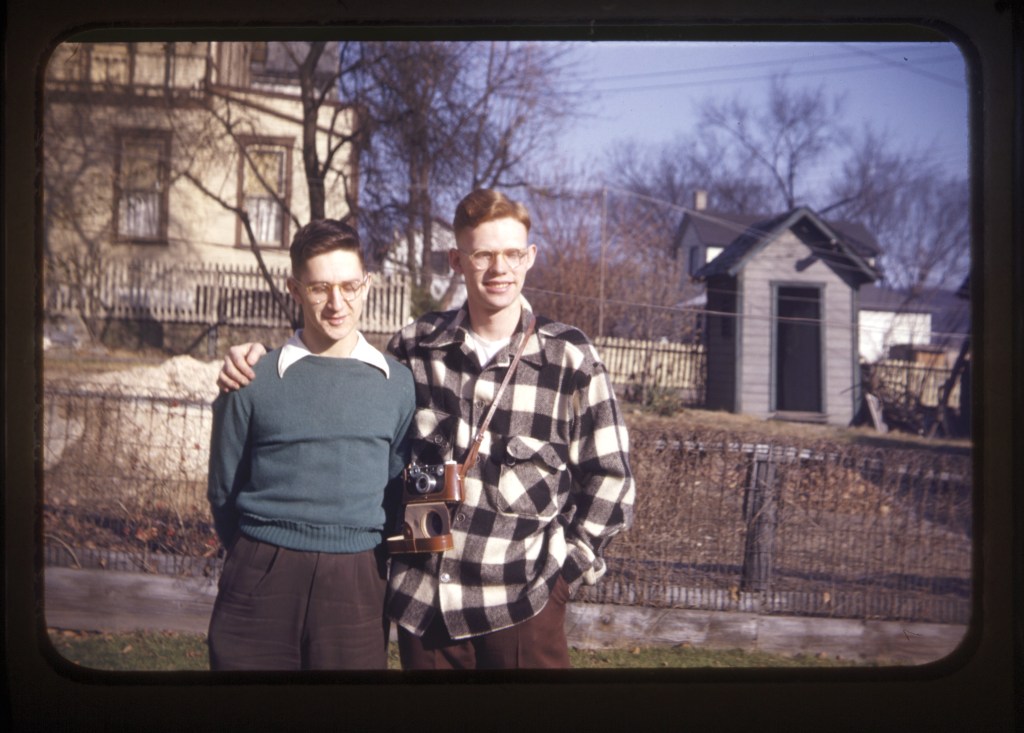
Herbert Loucks & Jay Peterson in Lewistown, PA

In addition to the time it takes to sort and scan all the pictures, I also spend time trying to figure out who people are in the pictures. For example, I was able to identify and link this picture to Jay’s friend, Herbert Loucks (thankfully labeled on the slide frame), by finding him in the 1940 U.S. Census in Lewistown, PA.

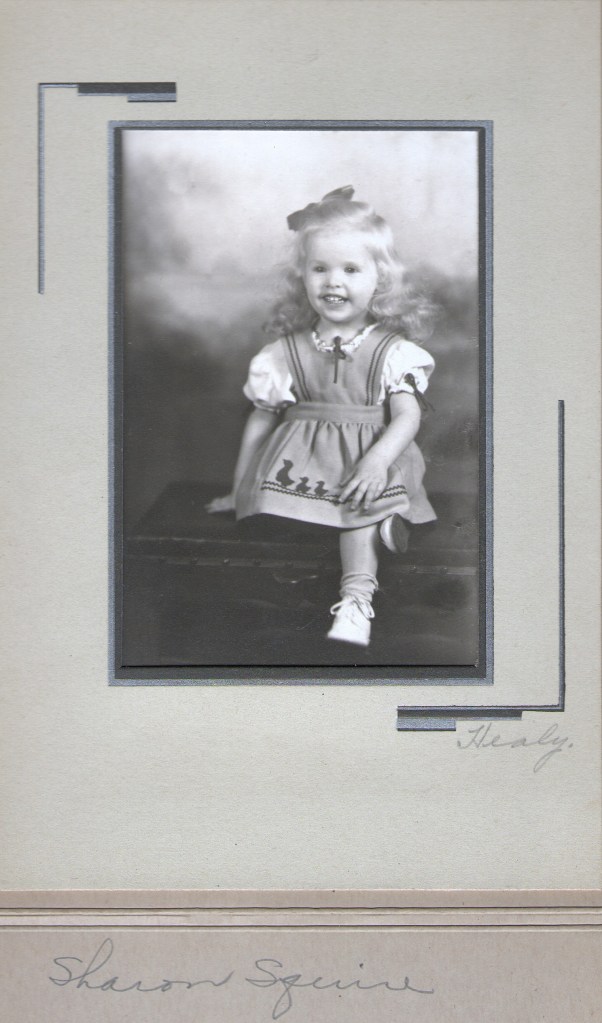
I’m still trying to guess who Sharon Squire is in the picture on the right. It was taken by the professional photographer in Lewistown, PA that my great grandparents regularly used, but it doesn’t have a date and I have family pictures that were taken there from at least the 1930s to the 1950s (including my uncle as a baby that was taken when his family visited PA from KS) that have the same handwritten photographer’s signature. I have not come across any Squire relatives with a Sharon so far in my research, so she may be a long-term project to identify.

Posted in Photo, Squire

Exploring Old Documents

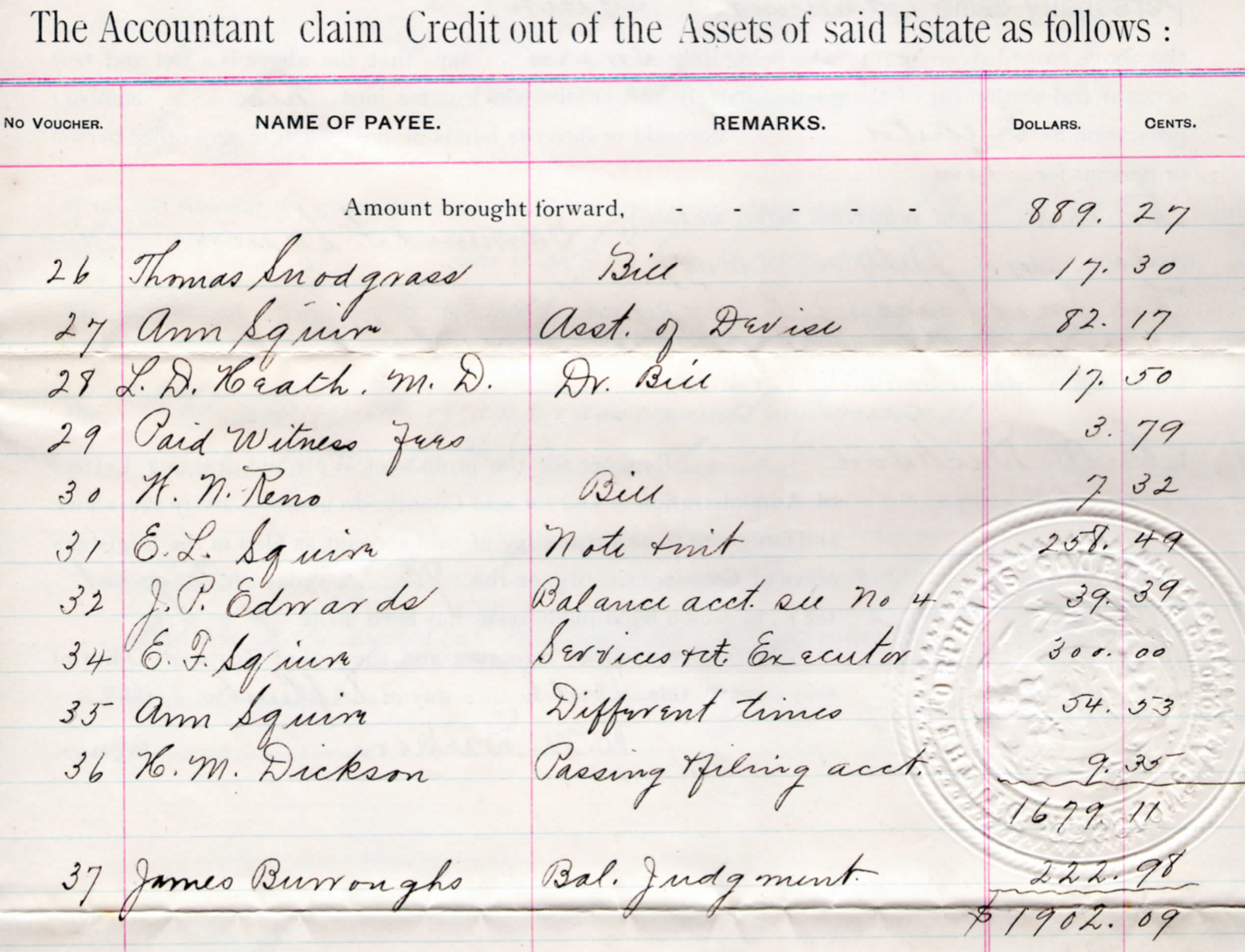
Among the items I found in my grandfather’s genealogy were two old legal documents.  The first was the final accounts of Frederick Squire (KGVJ-W7B) by his executor and son, Edmund Frederick Squire (KF5Z-Q8X), in 1888.  Frederick’s total assets when he died were valued at just over $3,000, but he had nearly $2,000 in debts and funeral and estate execution expenses, leaving just over $1,100 for his heirs. I found it fascinating to read all the itemized expenses and see how prices have changed.  For example, 2-days rental of horse and buggy cost $4 (that is about $108 in 2019 dollars, adjusted for inflation).  Funeral expenses were $32 (about $863 in 2019 dollars). This document is especially interesting to me because my own grandparents recently died and I have been helping to settle their estate, so it has been interesting to see the process from 1888 and now.  There were a number of fees for proving the will, hiring a lawyer, taking testimony, and filing the accounts, so it is clearly at least as expensive and a hassle then as it is now.

Frederick’s will stated that his wife, Ann, would get $400 on the sale of his estate and $100 every year thereafter for the remainder of her life. The final accounting shows $300 going to Ann Squire as the “widow’s exemption.”  I don’t know why it is less than the $400 in the will.  She did get paid for two other items on the expense list, “asst. of devise” and “different times,” but I have no idea that these mean.
Frederick’s will is available on Ancestry.com in the Pennsylvania Wills and Probate Records collection, and it provided a treasure trove of genealogical information.  I also transcribed the will and uploaded it on Ancestry and FamilySearch.org.  The scanned copy of the final accounts is also on FamilySearch.
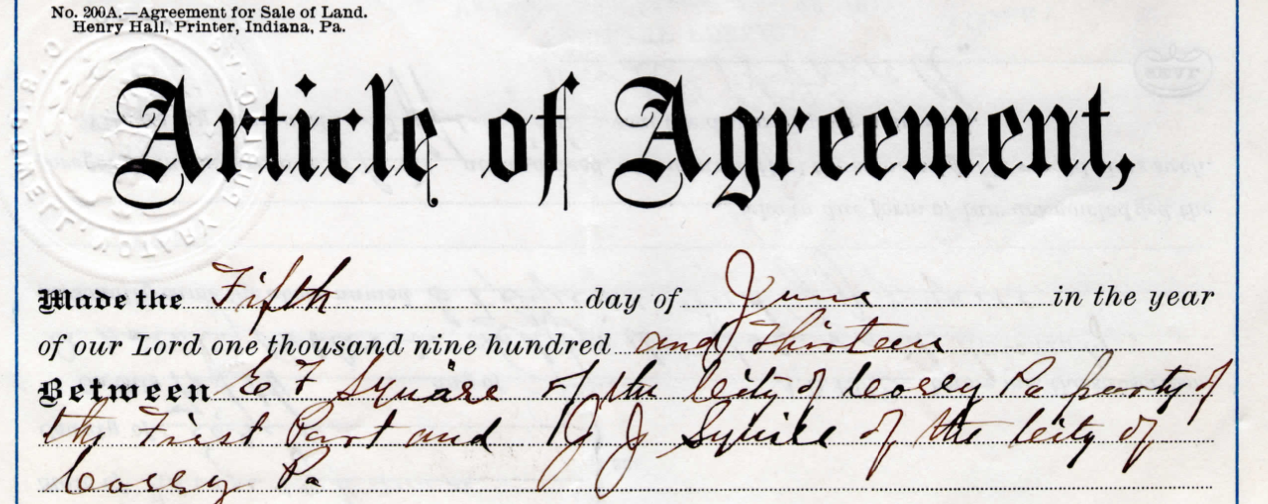
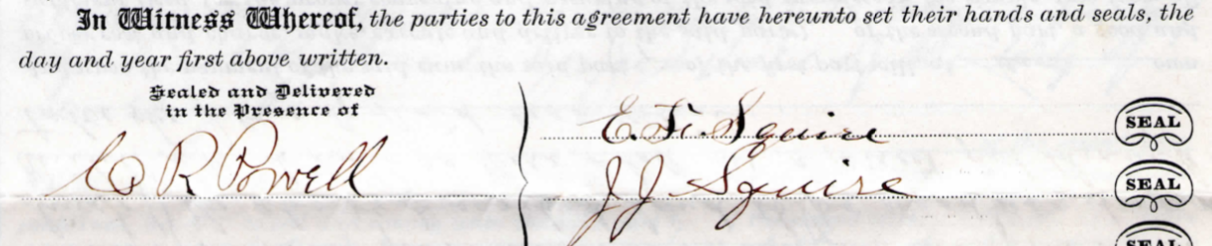
The other document I found was a land sale agreement between Edmund Frederick Squire and his son, John Jay Squire (L439-D3P), in 1913, wherein Edmund sold a plot of his land in Corry, Pennsylvania to his son for $800 plus interest, payable $100 per year. The document contains a description of the land, totaling three acres, and bordering on Marion St.  This document and it’s transcription are available on FamilySearch.org as well.

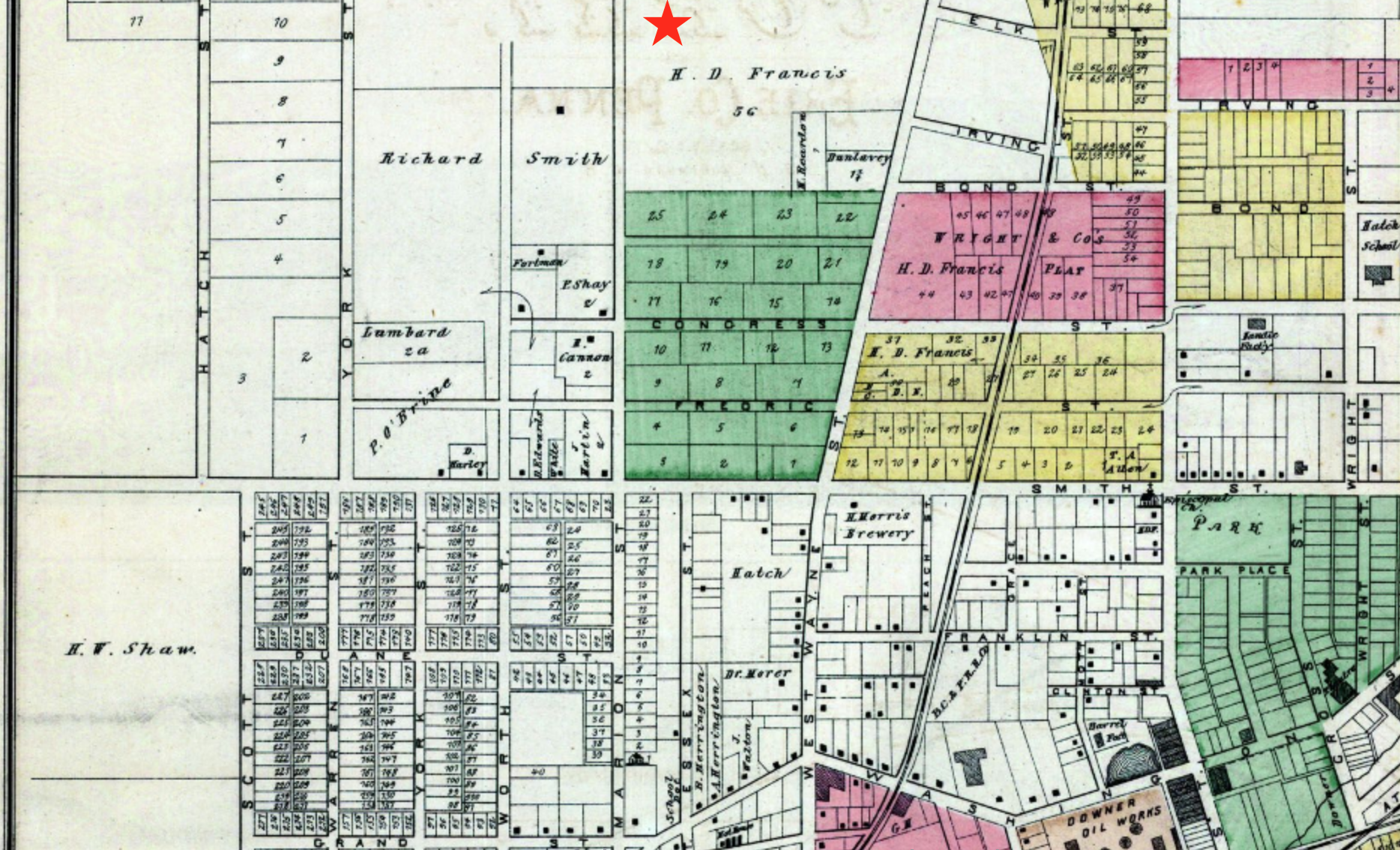
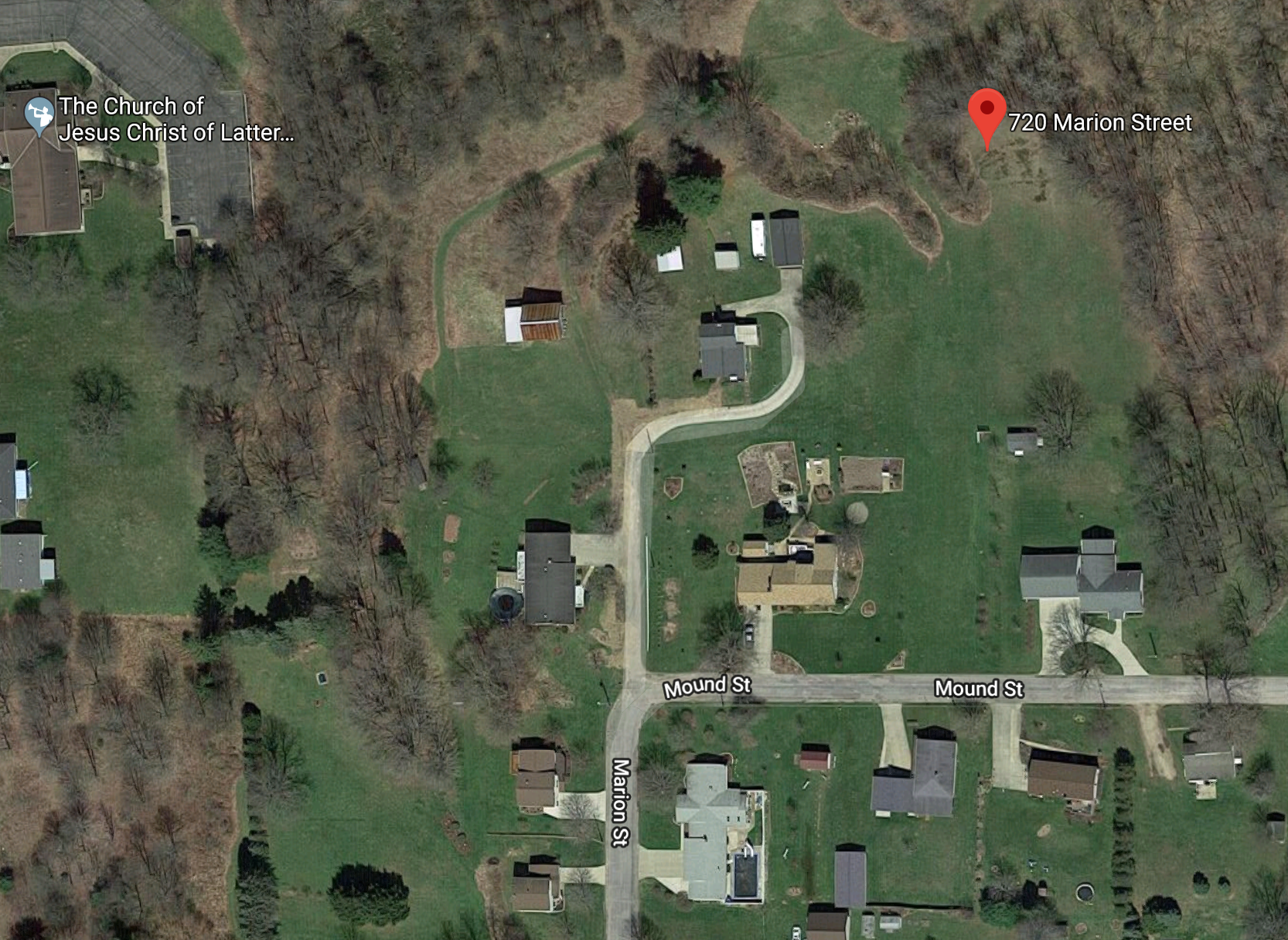
I did a little searching and found roughly where the land was, on the east side, near the end, of Marion St.

1876 map of land plots in Corry, PA.  The red star is my best guess of about where Edmund’s land was.  By 1913 that plot belonging to H. D. Francis had been broken into smaller plots, some of which probably still belonged to the same family because land belonging to Francis is listed as a border to Edmund’s land.

This is what the area looks like today.  Marion St. seems to have gotten shorter with time.  On the 1920 U.S. Census, John Jay Squire’s address is listed as 720 Marion St, with other houses on Mound St listed next to him.  Google Maps puts 720 Marion St in the middle of a field today, though it looks like there might be the foundation of a building there.

Posted in Allred, Peterson, Photo, Squire

Yearbook Fun

Ancestry.com has a growing collection of high school and college yearbooks that can add a personal dimension to your ancestors.  It’s been fun to see some of the pictures that have shown up as hints for my relatives. 

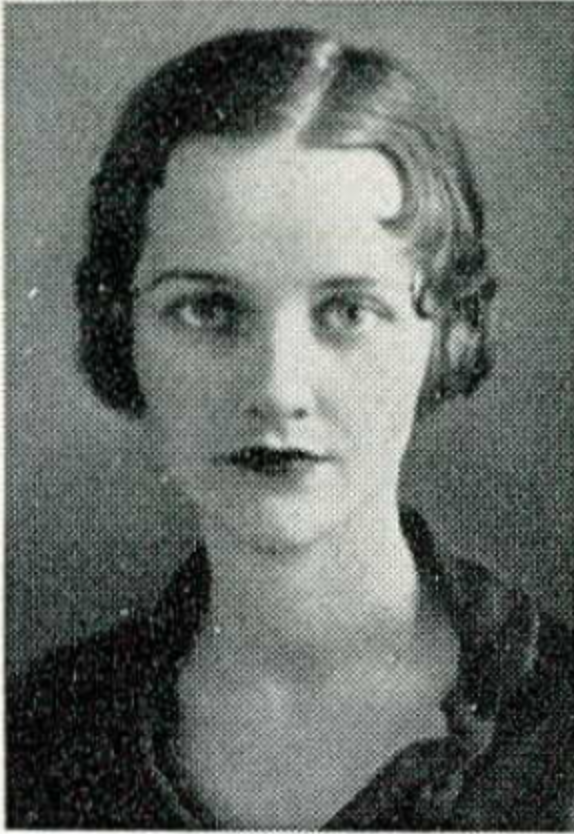
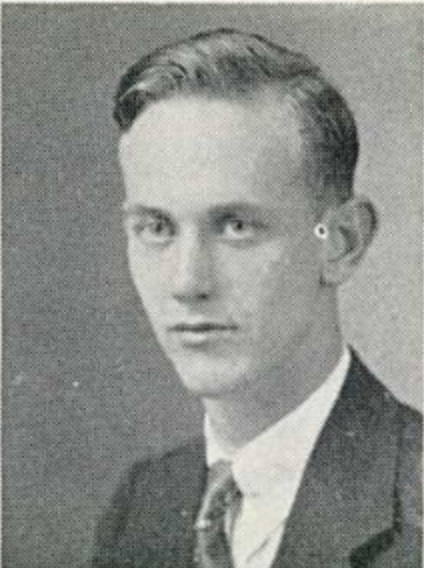
While I was researching Wilber Sidney Squire (L449-4YR) and his descendants (see: Finding Wilbur Sidney Squire), I found college yearbook pictures for his daughter and son. Besides the pictures, you can sometimes learn about their interests and activities. Christine L Squire (L2Q3-QTV), for example, was involved in the school newspaper and many other school organizations. These details can help you connect records. Christine went on to be a professional news writer. Knowing that she had spent several years on the school newspaper helped me recognize her in the 1940 census in Minneapolis, Minnesota because her occupation was listed as reported-writer.

Christine Squire – 1933
John Squire – 1933

Sometimes you find some amusing things…

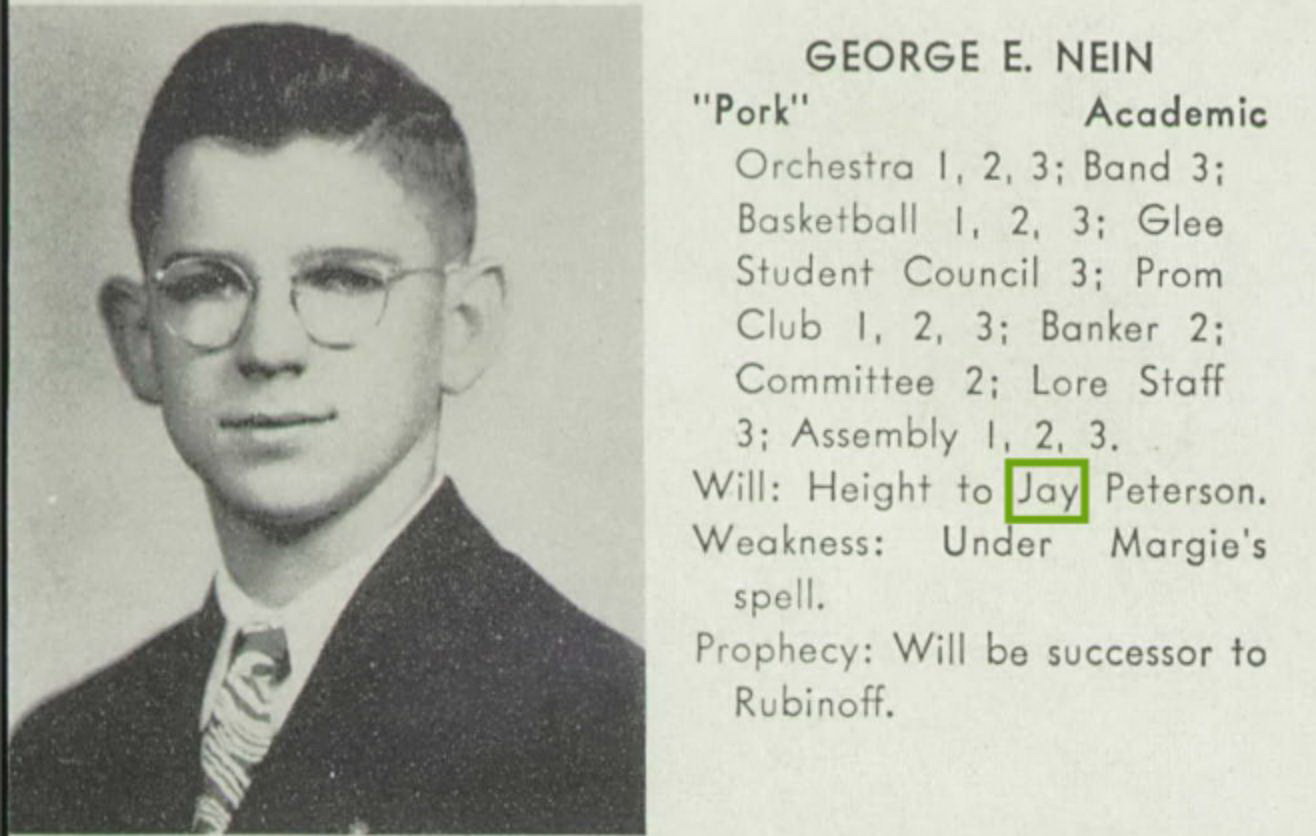
In 1945, this senior at Lewistown High School “willed” his height to Jay Peterson (a sophomore at the time). Apparently, one of the things they asked seniors was what they would “will” to someone else at the school when they graduated. They were pretty much all impossible things to give away.

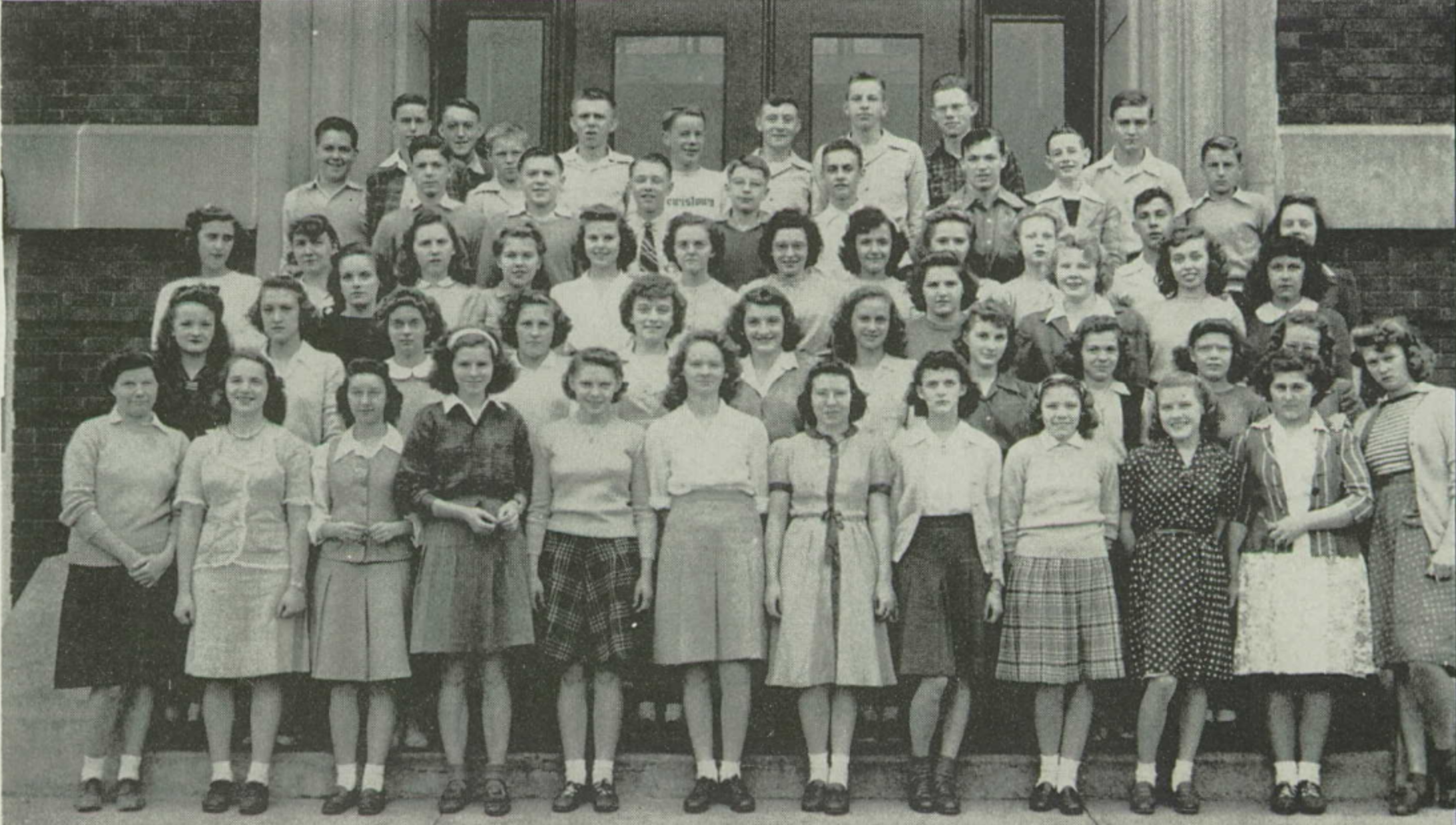
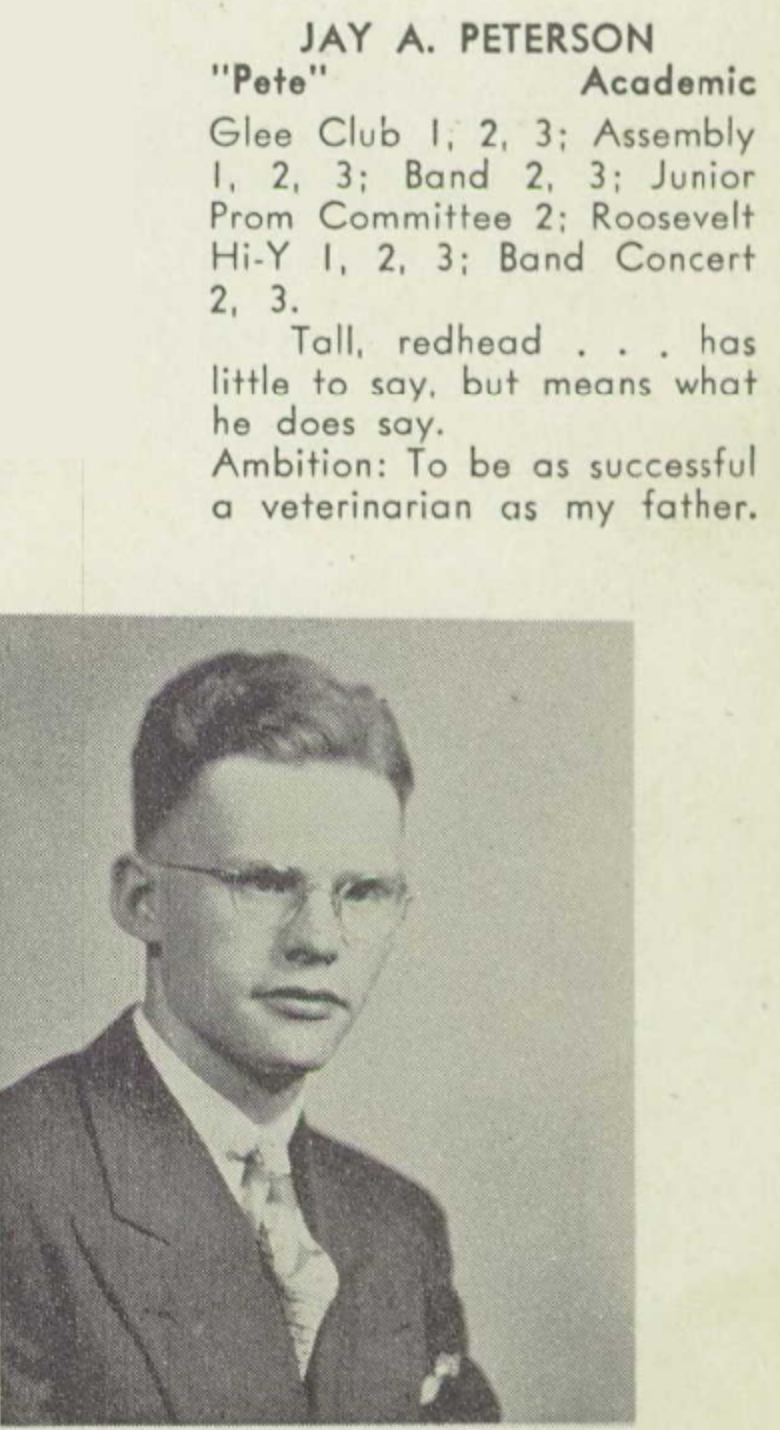
It is worth paging through the yearbook when you do get hints because you might find a picture of your relative without a name associated with it. I found the picture below of the Lewistown HS sophomore class after paging through it based on the hint that showed George willed his hight to Jay. There are no names in the book to align with the people in the picture, but I was able to find Jay. See if you can pick him out too. The other pictures of him below should help.

Lewistown, PA High School sophomore class – 1945
Lewistown, PA High School – 1947
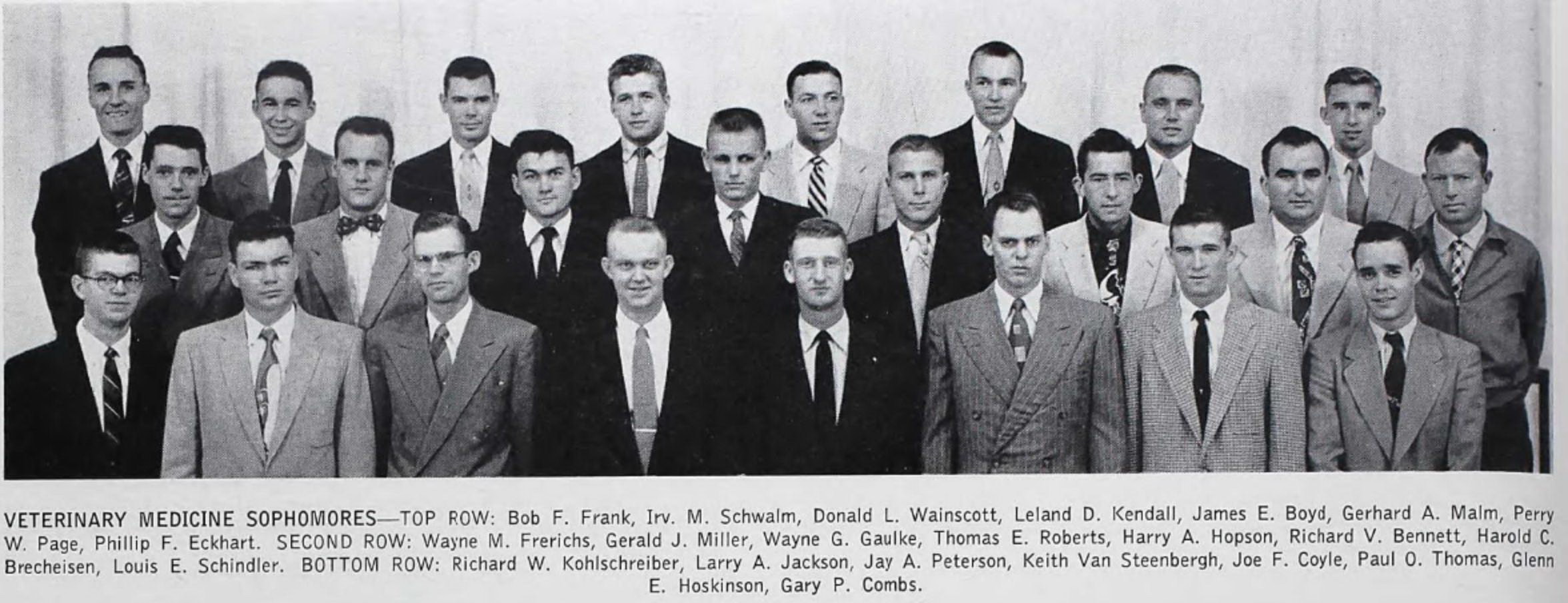
Kansas State Agricultural College – 1955

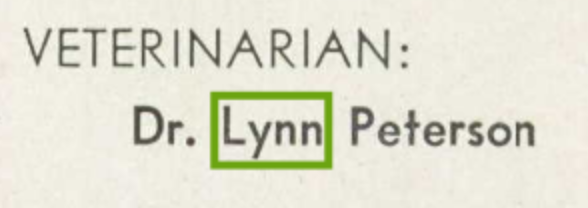
I found that Dr. Lynn Peterson was the veterinarian sponsor listed in the Lewistown, PA High School yearbook every year from at least 1947 until 1959.

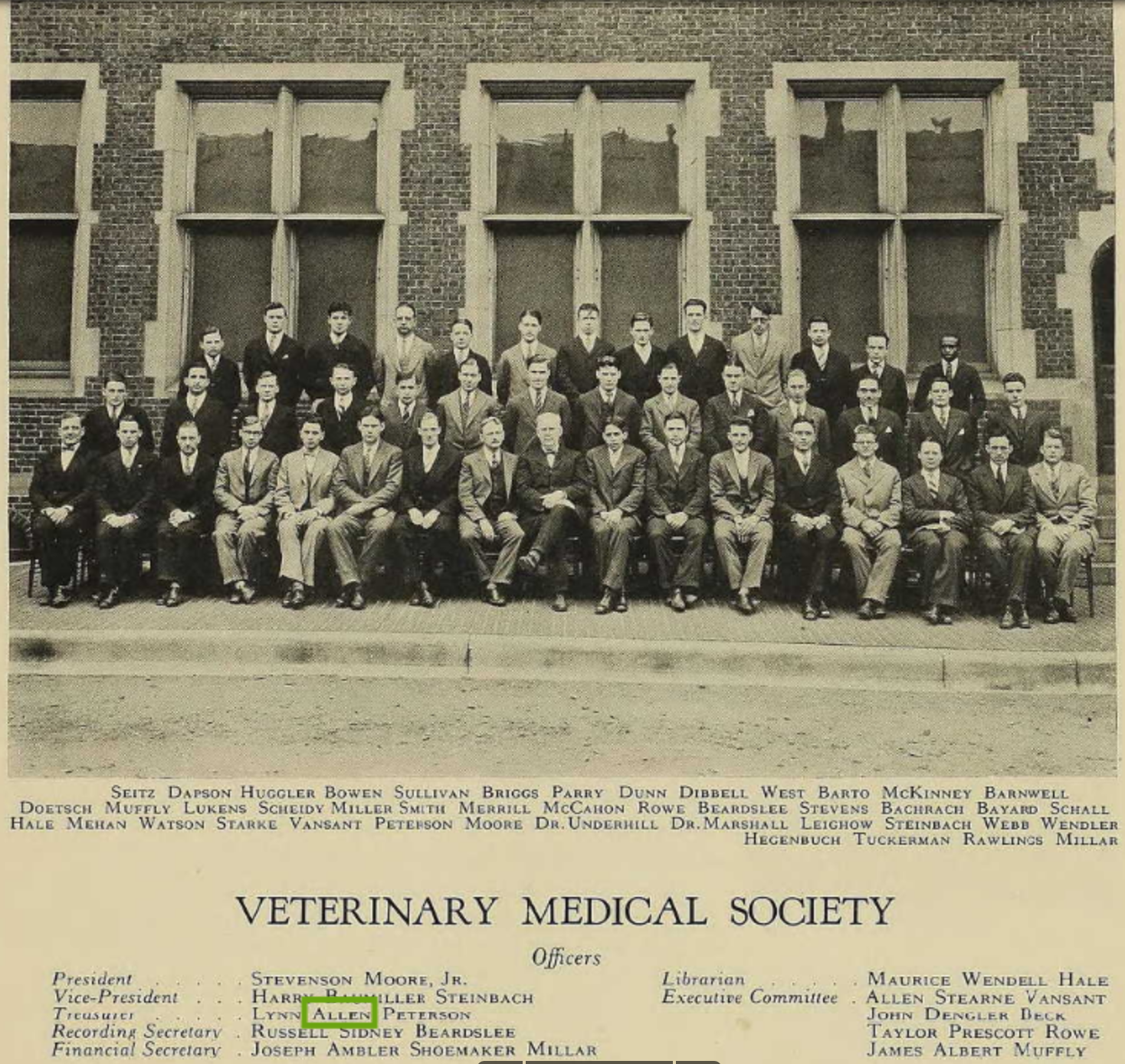
Lynn Peterson (front row, 6th from left) – University of Pennsylvania – 1927

Depending on your age, you might even start finding yourself in yearbook pictures on Ancestry.

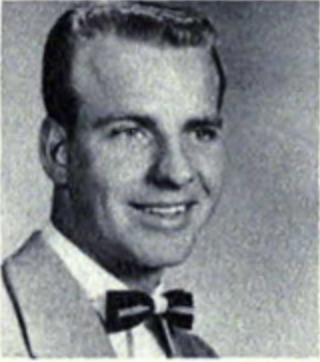
Marvin Hollingsworth –
BYU Yearbook – 1956
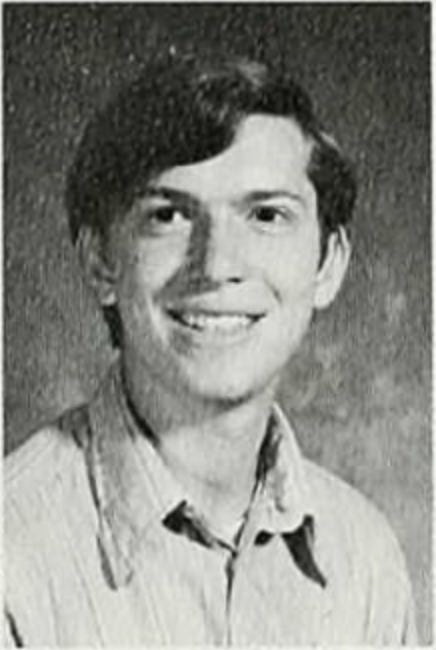
David Allred –
BYU Yearbook- 1975

The best way to see all the pictures I find is to have your own tree on Ancestry. The pictures I extract from yearbooks and upload as standalone pictures will show up as hints if you have a tree with the same person in it (plus you will get the same hints that lead me to the yearbooks in the first place). I am also uploading pictures to FamilySearch.org, but you won’t be able to see them for living people, at least for right now.

At RootsTech, the instructor of the class What’s New on FamilySearch? indicated that family groups are coming that will allow members of the group to see some living records, and hopefully that would include memories that have been uploaded. Right now, the warning on FamilySearch says “anyone could potentially see the photos, documents, and stories that are attached to this person” for a living person. However, while I can see memories my mother and grandfather uploaded for my grandfather, my mother can’t see the pictures I have uploaded for my grandfather. I think the policy changed several years ago. The pictures that show up for both of us were upload several years ago (like 2014) and more recent ones (like 2016) are not showing up for both of us.

Posted in Peterson, Photo, Scandal

The Scandal in Pennsylvania

It has been a weekend of uncovering apparent scandals! I’ve run into more weird marriage arrangements in two generations of one family line than I think I have in all my other research for the last several years.

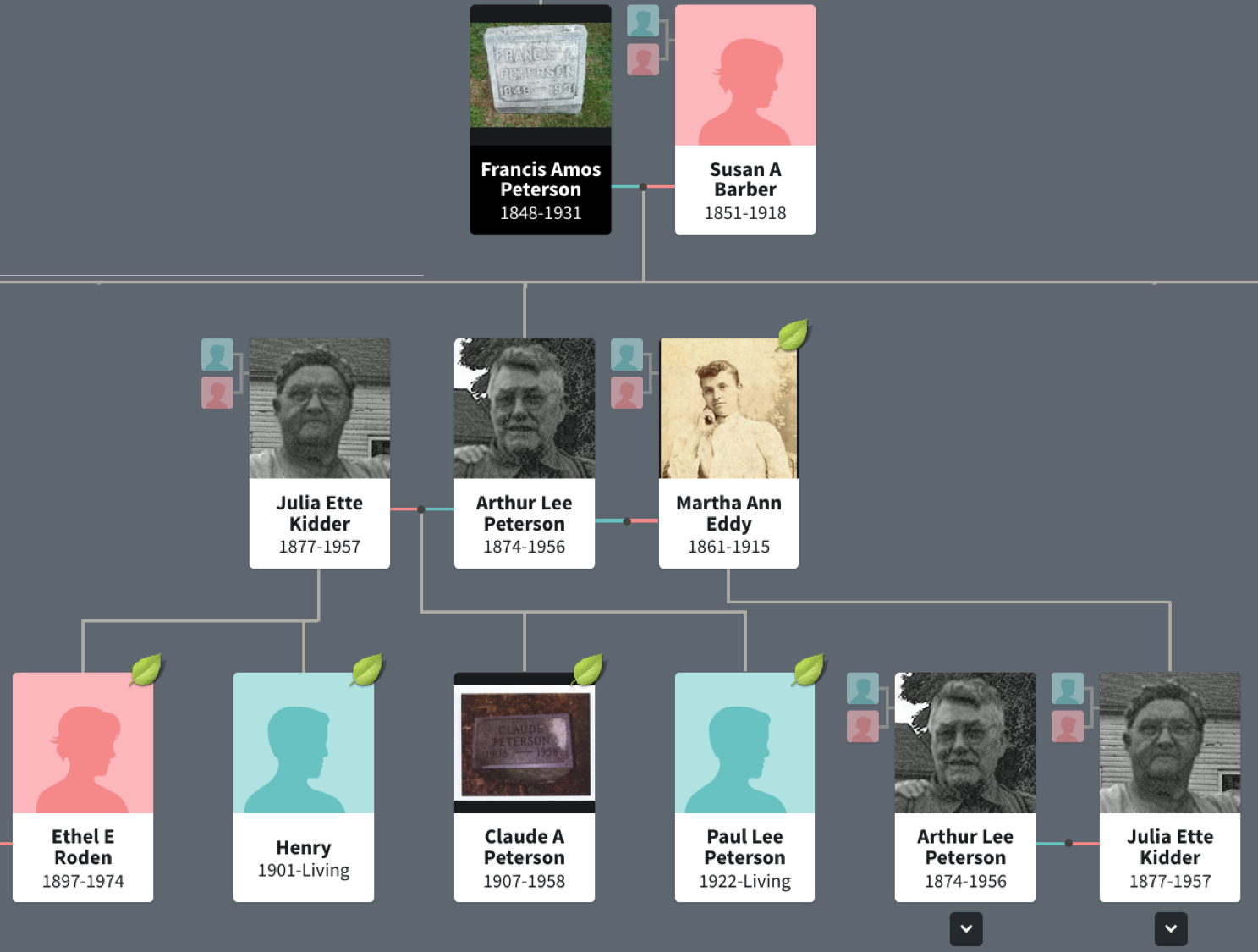
It all started when my uncle asked me to research Claude Peterson (LDQ5-N98) because someone else had changed some information for him on FamilySearch.org and now Claude no longer shows up as a relative. (FamilySearch.org is like a Wikipedia family tree; anyone can edit it to make corrections.) My uncle thought the other person may have mistakenly merged two people who should not have been merged, leading to changes in some of the dates and to the father listed for Claude.

I started my research by looking at the change history in FamilySearch.org. There was no record of a merge but it did show the father has been changed from Arthur Lee Peterson (KHBX-D21) to Joseph Roden (LRFY-DV6), and listed a birth certificate as evidence for the new information being correct. Just by looking at this information it wasn’t clear to me if the new father was correcting a previous mistake or if there might be two different Claudes that were being confused.

I decided to start by researching down my family line from Arthur Lee Peterson’s father, Francis Peterson (LHDP-FVX), who I already had in my own family tree, but had not completed researching yet. This way I could confirm if there is a Claude Peterson who belongs in my tree who may be different than the Claude with a different father in the birth certificate.

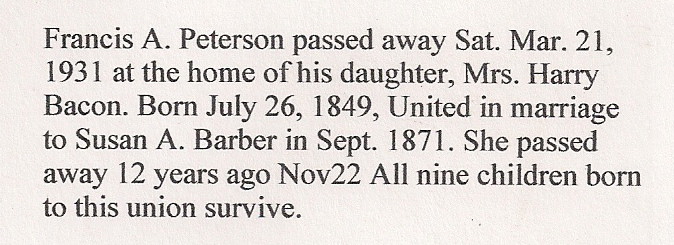
My research for Francis Peterson was pretty standard, looking at census records, a death certificate, and an obituary. The obituary in 1931 was one of the documents I looked at early in my research. It told a little about his life, mentioned that his wife, Susan A Barber (KDMH-675), had died 12 years earlier, and mentioned that they had nine children. Thus, I was a little surprised to when I looked at the 1900 Census to see that Francis (who started going by Frank) was divorced from Susan. Nothing in the obituary made it seem like he had been divorced, but they had been married long enough that nine children were possible, even though I hadn’t identified them all yet. So I kept looking.

At this point, I moved chronologically forward in time looking at records for both Francis and Susan. On the 1900 Census, Susan is also listed as divorced, living with one daughter (8 years old), and a nephew, William L Peterson (KCJL-CB7), who is a few years younger than her. He is listed as married, but his wife is not on the census with them. Next, I looked at the 1910 Census for Susan and discover that she and William L Peterson have now been married 7 years. Hmm….

I found the marriage record for William and Susan, which reveals an interesting story.  Susan divorced Francis on 27 Dec 1899 for adultery and abuse on the part her husband. By June 1900, the date of the census, she is now living with her nephew by marriage, William, though I can’t know if they are “living” together or just living in the same house.  The marriage record also revealed that William and his first wife were divorced on 26 Feb 1903 for “incompatibility,” just about 2 months before William and Susan got married. Obviously, I can’t learn the whole story from genealogy documents, but the situation definitely looks suspiciously like Susan may have been the pot calling the kettle black.

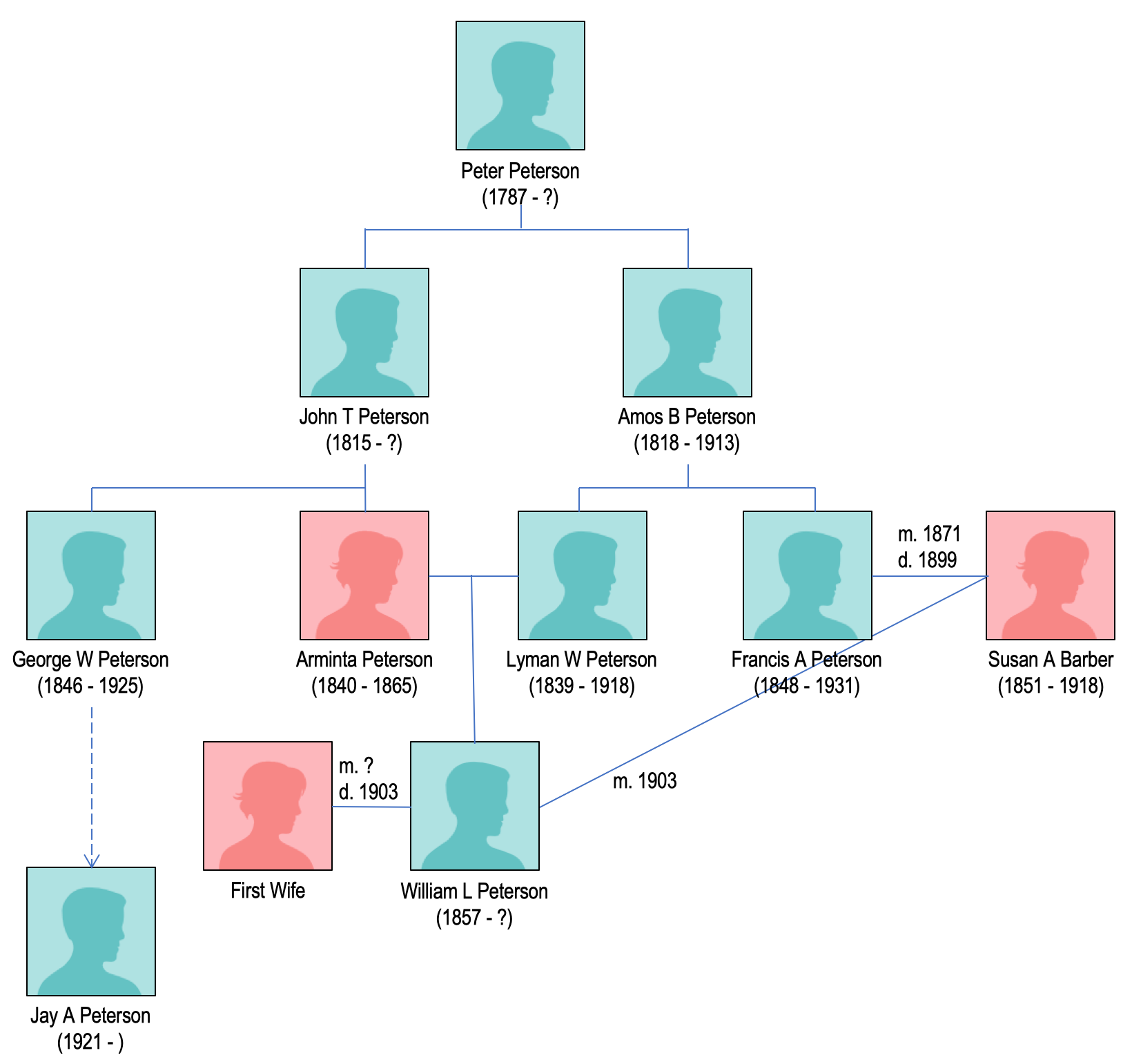
Also interesting, and potentially indicative of another scandal, the marriage certificate lists William’s parents as Lyman and Arminta Peterson. Arminta Peterson is a name I remember from elsewhere in the family tree, but her maiden name was Peterson. However, the name is not very common, so I started wondering. I looked at Francis’s bothers and found Lyman Peterson (KHCQ-27V), who is William’s father. I hadn’t really researched him, but I did have one record that showed his wife as Alice Davis. So I dug a little deeper and found Lyman’s obituary. From it I learned that Lyman had married Miss Arminta Peterson, and they had five children, three boys and two girls. After Arminta died, he married Alice Davis. I still need to do some more research, but I would bet money that Miss Arminta Peterson (L47Q-J5D) is the one I already have in my family tree, who is Lyman’s first cousin. If William is their oldest son, as I suspect he must be, then Lyman was about 17 and Arminta about 16 when William was conceived. More to follow on this family sometime in the future.

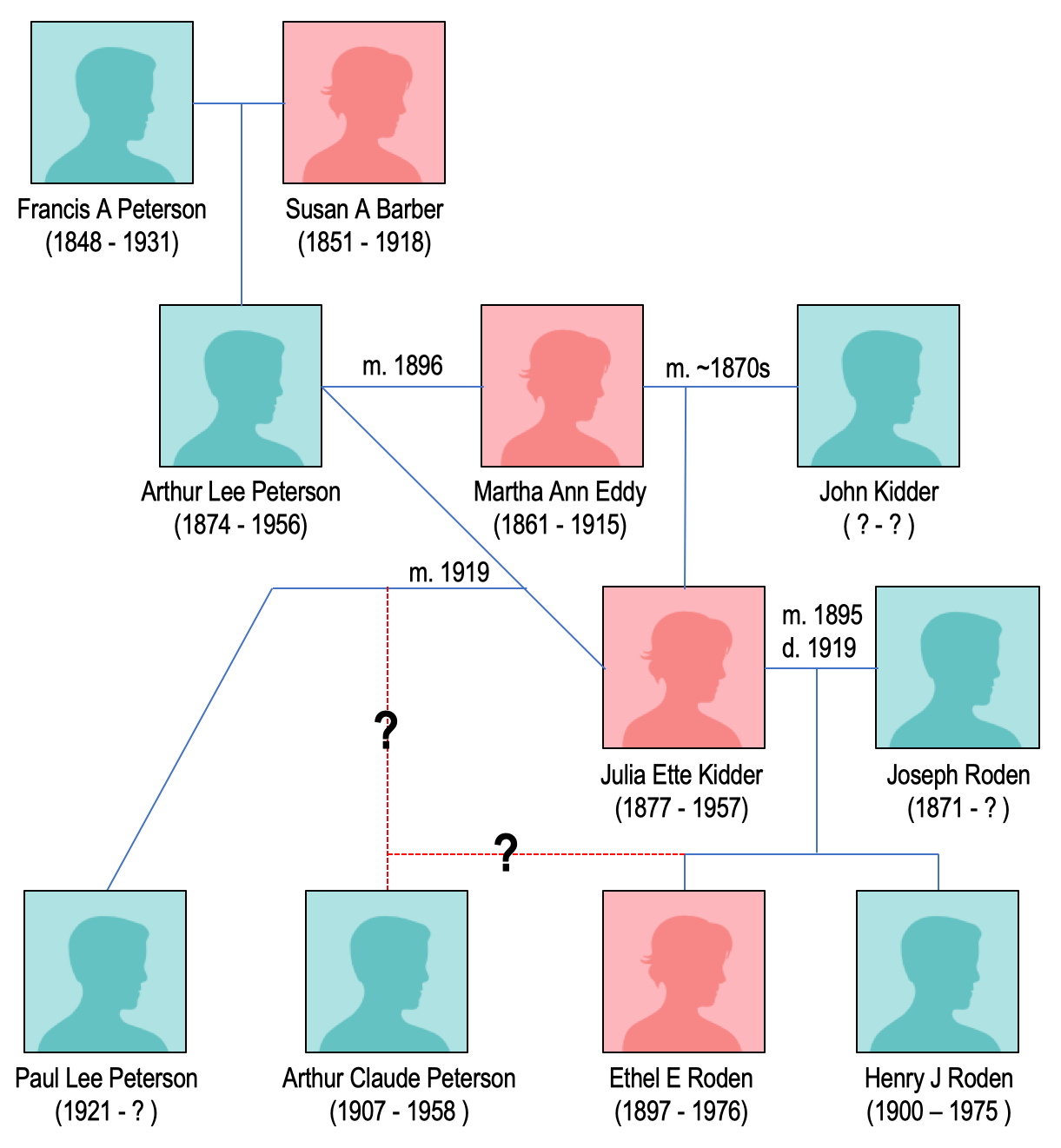
Map of the relationships so far in the story…

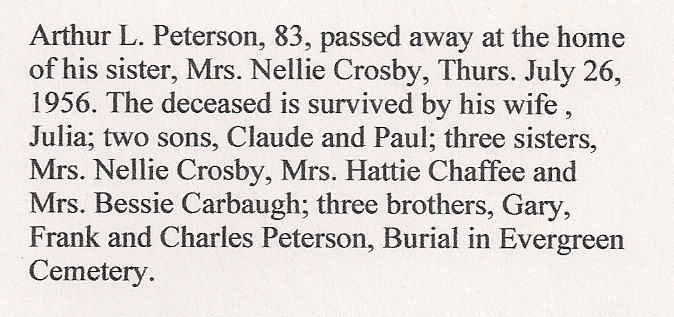
Back to Claude and figuring out who is his father. Finished researching Francis and Susan Peterson, I started researching their son, Arthur Lee Peterson, and Claude’s possible father. As I always do, I start with the records I can verify are the right person I am looking for based on other relationships in the document. In this case, it’s the 1919 marriage record for Arthur and Julia Ette Kidder (LRFY-H5W), which lists Arthur’s parents as Frank Peterson and Susan Barber (so I know I am on the right track). Julia Ette Kidder is also Claude’s mother on FamilySearch.org, so this is a good sign too. From the marriage record, I learned that it was a second marriage for both of them and that Julia’s parents are John Kidder (GMN3-PRJ) & Martha Ann Eddy (GMN3-VR1). Next I find Arthur’s obituary, which says his is survived by his wife, Julia, and two sons, Claude and Paul. So far, so good.

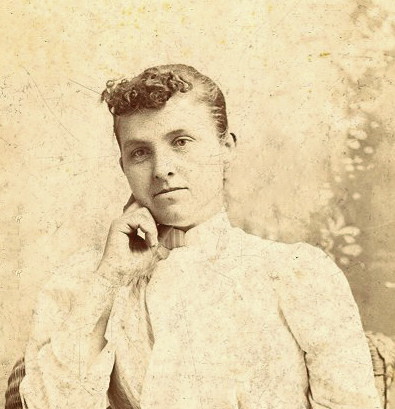
Martha Ann Eddy, circa 1882

Then it starts to get weird. I looked at the 1900 Census; the first one where Arthur is an adult. He is living with his wife, Martha Peterson, (ok, first wife) and his in-laws, Joseph (K6QG-6NP) & Mary Eddy (K6SJ-Y1S). Then I moved on to the 1910 Census; this is where my mind was blown. In 1910, Arthur & Mary (married 13 years at this point) also have in their household: Julia Kidder, listed as daughter and widowed, and Ethel (13 yrs), Henry (9 yrs), and Claude (3yrs). Wait! What?! Then it all starts to click. Julia Kidder’s mother is Martha Ann Eddy, and Arthur is married to Martha Eddy …. So he ends up marrying his first wife’s daughter from her previous marriage? Ah … yuck.

Sorting out all the drama…

Perhaps it is not quite as bad as it seems though.  Martha was about 12 years older than Arthur, and they were 35 and 23, respectively, when they married, according to the 1900 Census.  Martha died in 1915, after she and Arthur were married 18 years.  Arthur didn’t marry Julia until 1919, 4 years later.  Julia is actually only about 3 years younger than Arthur.  Still…

The one thing I can say at this point is that Claude appears to be Julia’s child from her first marriage, so FamilySearch.org probably has the right relationships.

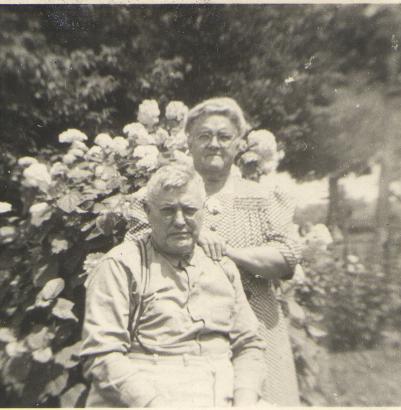
Arthur Lee and Julia Ette Kidder Roden Peterson

As I followed Arthur forward in time, I saw that in 1925 (New York state census) he and Julia are living with Claude (now 18 years old) and Paul Lee (LDQ5-N4Y) (3 years old). On the 1940 Census, all four are still living together. Claude is now 32 years old. The census notes that his highest education is only 5th grade (compared to both parents and Paul, which all had up to 8th grade). Claude is also listed as unable to work, which suggests he probably had some physical or mental impairment.

At this point, feeling pretty confident that I already know the right answer, I start researching Claude.  I found a death certificate that lists Arthur Peterson as Claude’ father, but that’s not especially reliable because Claude has been living in the same household as Arthur since at least the time he was 3 years old, so it may just mean he is the adoptive or step-father.

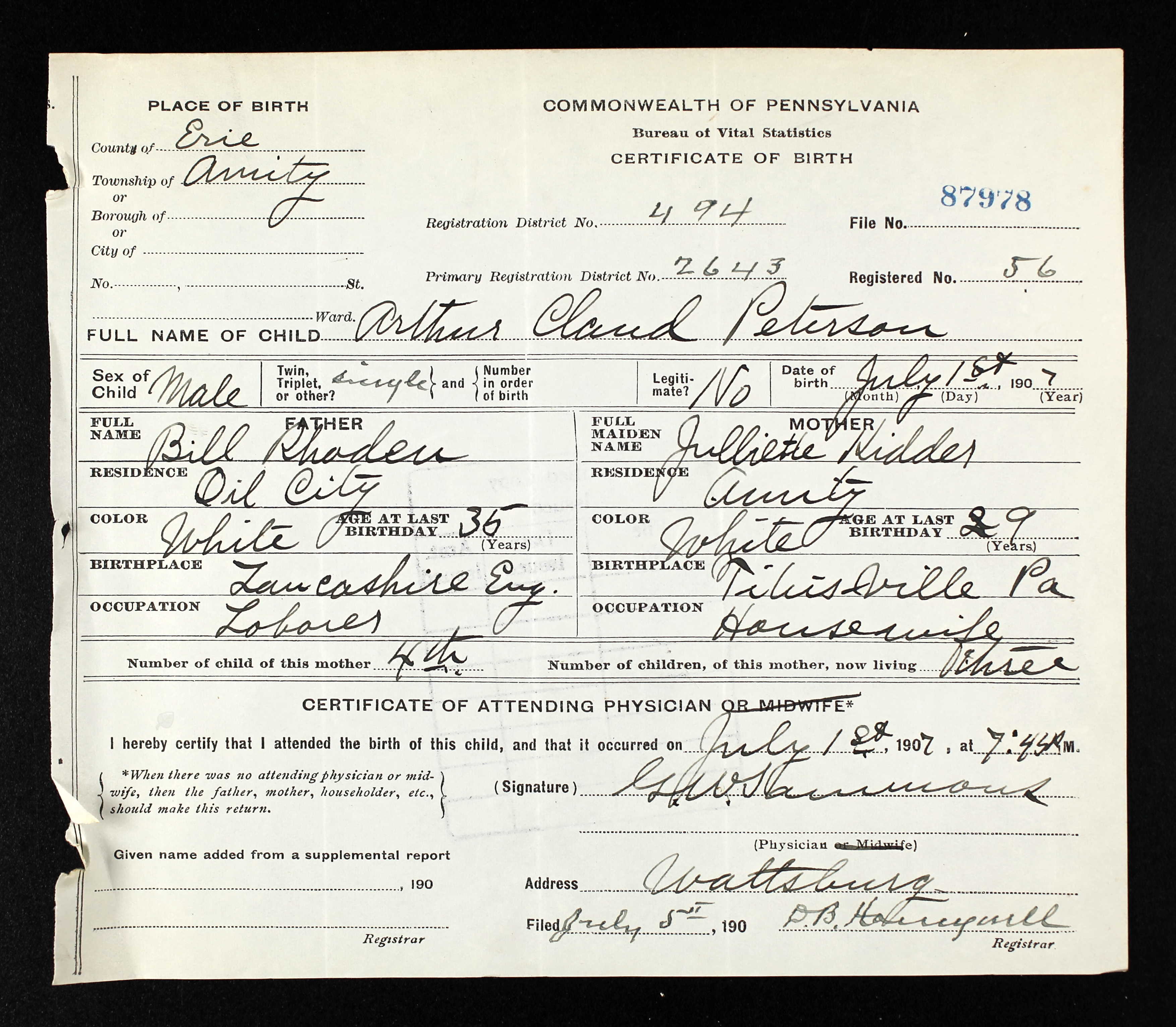
Next, I look at the 1907 birth certificate that caused the change in FamilySearch. I didn’t start here because I wanted to make sure I had a solid chain of evidence one way or the other first. Now that I look at it I am really confused. It lists the child’s name as Arthur Claud Peterson but lists the father as Bill Rhoden, possibly meaning Julia’s first husband, Joseph Roden. It also notes the birth is illegitimate. Now I’m left scratching my head. Is Bill/Joseph Roden the father? If so why is the last name Peterson? If Arthur Peterson is the father, why list Julia’s husband as the father on the record but name him Arthur Claud Peterson (a bit of a give way)? Also, if Arthur is the father, it means he had an affair with Julia while he was still married to Julia’s mother, then kept living with Julia’s mother while Julia lived in their household for another 8 years!

More research to follow in the coming weeks on Joseph Roden and the two other children, presumably from Julia’s first marriage.  I’m hoping that as I keep researching this muddle will become clearer.  Stay tuned.

Ancestry’s attempt to visually display these weird relationships