Posted in Allred, Photo, Squire

Honoring Those Who Served Their Country

This week in the United States we mark Veterans’ Day, which is known as Armistice Day or Remembrance Day in other countries.  It originally marked the anniversary of the end of World War I; the cessation of hostilities between Germany and the Allies took affect at the 11th hour of the 11th day of the 11th month.  Now the day honors all those who have served in the Armed Forces and remembers those who gave their lives for their country. I don’t think Veterans’ Day gets as much attention in the United States as Remembrance Day does in the countries more deeply affected by World War I.  In many of the Commonwealth counties, especially the United Kingdom, Canada, Australia, and New Zealand, members of the military wear a red poppy flower on their uniforms for several weeks before Remembrance Day to remember whose who fought and especially the millions who died.
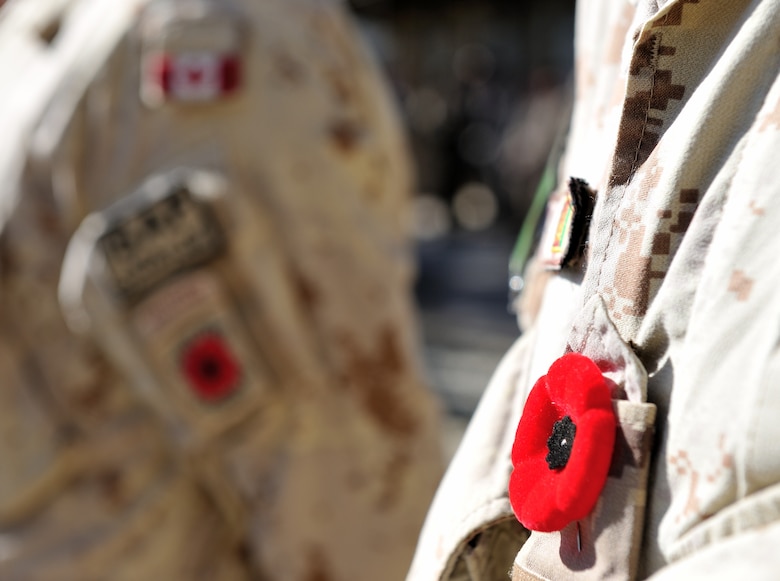
Canadian soldiers with a poppy flower on their uniform to mark Remembrance Day

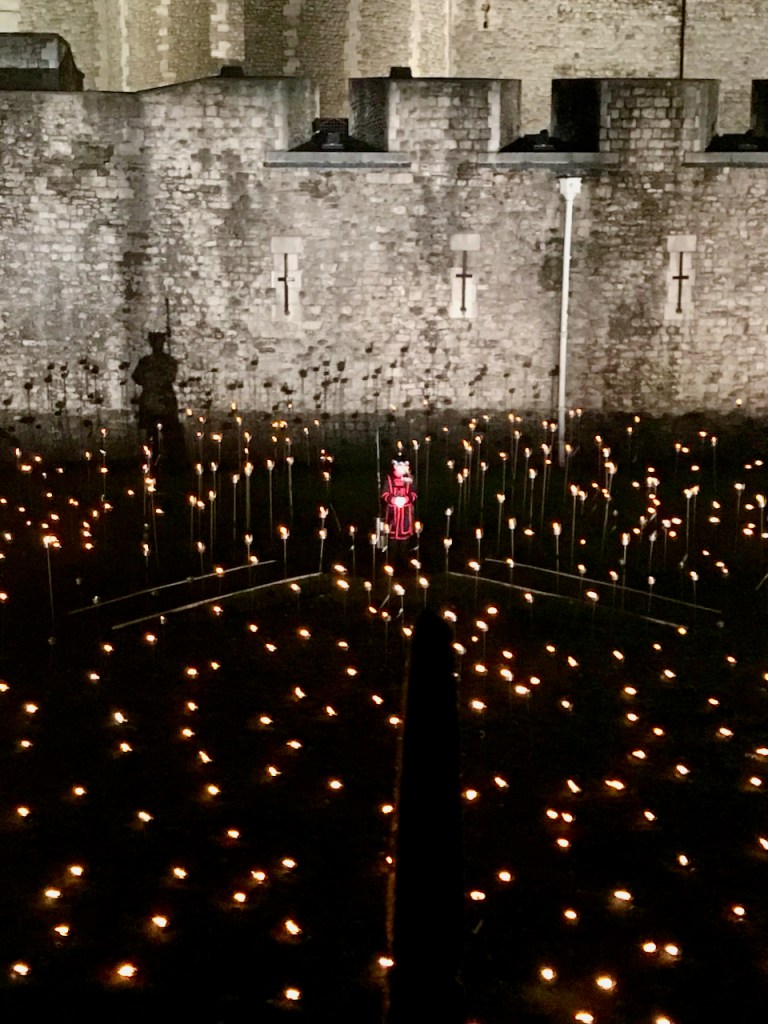
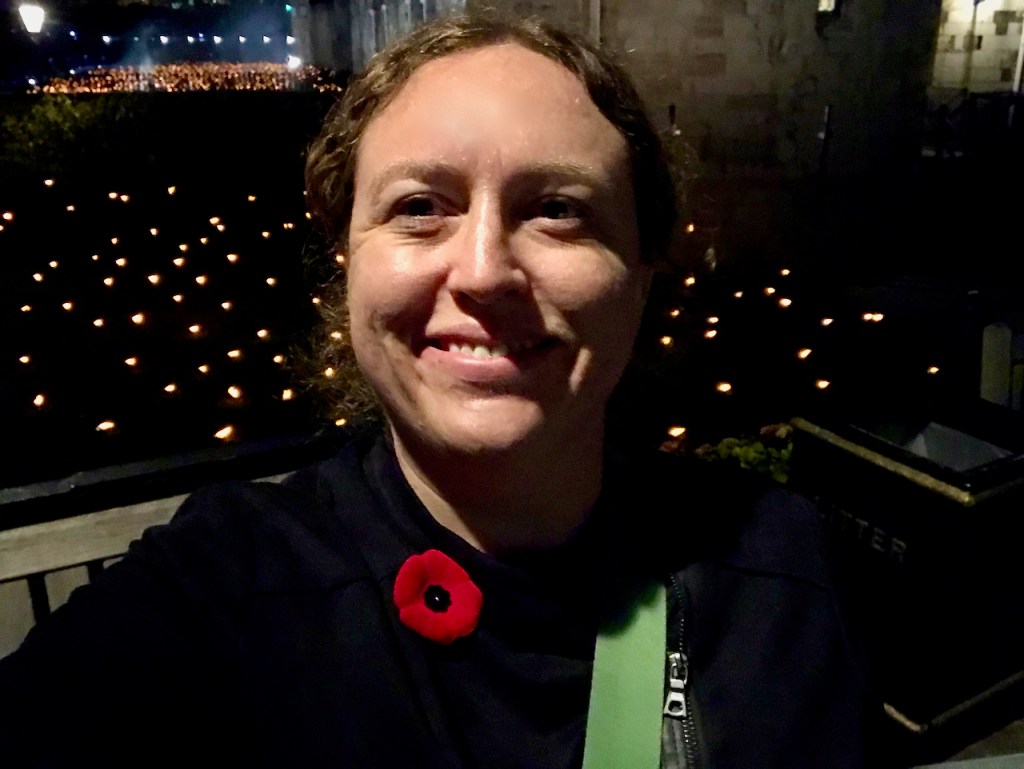
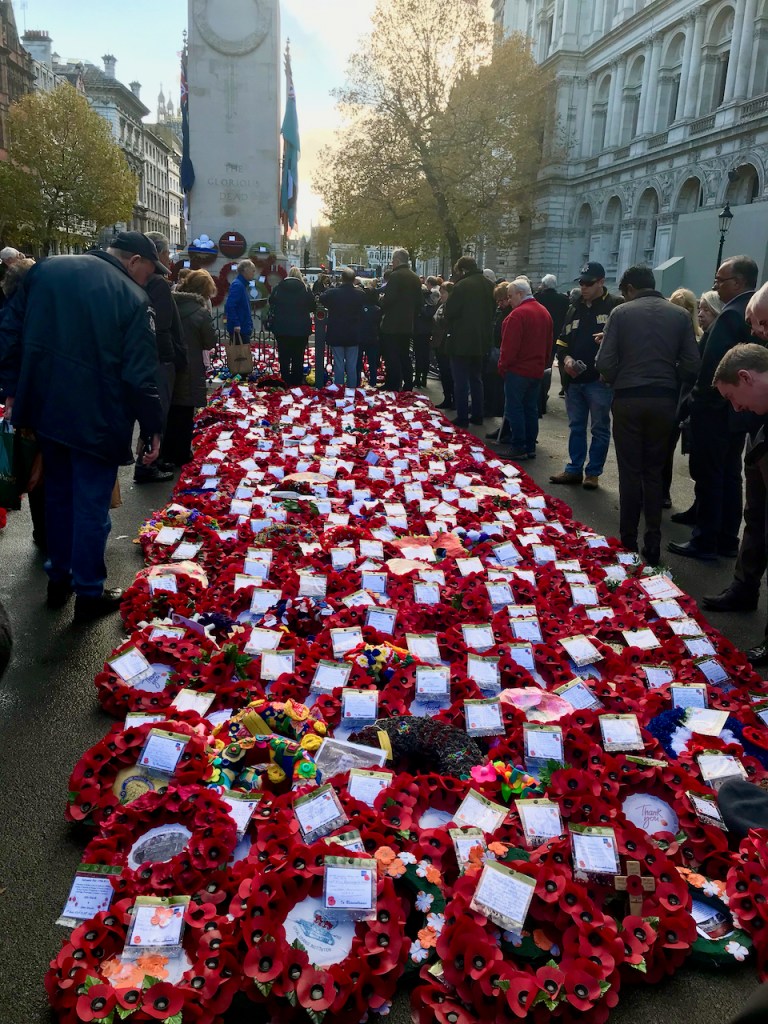
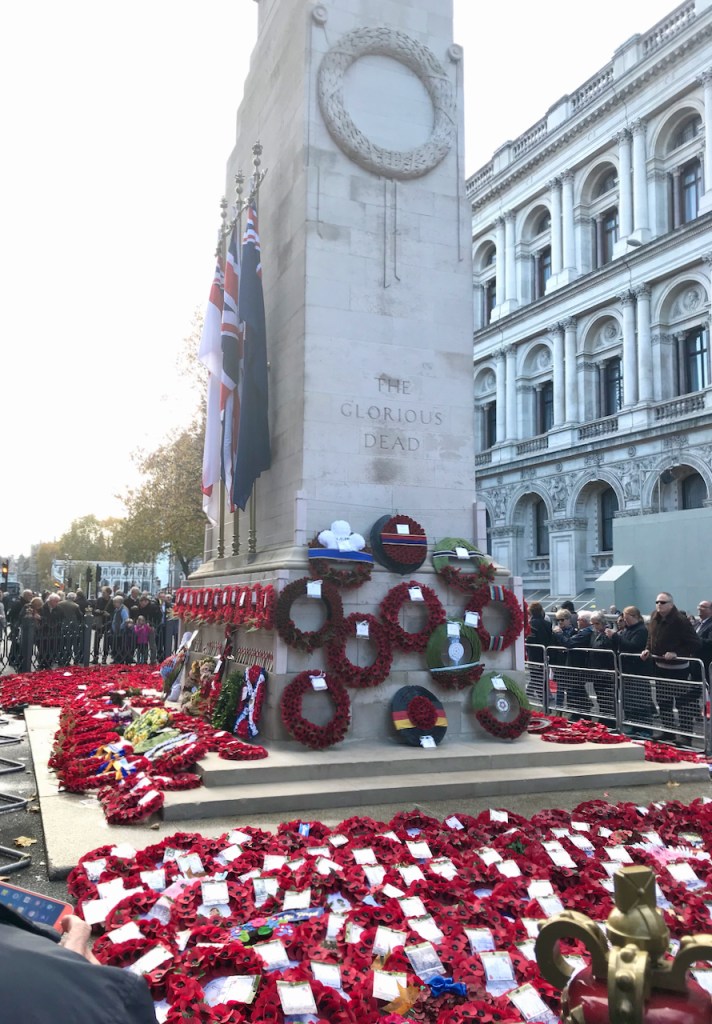
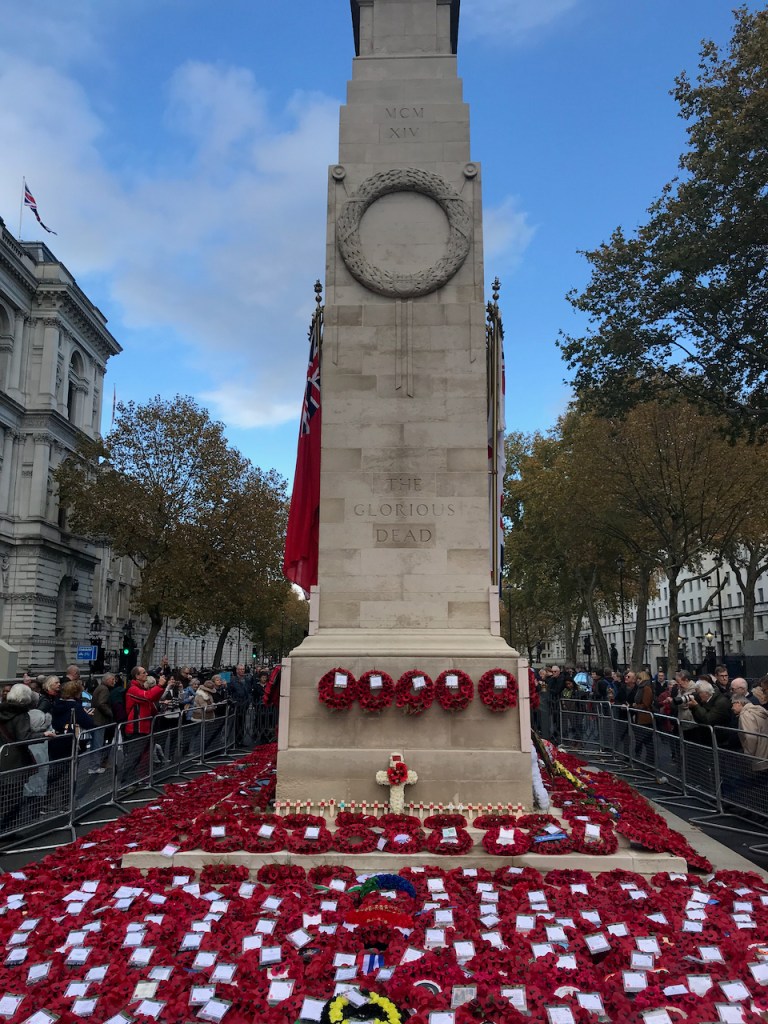
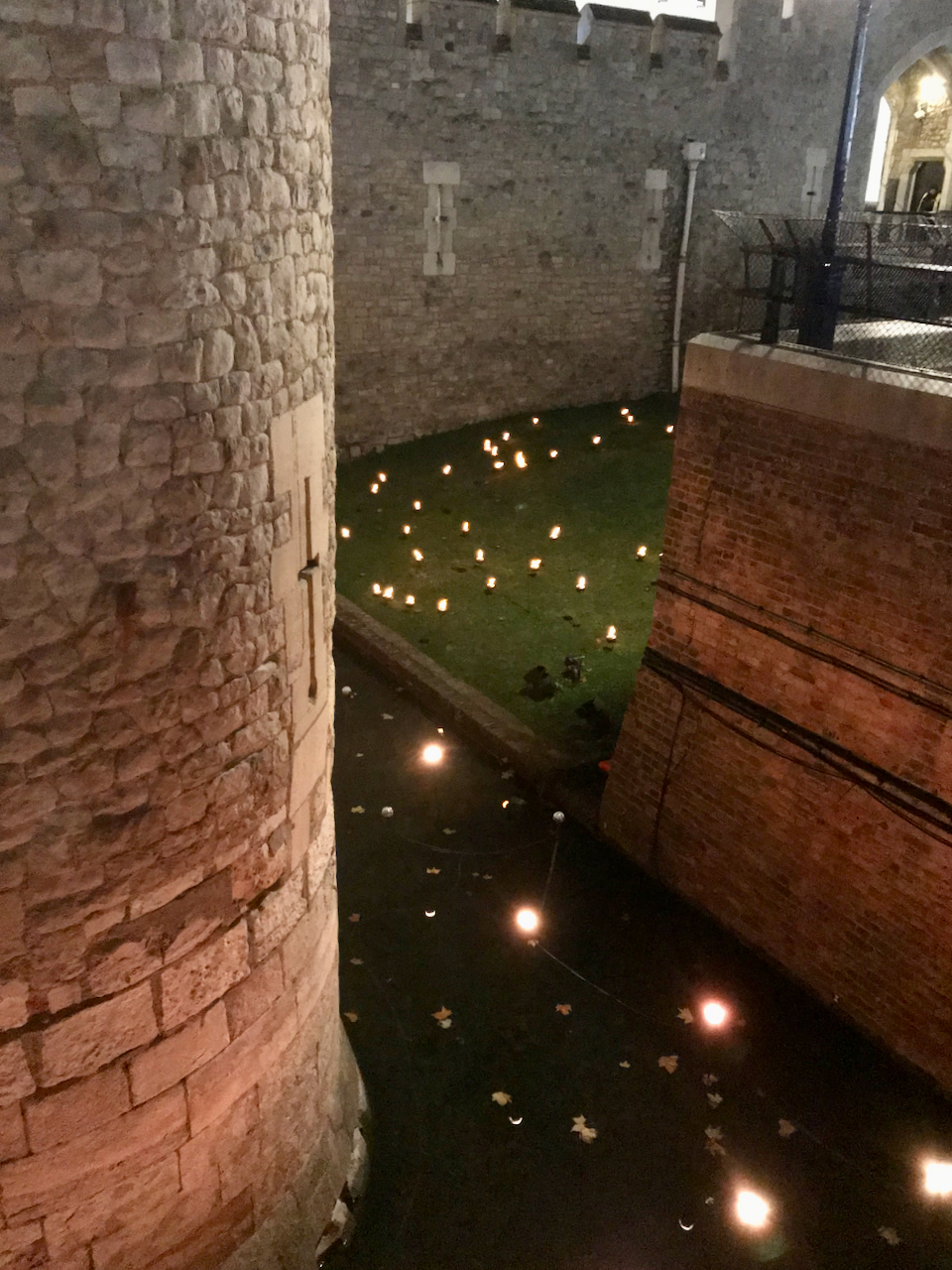
I had the privilege to be in London on 11 November 2018, the 100th anniversary of the end of World War I, and was able to see the scope feeling that Remembrance Day still evokes there.  To mark the centenary of the end of the First World War, an installation at the Tower of London filled the moat with thousands of individual flames: a public act of remembrance for the lives of the fallen, honoring their sacrifice.  Each evening over the course of four hours the Tower moat was gradually illuminated by individual flames. The visual spectacle was accompanied by the sounds of whispered voices, representing the shifting tide of political alliances, friendship, love and loss in war.  Seeing the installation was a moving and haunting experience.  On the day after Remembrance Day, I went to the Cenotaph, a memorial honoring those who died in World War I, that was set up in 1920, where lots people had laid wreaths the day before.
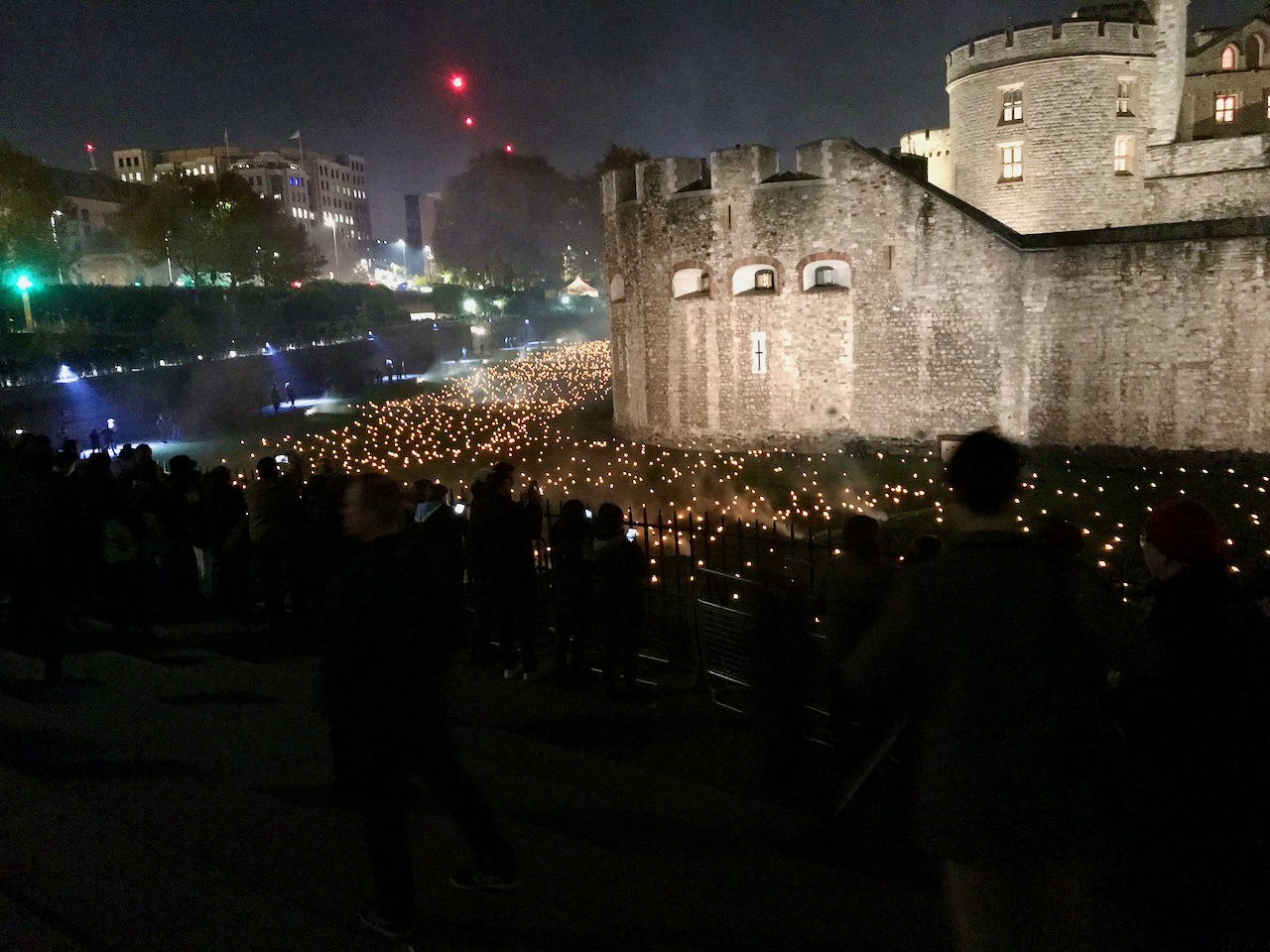
I honor all who have served in the Armed Forces to protect their families, freedom, and peace.  I have been touched by the military service I had discovered while researching my family, and will share a few examples of their service below, particularly those who served during World War I.

George Sydney Tucker (1973-1932) & William Henry Tucker (1881-1916)

During World War I, William joined the British Army, leaving behind his wife, son, and daughter.  He was 33 years old. He arrived in France on 24 January 1915.  He started as a private in the 16th Battalion, London Regiment and was later promoted to a second lieutenant in the 12th Battalion, London Regiment (the Rangers), the same battalion in which his brother, George, was also a member.   He was killed on 1 July 1916, during the first day of the Battle of the Somme and is buried there.  
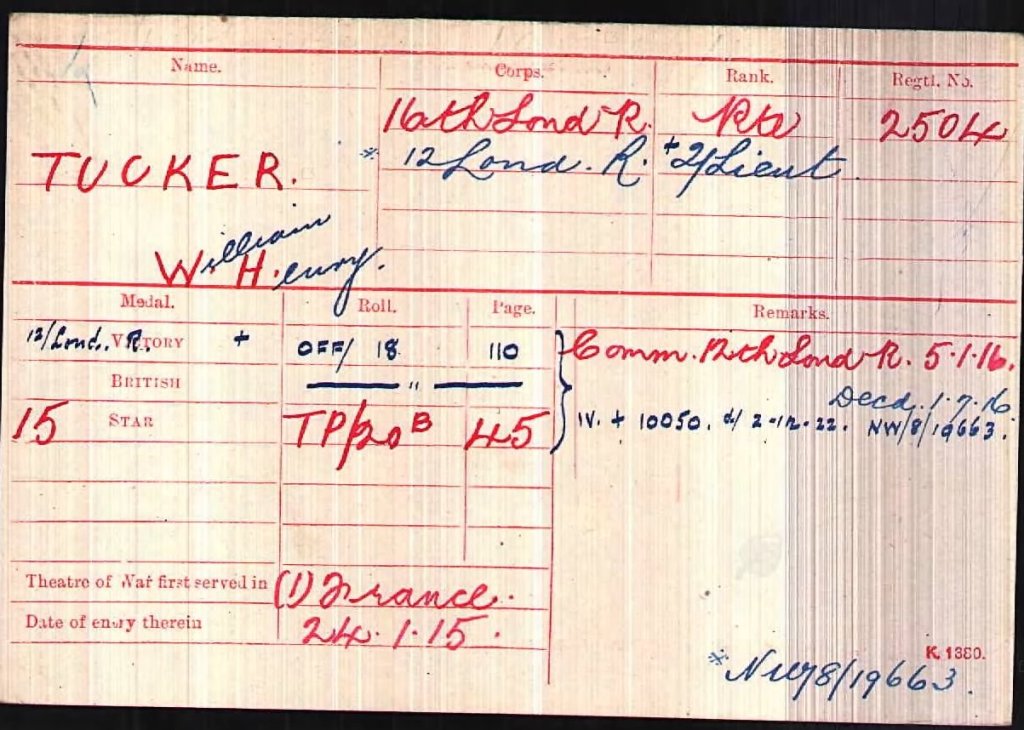
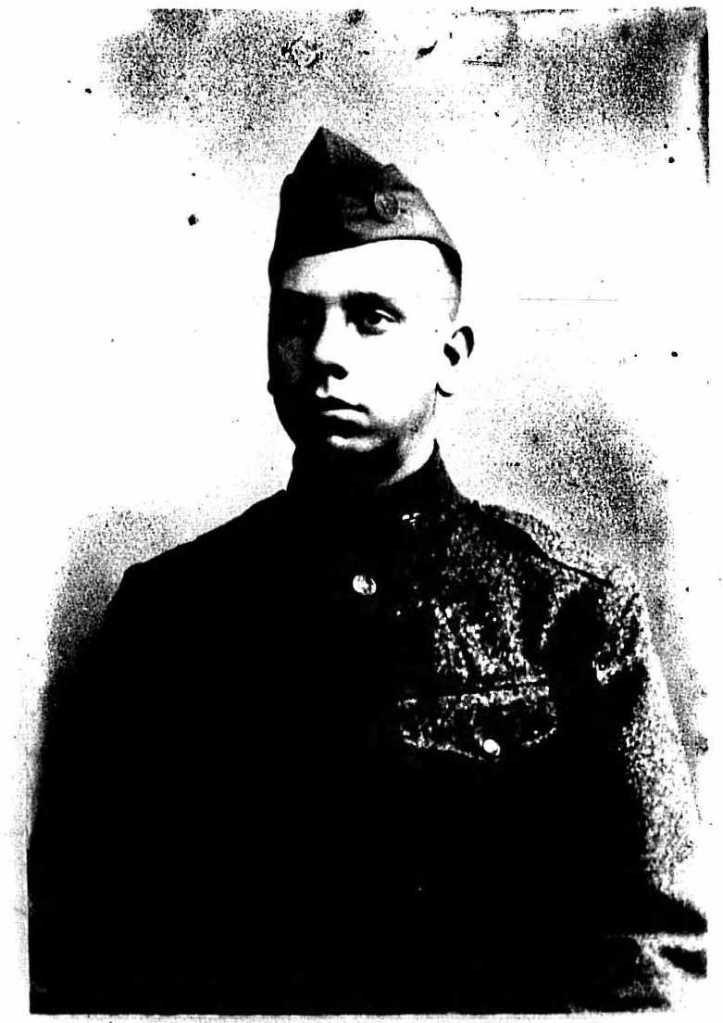
William’s service record, noting rank, unit, and medals he earned

The Battle of the Somme took place between 1 July and 18 November 1916 on both sides of the upper reaches of the River Somme in France. More than 3 million men fought in the battle, and 1 million men were wounded or killed, making it one of the bloodiest battles in human history.  The first day was also the worst day in the history of the British Army, in terms of casualties, suffering 57,470 casualties, including 19,240 killed in action.  In the end, British and French forces penetrated only 6 miles into German-occupied territory and they failed to achieve their key objectives.
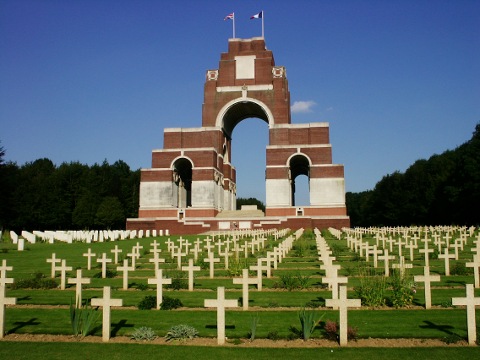
Thiepval Anglo-French Cemetery, where William is buried

William’s older brother, George, also served in the British Army during World War I. In May 1915, he was a captain in the 12th Battalion, London Regiment (the Rangers). By December 1915, he had been promoted to a major. The regiment saw intensive action on the Western Front in the First World War (including the Battles of the Somme and Passchendaele). Unlike his brother, George survived the brutal war and returned to his family in England.
Alma Sharp Barker (1897-1980)

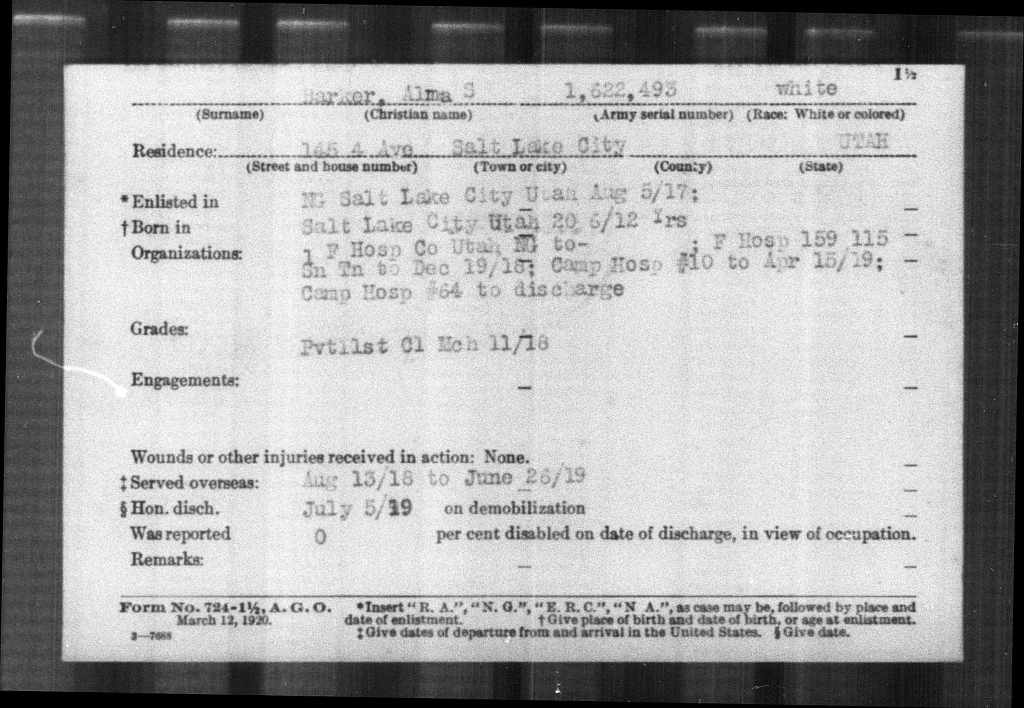
Alma joined the Utah National Guard in 1917, at age 20, just before the National Guard unit was mustered into the United States Army, when the United States entered World War I.  He served for 2 years.  First at Camp Kearny, California and later in France, in the Medical Department.  He arrived in France in August 1918—about 2.5 months before the war ended—and was on his way to the Front when the Armistice was signed.  He recorded in his autobiography that there was not much for the medical department to do at first, when he arrived, but then an influenza outbreak occurred among the soldiers and he was very busy.  For a while, he was a nurse in the contagious ward. Later he worked in camp hospital administration because he could type quickly.  He stayed in France until June 1919, and was honorably discharged in July 1919.  During World War II, he served his country again, this time in the Coast Guard Reserves in California.
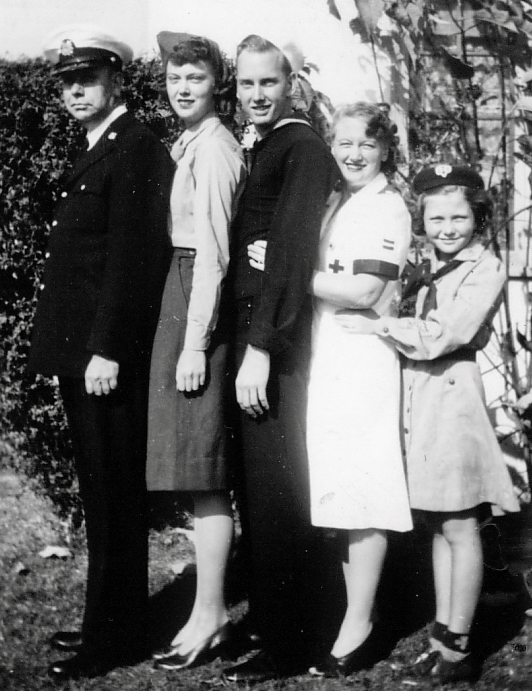
1944: Alma Barker (Coast Guard Reserves), Marian Barker (Civil Air Patrol), Wayne Barker (Navy), Ruth Davis Barker (Red Cross), Marjorie Cecilia Barker (Girl Scout)

William Squire (1809-1846)

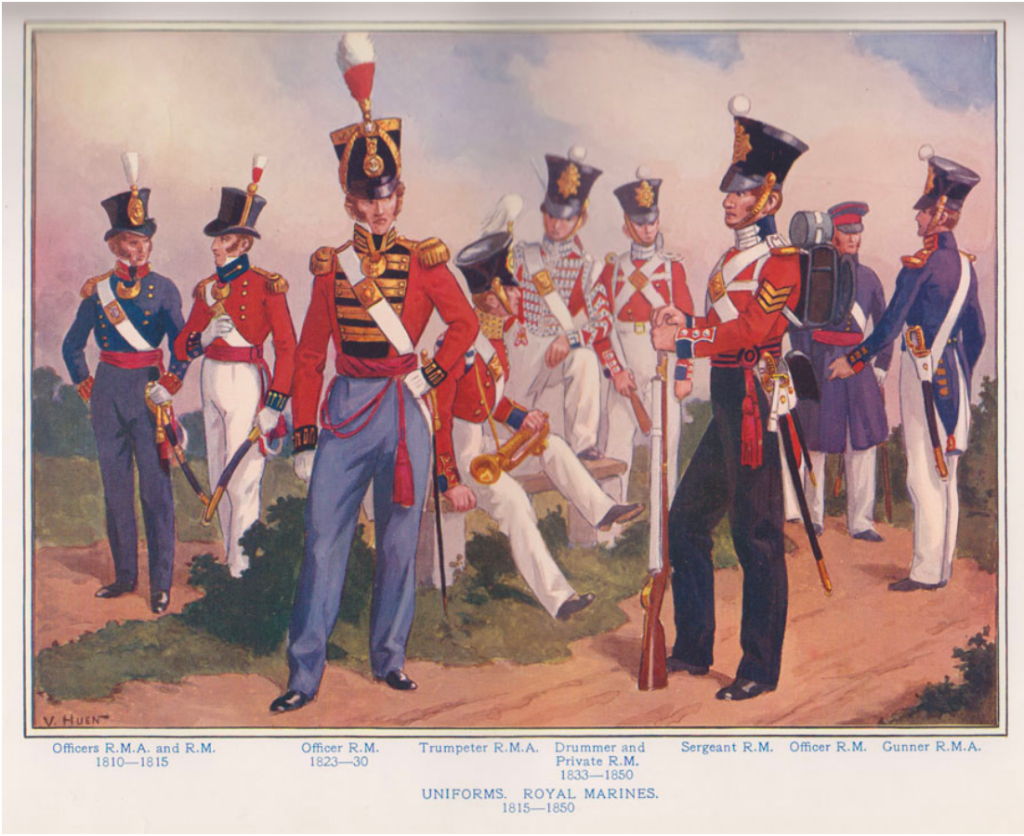
William probably joined the British Navy or Royal Marines as a teenager or young adult. In his 1844 will, he states he was in Her Majesty’s service in the Royal Navy.  Later, his death is noted in a Navy obituary list as a member of the Royal Marines.  In late March 1846, William became the Master (the senior non-commissioned rank) aboard HMS Styx, operating off the western coast of Africa.  In May 1846, the Styx was at Ascension, a very small island in the middle of the Atlantic Ocean used by the British Navy as a resupply point.  The ship operated along the coast of Africa to intercept and capture slave ships. 
In late October, much of the crew of HMS Styx became ill, to such an extent that the Styx borrowed the surgeon from HMS Flying Fish to help deal with the outbreak. Sadly, William died of “coast fever” on 30 October, when he was 37 years old.  He likely was buried at sea.  It took months for the news to reach England; an account of the illness was reported in a Southampton newspaper in late February 1847.  William’s will was not proved until 22 April 1847.  Before news of his death reached England, William was included among a batch of promotions announced on 9 November 1846, when he was promoted to master, a senior non-commissioned officer rank, which suggests he must have been in the Marines for some time.
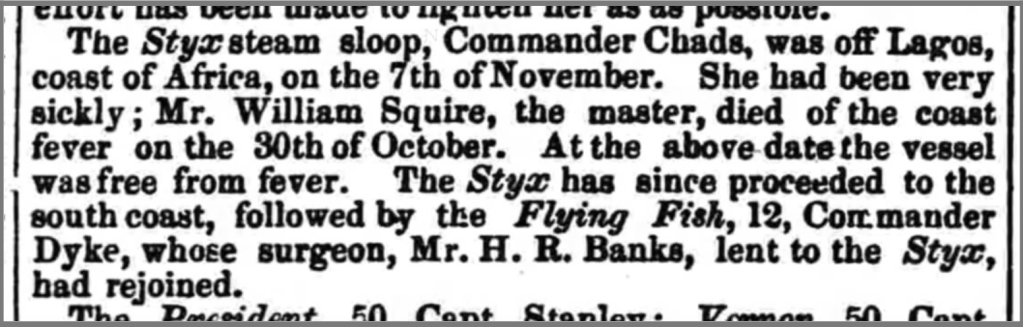
27 February 1847: News of William Squire’s death at sea
Posted in Peterson, Photo, Squire

More Memories Added To FamilySearch

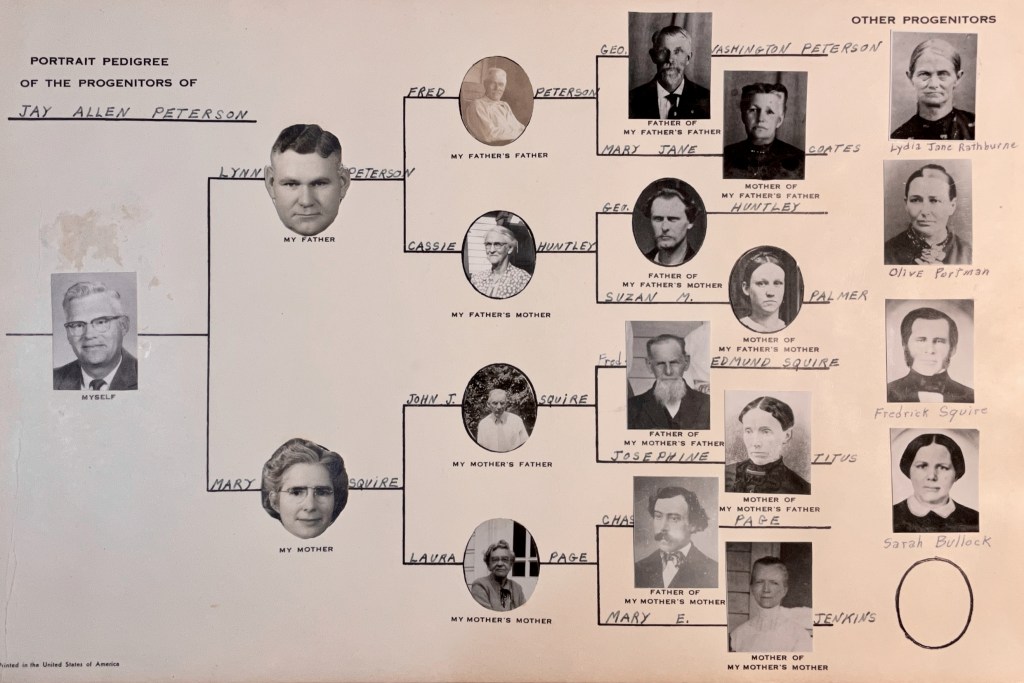
I’ve been scanning a few documents and photos from a book of remembrance that belonged to Jay Peterson and possibly his mother before him. It’s a bit of a random collection of items that I have added to FamilySearch lately.

  • Jay Peterson:
    • Page with vital data and short autobiography (in 2 parts)
    • Book of Remembrance entries for key moments from birth to marriage
    • Peterson family origin and coat of arms info
    • Portrait pedigree charts for Jay and his ancestors
    • Small pox vaccination card
    • Chart of major world religions that Jay had made (very detailed and handwritten)
Lynn Peterson
Posted in Peterson, Photo, Squire, Update

More Photos

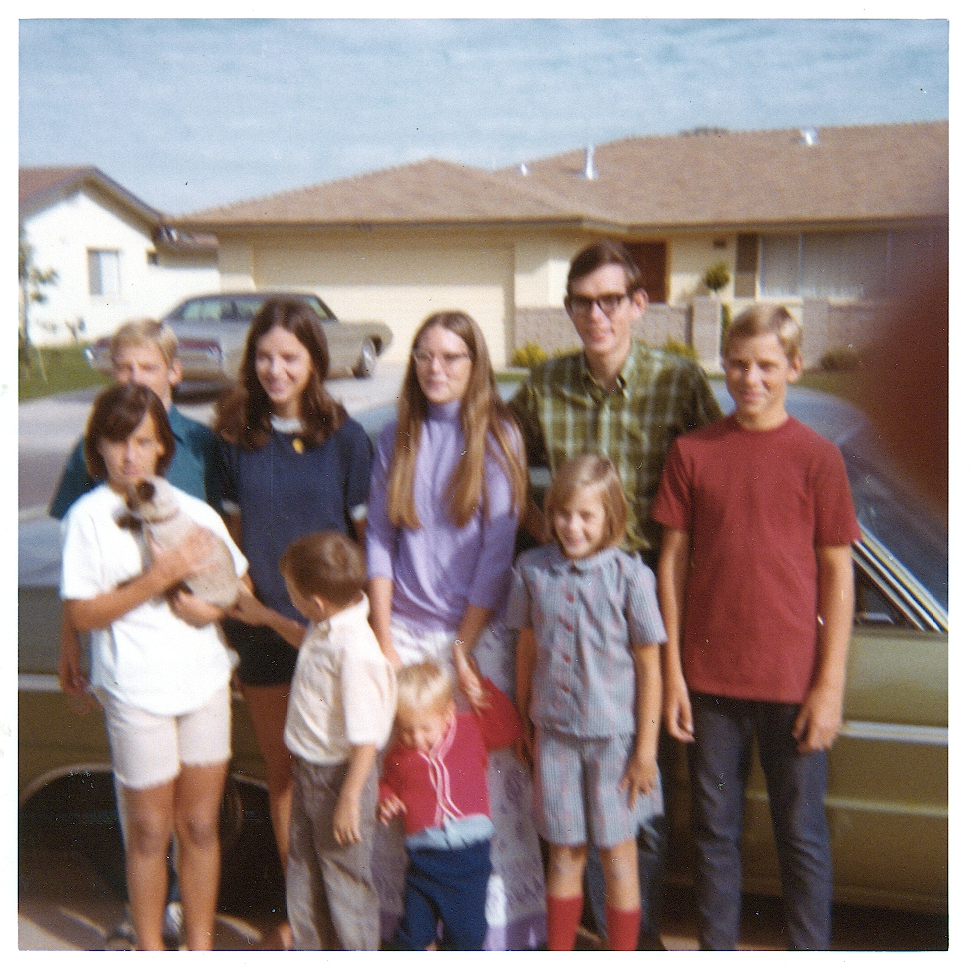
Lynn & Mary Peterson’s grandchildren, October 1970
Jay Peterson

I’ve added a lot more photos to Family Search:

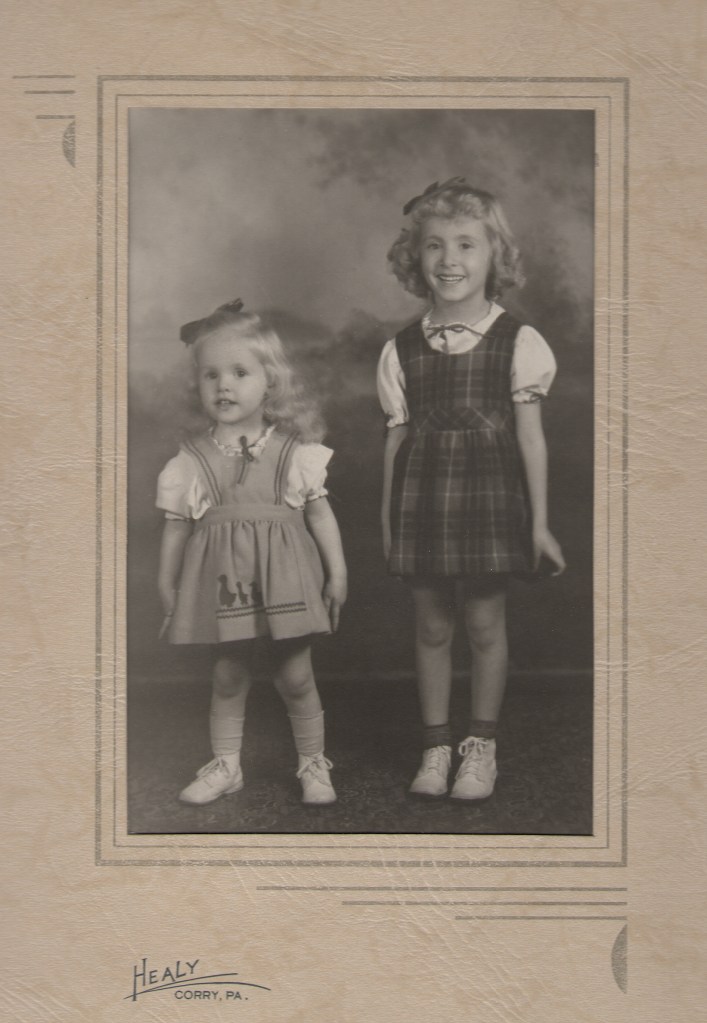
Sharon & Sylvia Squire, about 1944

I discovered that Sharon Squire, the unidentified little girl from my last post, is the daughter of John Theodore & Gladys (Bennett) Squire. I was able to find her quite quickly just by searching census records for a Sharon Squire in Pennsylvania and when I got some hits, I recognized her parents. Other pictures I found later of all the kids in the family confirmed my identification.

But I still have other mystery photos, some without any names or dates, that may end up being perpetual mysteries.

Bud Johnson, no date, possibly family friend?
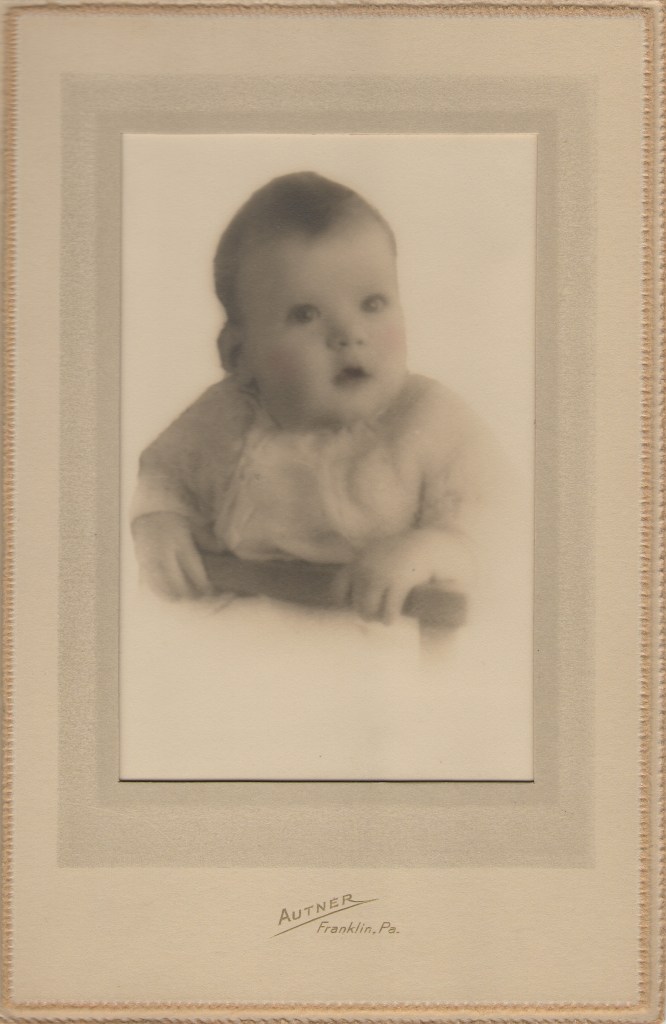
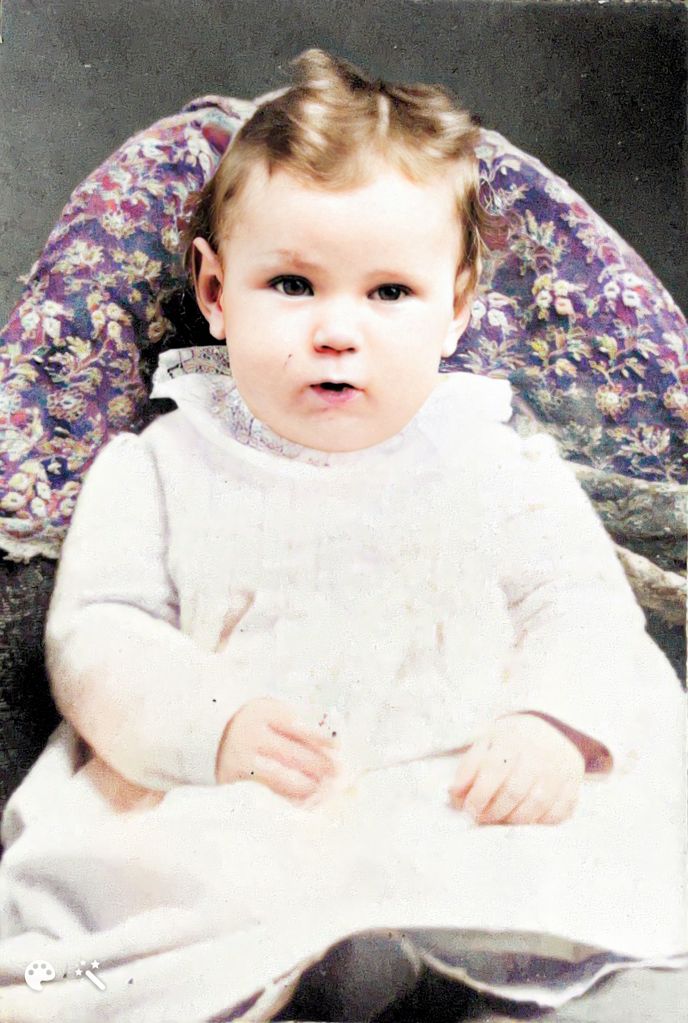
Unknown baby, no date

Posted in Peterson, Squire

Share in My Discovery Adventures

Dear Family,

I’ve decided to start this blog to share my family history discoveries. I’ve found some pretty interesting things lately and wanted to make the information available to you too.  I get obsessed with researching to unravel a mystery. I want to share that love and the joy of discovery with you. This blog is a way to share my research with family members and perhaps connect with other people researching the same lines. I have primarily focused my research on Peterson and Squire lines in northwestern Pennsylvania and nearby parts of Ohio and New York. I hope you enjoy this and would love to hear your reactions to my discoveries.

Posted in DNA, Squire

Finding Wilbur Sidney Squire

I recently inherited my grandfather’s collection of genealogy documents when he moved to a retirement home and didn’t take them with him. I am in the process of hauling suitcases full of binders and envelopes of letters, pictures, and loose documents from Utah to Virginia and sorting everything out.  One item I found in the collection turned out to be the beginning of a mystery even though it initially seemed very straight forward.

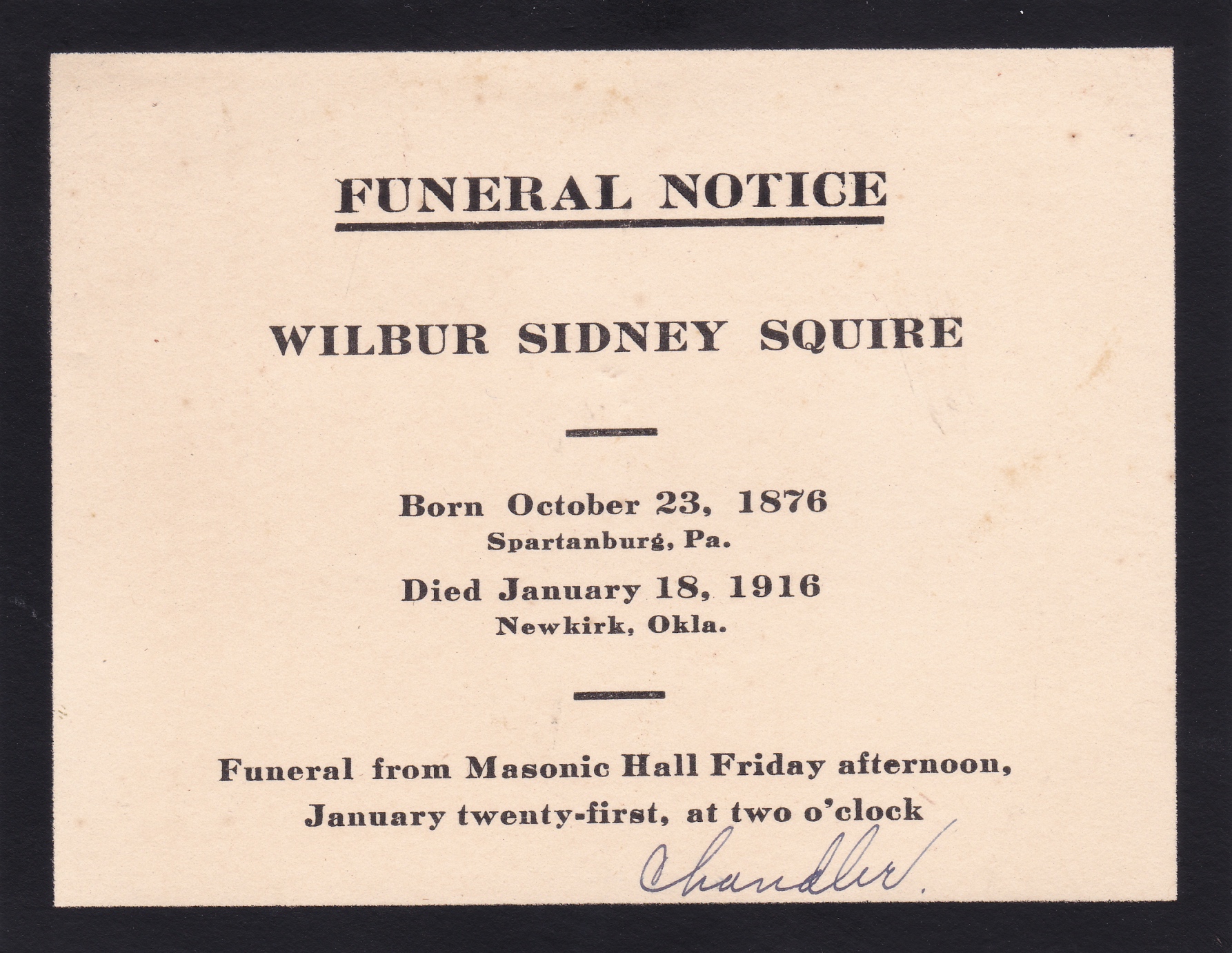
I found a funeral announcement for Wilbur Sydney Squire (L449-4YR), who died in 1916. I didn’t immediately recognize the name, but I have lots of Squires in my family tree, so I expected to just scan the card and attach it to an existing person in my research. I was surprised when I searched my tree and didn’t find a match.

I next turned to FamilySearch.org to see if I could find him there. I did, and he was listed as the son of John Russel Squire (L449-LXT). However, I have John Squire in my research and three of his sons, but Wilbur wasn’t among them. There was no documentation on FamilySearch.org to support the relationship either.

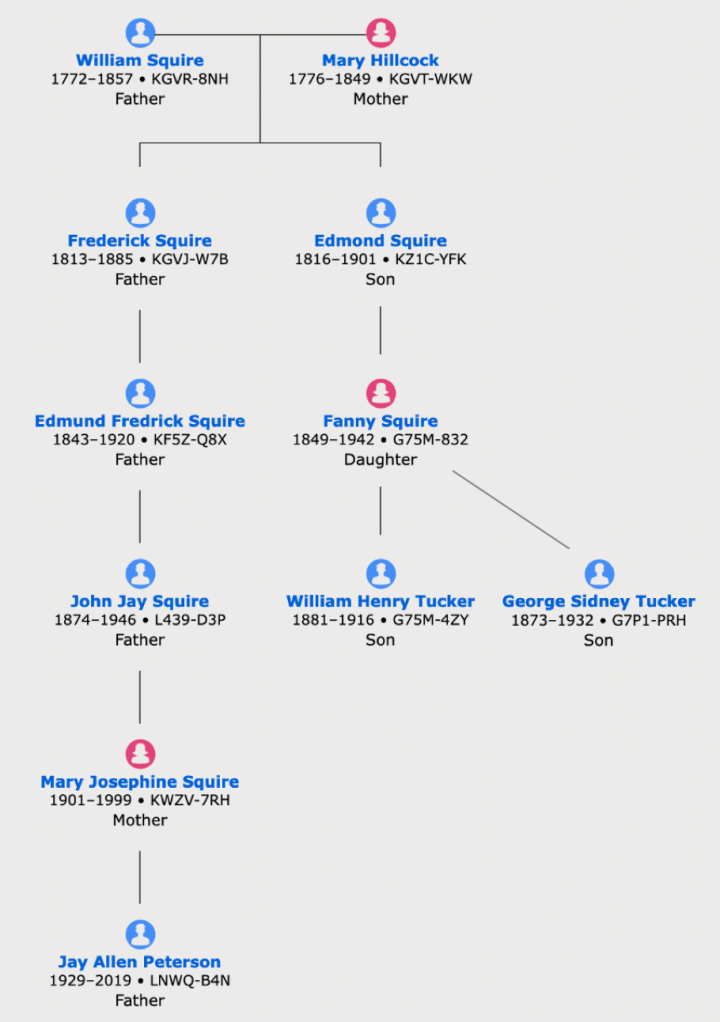
I turned to Ancestry.com and searched for Wilbur Sydney Squire with the birth and death dates and locations on the notice to see what I could find, trying to find documentation of where Wilbur fit into my family. Among the search results was a familiar hit in the 1880 Census. In the household of Edmond Frederick Squire (KF5Z-Q8X), my third-great grandfather, I found Sydney Squire, nephew, age 4. I had previously reviewed this census record when researching my direct line and had marked Sydney Squire as someone to come back and research because I didn’t know where he fit. This was a small step in the right direction, but it still left three of Edmond’s brothers as the possible father for Wilbur Sydney.

As I continued to search through records, I still couldn’t find much. I found a marriage record for Wilbur S Squire (of the right age and general location) to Lydia T. Bruce (L449-H12), but sadly the marriage license document of the time didn’t ask for parents. The next thing I found was the 1910 Census with Wilbur and Lydia and one child living in Chandler, Oklahoma—a long way from Pennsylvania where they both originated and most of my family lines stayed—but the funeral notice noted that Wilbur died in Newkirk, Oklahoma, so I’m pretty confident that the marriage record and the census record are my Wilbur Squire. But that’s it, I can’t find anything else.

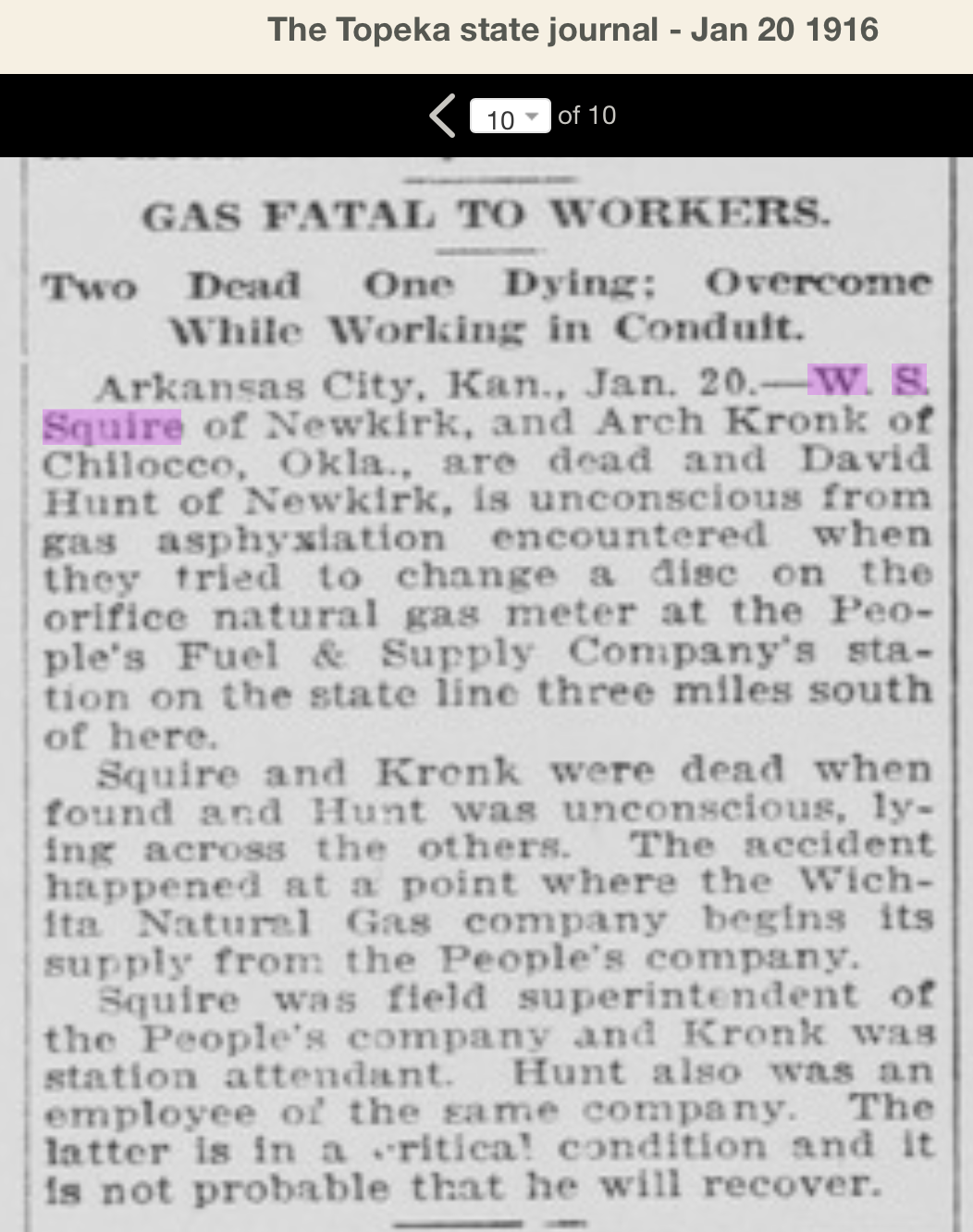
My next hope was to look for an obituary, maybe it would include a mention of his parents or something.  I started searching online newspaper archives and didn’t find an obituary, but I did find three different newspapers in Oklahoma and the vicinity for a W. S. Squire in 1916.

“W. S. Squire of Newkirk, and Arch Kronk of Chilocco, OK are dead and David Hunt of Newkirk, is unconscious from gas asphyxiation encountered when they tried to change a disc on the orifice natural gas meter at the People’s Fuel & Supply Company’s station.”

This is my Wilbur Squire, the dates and locations are right, and the marriage and 1910 Census records both show that Wilbur worked in the oil and gas industry.  Still no parents though.  At this point I’m starting to get desperate because I’ve exhausted all my usual sources of information.  

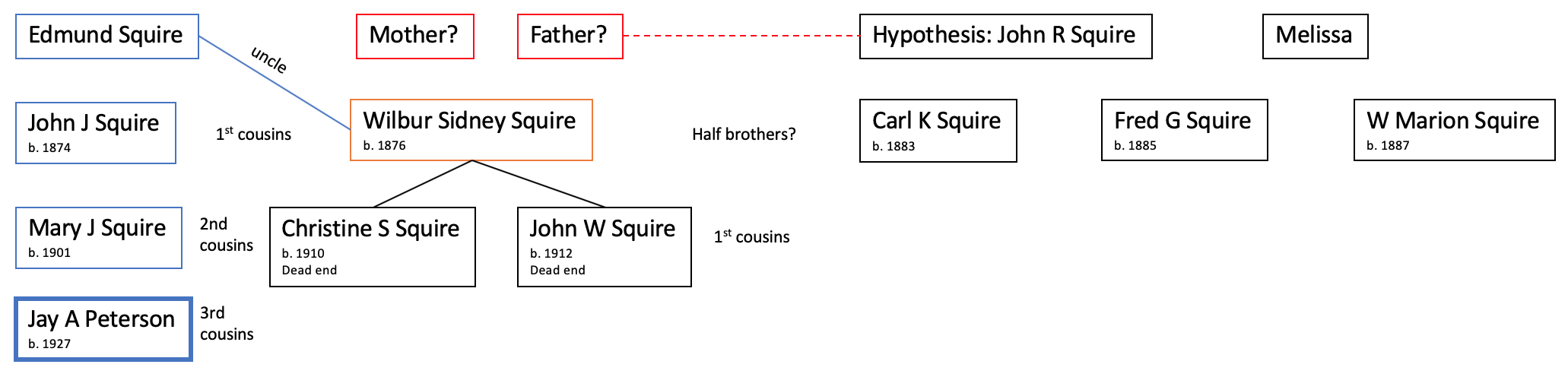
I wondered if I could use DNA matches to find a close enough link between Wilbur’s descendants and the descendants of John Squire’s other children—as compared to my grandfather’s DNA, who is Wilbur’s first cousin twice removed—to at least support the hypothesis that John Squire is the father.  There is a 7-year gap between Wilbur’s birth and the birth of the eldest of three other sons (who are all born 2 years apart), so I’m pretty sure Wilbur must be from a first marriage that I can’t find documentation for. I was fresh back from RootsTech and feeling ready to apply the DNA research skills I learned, so I started doing the descendancy research and mapping out the hypothesized relationships.  Unfortunately, while I found two children for Wilbur Squire, I couldn’t find any children for either of them.  They are just on the cusp of when I might have found them with children on the 1940 Census, but no dice.  

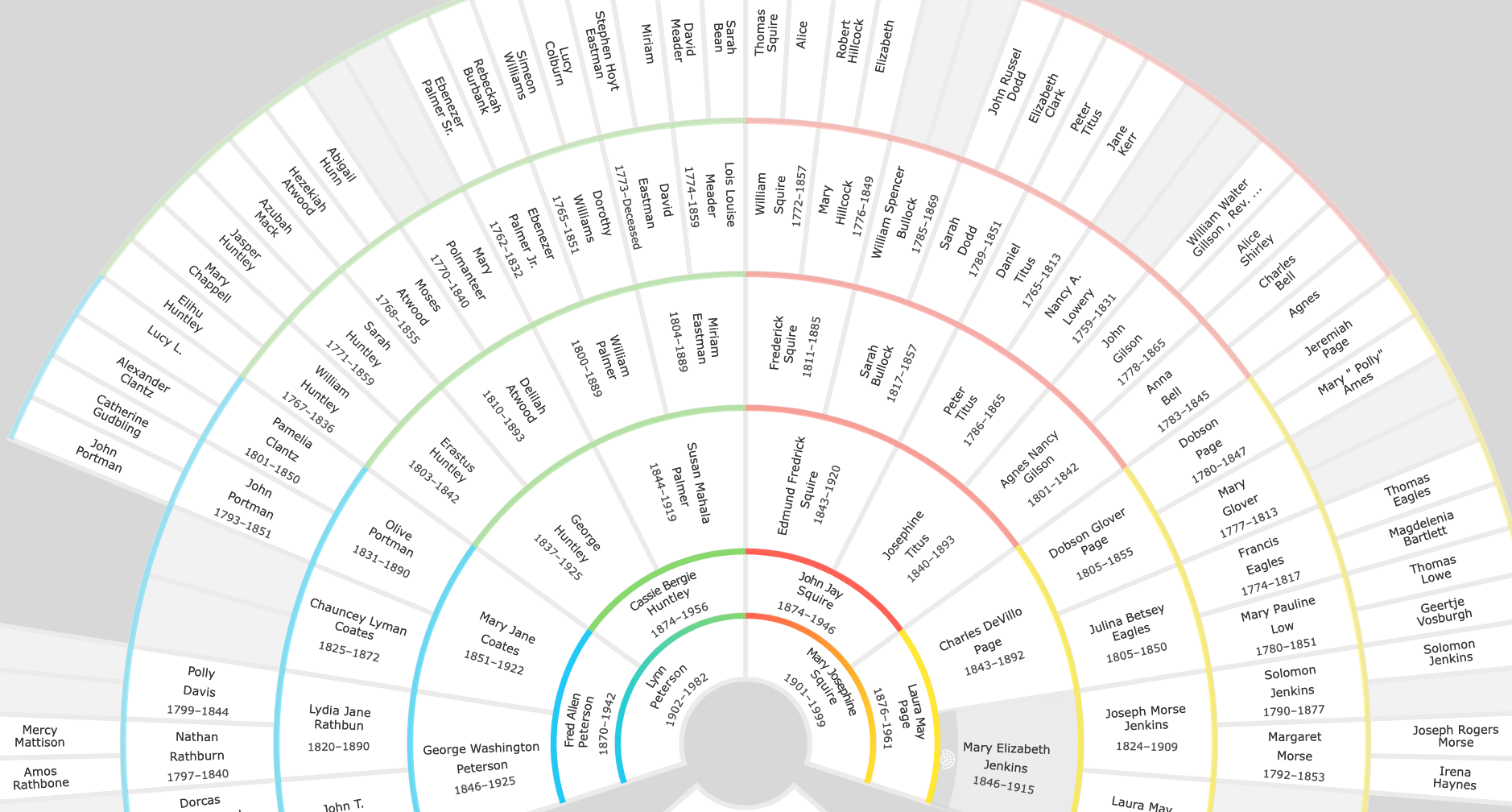
Relationship chart for attempted DNA research

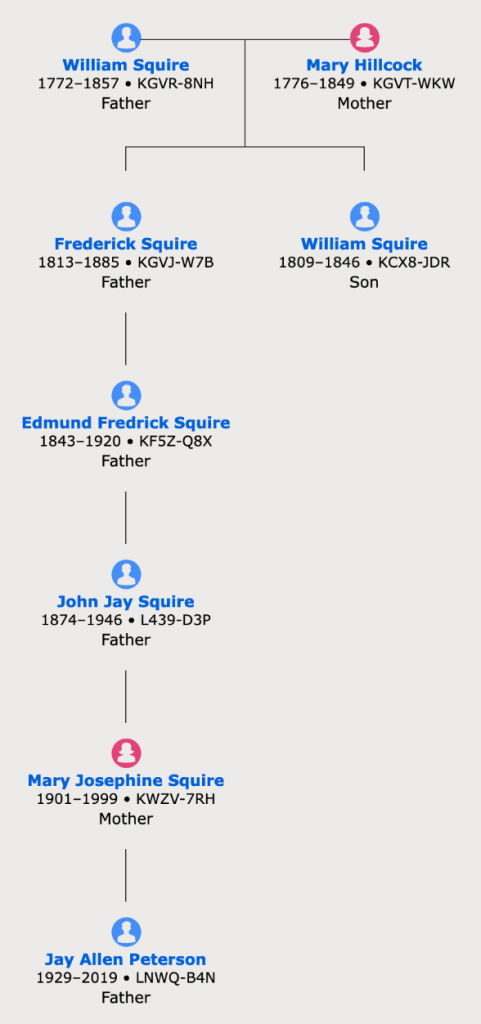
Uncertain if it was even worth doing the descendancy research on John Squire’s other children or not, I decided to play around with Ancestry’s new ThruLines to see if any of my grandfather’s 1,400+ close matches (4th cousin or closer) are even from the right parts of the family. (ThruLines looks for common ancestors among DNA matches’ attached trees and sorts out your matches so you can hopefully find matches on the lines you are looking for.) I looked for any DNA matches that come through Frederick Squire (KGVJ-W7B), the father of Edmond and John. Unfortunately, all my grandfather’s DNA matches through that ancestor are my own uncles, aunts and cousins, and two matches through one of Edmond’s and John’s half-sister. No matches that I could connect to any of Edmond’s brothers to test my hypothesis. Another dead end.

All this research took about 2 weeks.  In the meantime, I mentioned the trouble I was having to my mother, and she mentioned it to her father and asked if he knew Wilbur’s parentage.  He said he didn’t remember, though he could remember off the top of his head that he died in an industrial accident.  (Pretty impressive!)  He asked my mom to bring him his book of genealogy research with Wilbur Squire in it so that he could double check what info he did have.  When my mom texted me to ask if I had the book or if she should go look for it at his house, I started digging through the latest suitcase of folders that I still hadn’t unpacked.  Eventually I found a Squire folder with a family group record that showed Wilbur Squire as the son of John Squire and Mrs. John Squire, his first wife.

As I kept flipping through the folder, I finally hit pay dirt! At the back were a series of transcribed letters from John to his brother Edmond spanning 1877 to 1880.  As I skimmed through them, I learned that John had left Pennsylvania to work in the western U.S. territories, sometimes in oil fields, sometimes on the railroad.  But more importantly, he sent Wilbur “love from his pa” in each letter.  Finally! the proof that John is Wilbur’s father and I can slot him into his place in the family tree.

I still don’t know who John’s first wife was.  I can only presume that she died and John decided he needed to travel to find better work, leaving his young son with his brother.  I’ve sketched out a research plan to eventually search the Pennsylvania State Library newspaper microfilms and a few other non-digital sources in the hopes of eventually getting more information.  But for now, I can lay one mystery to rest.